

Have you ever wondered how the stories of Israel’s kings and leaders offer valuable lessons for our lives today? In this Bible study guide, I delve into the rich history and spiritual insights found in 1 Chronicles. Discover how the genealogies, battles, and triumphs of God’s people can inspire and strengthen your faith journey.
1 Chronicles Bible study guide: Brief overview

The Book of 1 Chronicles, part of the Hebrew Bible and Christian Old Testament, focuses on Israel’s history, tracing genealogies from Adam to King David.
It highlights the reign of David, his military victories, and his preparations for the construction of the temple, while omitting some of the darker aspects of his life.
Written after the Babylonian exile, 1 Chronicles offers a reflection on Israel’s past, emphasizing the importance of the Davidic line and temple worship. Here is a summary of 1 Chronicles:
| Aspect | Details |
|---|---|
| Author | Traditionally attributed to Ezra, though the author is anonymous. |
| Date of writing | Around 450-400 B.C. |
| Purpose | To encourage the Jewish exiles returning from Babylon by showing their connection to Israel’s history, especially Davidic kingship and temple worship. |
| Recipients | Jewish exiles returning to Jerusalem after the Babylonian captivity. |
| Historical context | Written after the Babylonian exile during the Persian period, focusing on Israel’s spiritual heritage, especially through genealogies and David’s reign. |
| Key themes | The Davidic Covenant, temple worship, Israel’s genealogies, faithfulness to God, God’s sovereignty, and the importance of true worship. |
| Notable verses | 1 Chronicles 4:9-10, 16:8-11, 17:11-14, 28:20, 29:11-12. |
| Application for today | The book reminds believers of the importance of spiritual heritage, faithfulness to God’s covenant, and the centrality of worship in community life. |
Importance of studying 1 Chronicles
Studying 1 Chronicles is essential for understanding Israel’s identity and its relationship with God, especially through the Davidic covenant. It shows how worship and proper devotion to God played a central role in Israel’s spiritual life.
By examining the overarching themes, you gain a deeper understanding of the divine covenant with David and the broader narrative of God’s redemptive plan.
The book is particularly valuable for seeing how God works through history to fulfill His promises, emphasizing themes like repentance, obedience, and hope for restoration.
Purpose of the 1 Chronicles Bible study guide

This guide aims to provide a deeper understanding of Israel’s spiritual heritage, the significance of genealogies, and the centrality of the temple.
It walks you through the historical and theological implications of the Davidic covenant and the importance of worship in the life of Israel.
Through structured analysis, key lessons in leadership, obedience, and faithfulness are brought to light, offering valuable insights for modern believers.
The 1 Chronicles Bible study guide seeks to facilitate individual and group study, fostering reflection, discussion, and application of the lessons found in this book.
1 Chronicles Bible study guide: Background information

It’s essential to establish the backdrop against which 1 Chronicles’ narratives unfold. The book recounts Israel’s history from a priestly perspective.
Unlike the earlier historical books like Samuel (1 Samuel & 2 Samuel) and Kings (1 Kings & 2 Kings), 1 Chronicles retells the nation’s story with an emphasis on God’s covenantal promises and religious institutions.
Historical context
The events in 1 Chronicles cover the time from Adam to the end of King David’s reign. It offers a retrospective view of Israel’s history but from the vantage point of the post-exilic community.
This period, after the Babylonian exile, was a time of rebuilding for the Jewish people, both physically (in the form of the temple) and spiritually (in their renewed relationship with God).
The chronicler wrote to a group who had returned to the land of Judah and were re-establishing their identity as God’s covenant people. 1 Chronicles omits much of the political turmoil present in the earlier narratives found in Samuel and Kings, instead focusing on themes of faithfulness to God and proper worship.
This reflects the post-exilic concern with temple worship and maintaining religious identity in a period of restoration.
Cultural context

In the post-exilic period, the people of Israel were dealing with the challenges of restoring their nation after years in exile. The rebuilding of the temple was central to their efforts.
The genealogies in 1 Chronicles were important to establish continuity with the past, reminding the returned exiles of their identity and connection to the patriarchs, priests, and kings of Israel.
The focus on David and the establishment of the temple in Jerusalem was significant in re-establishing a sense of national unity and religious focus.
David was depicted as a model king, emphasizing his role in organizing worship and preparing for the construction of the temple, which would become the heart of post-exilic Jewish religious life.
Authorship and date of writing

The authorship of 1 Chronicles is traditionally attributed to Ezra, though this is not definitively proven. The book is often grouped with 2 Chronicles, Ezra, and Nehemiah, suggesting a single author or group of authors known as the “Chronicler.”
This person or group was likely a priest or Levite due to the strong focus on temple worship, the Levitical priesthood, and genealogies. 1 Chronicles was likely written between 450 and 400 BC, after the return from exile.
This dating places it in the Persian period, where the Jewish community in Judah was a small province within the vast Persian Empire.
The Chronicler’s purpose was not merely historical but theological—encouraging the returned exiles to remain faithful to God and uphold temple worship as central to their national identity.
1 Chronicles Bible study guide: Structure of the book

1 Chronicles is a historical account that focuses on Israel’s genealogies and the reign of King David. Its structure is deliberate, moving from detailed genealogies to the reign of Israel’s most celebrated king.
The book is divided into two main sections: the genealogies of Israel and the history of David’s rule. The genealogical records are important as they connect Israel’s past with its future, while David’s story emphasizes God’s covenant with his chosen king.
Division into chapters
The book is grouped into two broad sections, with each section covering different aspects of Israel’s history.
| Section | Chapters |
|---|---|
| 1. Genealogies of Israel | 1 Chronicles 1–9 |
| These chapters focus on tracing the lineage of the tribes of Israel, including Adam, Noah, Abraham, and the twelve tribes of Israel. The genealogies cover generations that span from Adam to King Saul. | |
| 2. The reign of King David | 1 Chronicles 10–29 |
| The focus shifts to King David’s rise and reign, beginning with the death of King Saul. This section chronicles David’s victories, his preparation for the temple, and the establishment of religious and civil order in Israel. It concludes with the appointment of Solomon as David’s successor. |
1 Chronicles timeline
This timeline helps you understand the key events that shaped Israel’s identity and covenant with God, paving the way for the coming of the Messiah.
| Events | Key milestones |
|---|---|
| Pre-Davidic period | Genealogy from Adam to Abraham (1 Chronicles 1:1-27) |
| Genealogy of the descendants of Isaac (1 Chronicles 1:28-54) | |
| The reign of Saul (1 Chronicles 10) | |
| David’s reign | David’s anointing as king (1 Chronicles 11) |
| Capture of Jerusalem (1 Chronicles 11:4-9) | |
| Bringing the Ark to Jerusalem (1 Chronicles 13-16) | |
| God’s covenant with David (1 Chronicles 17) | |
| David’s victories and organization of the military (1 Chronicles 18-23) | |
| Preparations for the construction of the Temple (1 Chronicles 22) | |
| Solomon’s reign | Solomon’s anointing as king (1 Chronicles 23-29) |
| David praises God (1 Chronicles 29:10-19) | |
| Construction and dedication of the Temple (1 Chronicles 28-29) | |
| Epilogue | Death of David (1 Chronicles 29:26-30) |
| Solomon’s rule and prosperity (1 Chronicles 29:23-25) |
Literary style

The literary style of 1 Chronicles reflects its purpose to remind Israel of its divine heritage and the faithfulness of God through history. The chronicler uses a number of distinct techniques and styles:
- Genealogical lists: The first nine chapters of 1 Chronicles focus heavily on genealogies, which serve to validate the line of David and the priesthood (1 Chronicles 1–9). These lists are often repetitive but serve as a connection to the past.
- Chronological narrative: The second part of the book (1 Chronicles 10–29) follows a chronological order in recounting the reign of King David, highlighting his military conquests, religious reforms, and the preparation for building the temple (e.g., 1 Chronicles 11, 17).
- Selective historical emphasis: 1 Chronicles tends to omit negative aspects of David’s life, such as his adultery with Bathsheba (found in 2 Samuel), and focuses more on his religious and political successes. This is intentional to present an idealized version of David’s kingship (1 Chronicles 17:1–15).
- Direct speeches and prayers: The chronicler often records significant prayers and speeches, such as David’s prayer of thanksgiving (1 Chronicles 16:7–36) and his prayer of blessing before his death (1 Chronicles 29:10–20). These prayers emphasize God’s sovereignty and the importance of temple worship.
- Religious terminology: The chronicler uses a distinct religious vocabulary, focusing on terms related to the temple, worship, and priesthood. Words like “Levites,” “priests,” and “the ark of the covenant” appear frequently (1 Chronicles 15:2, 15:12).
- Repetition of key events: Key moments in David’s reign, such as the bringing of the ark of the covenant to Jerusalem, are repeated for emphasis and to underscore their theological significance (1 Chronicles 13–16).
1 Chronicles Bible study guide: Major themes

As the narrative unfolds in 1 Chronicles, several themes emerge offering you a glimpse into the spiritual landscape of ancient Israel. These themes resonate with timeless significance, inviting reflection and contemplation.
Davidic Covenant
The Davidic Covenant is one of the central themes in the Book of 1 Chronicles, highlighting God’s eternal promise to David and his descendants.
It is a pivotal moment in Israel’s history, where God affirms His plan for a future Messiah through the line of David, ensuring the continuity of His divine rule over Israel.
The Chronicler emphasizes this covenant as a foundation for understanding the Davidic monarchy and its lasting significance for Israel’s future.
God’s promise of an everlasting kingdom

God’s covenant with David, found in 1 Chronicles 17, promises a dynasty that will last forever. This promise is unconditional and includes the establishment of David’s throne through his descendants, a lineage that the Chronicler links to the coming Messiah.
The focus is not just on David’s immediate reign but on the eternal nature of his house, showing God’s long-term plan for Israel’s salvation and leadership.
The role of obedience in covenant fulfillment

While the covenant is unconditional, 1 Chronicles highlights the importance of obedience to God’s commandments. David and his descendants are expected to rule righteously and follow God’s laws.
The Chronicler often juxtaposes the success of David’s reign with his devotion to God, illustrating that while the promise is eternal, individual kings and leaders are responsible for maintaining their relationship with God for blessings to flow.
The importance of worship
In 1 Chronicles, worship is a theme that transcends mere rituals and ceremonies.
From David’s musical contributions that echo through the Psalms to the establishment of the Temple as a sacred dwelling place, the narrative emphasizes the transformative power and communal significance of worship.
David’s musical contributions

Within the Book of 1 Chronicles, the importance of worship is not just a recurring subject but a central theme that permeates the narrative. David contributes military prowess and also a heart attuned to worship.
His psalms and musical contributions serve as a testament to the transformative power of worship in the life of an individual and a nation.
Establishment of the Temple
The chronicler’s detailed account of the construction and dedication of the Temple underscores the centrality of worship in Israel’s identity. Beyond a physical structure, the Temple represents a sacred space where God’s presence dwells.
The sovereignty of God

As the narrative unfolds, another theme emerges—the unwavering sovereignty of God. From the divine choice of David, a humble shepherd, to the careful guidance in the construction of the Temple, 1 Chronicles portrays a God intimately involved in the affairs of His people.
This theme prompts contemplation on the intersection of human agency and divine providence, highlighting the grandeur of God’s redemptive plan woven into Israel’s history.
God’s choice of David
At the heart of 1 Chronicles lies the narrative of God’s sovereign choice of David as king. This theme transcends political succession, revealing God’s intimate involvement in the affairs of humanity.
David, a shepherd elevated to a throne, becomes the perfect example of divine sovereignty working through the seemingly ordinary.
Divine guidance in building the Temple

As Solomon undertakes the monumental task of building the Temple, the narrative unfolds with divine guidance woven into every detail.
The meticulous instructions, the provision of resources, and the overarching success of the project underscore the sovereignty of God in the execution of His plans.
1 Chronicles Bible study guide: Key characters

1 Chronicles highlights two central figures, David and Solomon. Their stories, marked by triumphs and challenges, illuminate key aspects of Israel’s history and God’s unfolding plan.
David
David stands as a towering figure in biblical history. As you explore the intricacies of his life, you discover a man whose heart echoed the rhythms of worship, leadership, and a relentless pursuit of God’s promises.
Early life and anointing
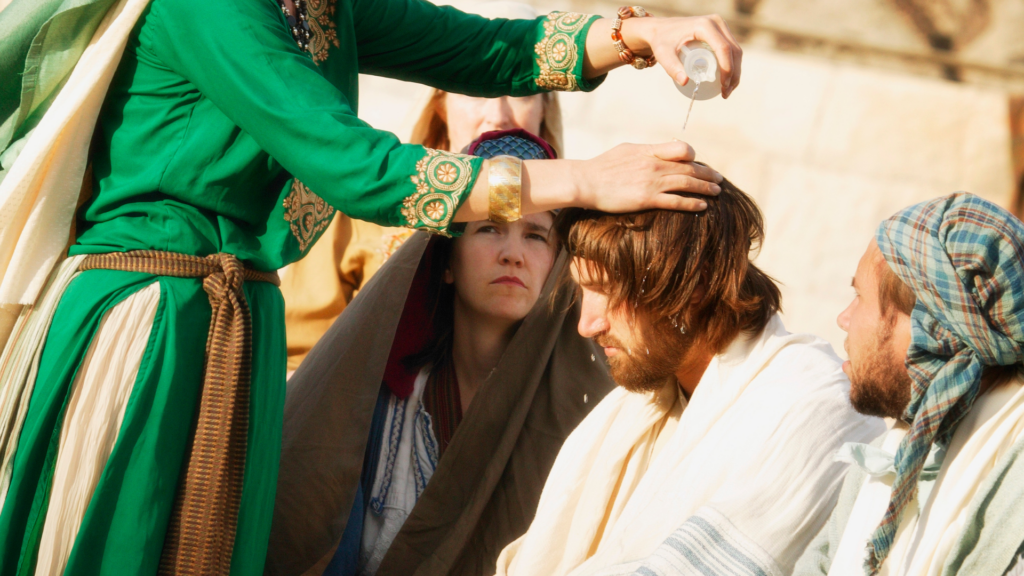
The narrative of David’s life in 1 Chronicles begins not with the crown but with a shepherd’s staff. David’s early life, characterized by his shepherd’s heart and anointing by the prophet Samuel, sets the stage for his eventual ascent to the throne.
Reign as king
As David ascends to the throne, his reign is filled with military triumphs, poetic psalms, and profound encounters with God.
The chronicler details David’s victories, his deep commitment to worship, and the establishment of Jerusalem as the political and spiritual center.
Unraveling the layers of David’s reign unveils the complexities of leadership and the intricate balance between divine promise and human response.
Solomon

Solomon, the son of David, emerges as a key figure in the later chapters of 1 Chronicles. His reign is marked by remarkable achievements, most notably the construction of the Temple in Jerusalem and the renowned wisdom bestowed upon him.
Building of the Temple
Solomon’s legacy is linked with the construction of the Temple, a monumental undertaking that underscores the centrality of worship in the life of God’s people.
The meticulous details surrounding the Temple’s planning and construction offer insights into Solomon’s dedication to honoring God and the symbolic significance of this sacred structure.
Wisdom and wealth

Solomon’s reign is not only characterized by physical structures but also by the wisdom and wealth bestowed upon him by God. His renowned wisdom, demonstrated in famous judgments and the Book of Proverbs, adds a layer of depth to the narrative.
Exploring Solomon’s reign allows you to ponder the intersection of divine favor, human responsibility, and the consequences of choices made in the pursuit of wisdom and wealth.
Other characters
1 Chronicles highlights significant individuals who played crucial roles in the history of Israel.
- Adam: The first human created by God, Adam is listed at the very beginning of the genealogical record. His inclusion underscores the origin of humanity and the continuity of God’s plan through generations.
- Abraham: As the patriarch of the nation of Israel, Abraham represents God’s covenant with His chosen people. His descendants form the backbone of the narrative in 1 Chronicles, linking Israel’s history to God’s promises.
- Jacob (Israel): The father of the twelve tribes. His family line plays a critical role in shaping the history of Israel, as chronicled throughout the book.
- Saul: The first king of Israel. He is briefly mentioned to contrast his failure as a king with David’s rise. Saul’s disobedience led to his downfall, and this sets the stage for David’s reign.
- Joab: David’s military commander who played a key role in securing many of David’s victories. His loyalty to David, despite sometimes acting independently, made him a significant figure in David’s military campaigns.
- Nathan the prophet: God’s prophet during David’s reign. He played a critical role in guiding David spiritually. Nathan delivered God’s covenant promises to David, assuring him that his dynasty would endure forever.
- The Levites: A tribe set apart for religious duties, including leading worship, offering sacrifices, and caring for the temple. Their genealogical details are carefully recorded, emphasizing their unique role in Israel’s worship and religious life.
- The mighty men: A group of elite warriors who supported David during his rise to power and his reign as king. Their loyalty and bravery are recorded as they played a vital part in securing David’s victories and establishing his rule.
1 Chronicles Bible study guide: Key passages and their exegesis

These verses emphasize God’s sovereignty, the importance of prayer, the fulfillment of His promises, and the essence of true worship.
1 Chronicles 4:9-10
This passage stands out in the genealogical list, focusing on Jabez, a man whose name means “pain.” Despite this negative connotation, Jabez is described as honorable.
His prayer, which asks for blessing, territory expansion, God’s presence, and protection from harm, reveals a deep trust in God’s provision and care.
The emphasis on God’s willingness to answer such a personal and faith-filled request highlights God’s responsiveness to prayer and His desire to bless His people, even amidst hardship.
1 Chronicles 11:1-3

These verses mark a significant turning point in Israel’s history. David’s anointing as king by all of Israel emphasizes his legitimacy, not only because of his kinship but also due to his leadership abilities and divine appointment.
The reference to God’s earlier word through Samuel shows that David’s kingship was part of God’s plan all along.
David is portrayed as both a ruler and a shepherd, a foreshadowing of the Messianic king who would also shepherd God’s people. This passage underscores God’s sovereignty in leadership and the fulfillment of His promises.
1 Chronicles 17:11-14

This passage contains God’s covenant with David, often referred to as the Davidic Covenant. It promises that David’s lineage will endure, and his son will establish a permanent kingdom by building a house for God (the temple).
The language of father and son indicates a unique relationship between God and David’s descendants. The reference to an everlasting kingdom ultimately points to Jesus Christ, the eternal king from David’s line.
This covenant solidifies God’s unbreakable promise of a future hope for Israel, with David’s dynasty playing a crucial role in His redemptive plan.
1 Chronicles 21:24

This passage occurs after David’s sin of taking a census, which leads to a plague on Israel. God instructs David to build an altar on the threshing floor of Ornan to stop the plague.
Ornan offers the land and animals for free, but David insists on paying the full price, stating that he will not offer to God something that costs him nothing.
This moment reflects David’s understanding of true sacrifice—one that involves personal cost and devotion. The location of this altar later becomes the site of the temple, signifying that sacrifice and worship must stem from genuine commitment and reverence for God.
1 Chronicles Bible study guide: Practical application

Beyond being a historical record, 1 Chronicles offers valuable lessons applicable to contemporary life and faith.
Lessons for modern believers
In the dynamic interplay of leadership and worship depicted in 1 Chronicles, there are lessons for modern believers.
The lives of David and Solomon become windows into virtues such as faithfulness, humility, and the impact of prioritizing worship.
These lessons extend an invitation for reflection on how you can embody these principles in your various leadership roles and cultivate a vibrant worship life.
Faithfulness in leadership

As the narratives of David and Solomon unfold, their lives illustrate the virtues of leadership.
Modern believers can glean insights into the qualities of faithfulness, humility, and reliance on God in navigating the challenges of leadership roles—be it in the context of family, work, or community.
Importance of worship in the Christian life
The emphasis on worship in 1 Chronicles serves as a beacon for contemporary believers. From David’s musical expressions to the construction of the Temple, the importance of worship is a theme that resonates across time.
Modern Christians can draw inspiration for fostering a vibrant, transformative worship life that extends beyond ritualistic practices.
Application to personal devotion

The themes of God’s promises and a commitment to worship in 1 Chronicles are not confined to ancient rituals but resonate deeply with the personal journey of contemporary believers.
The promises made to David evoke a sense of trust and reflection on God’s enduring faithfulness, while the call to a life of worship beckons individuals to embrace a daily rhythm of devotion.
Reflection on God’s promises
The promises made to David in 1 Chronicles 17 invites modern Christians to reflect on the steadfastness of God’s promises.
As individuals grapple with uncertainties and challenges, this theme encourages a deepened trust in the faithfulness of God and a personal reflection on the promises found in Scripture.
Commitment to a life of worship

Beyond the corporate worship highlighted in 1 Chronicles, there is a call for personal devotion. The commitment to a life of worship, modeled by David, extends an invitation to today’s believers to cultivate daily prayer, praise, and devotion.
This application resonates with the Christian journey, emphasizing the transformative power of a life lived in constant communion with God.
1 Chronicles Bible study guide: Relevant cross-references

To grasp the full significance of 1 Chronicles, it’s helpful to explore how its teachings align with other biblical passages.
Connecting 1 Chronicles with other biblical passages
These comparisons show the interconnectedness of 1 Chronicles with the broader biblical narrative, underscoring its theological significance in understanding God’s relationship with His people.
2 Samuel
The reign of King David is a key theme in both 1 Chronicles and 2 Samuel 5-24. While 1 Chronicles emphasizes David’s religious and covenantal role in the nation of Israel, 2 Samuel gives more attention to his personal life, including his moral failures.
Comparing these passages helps highlight how different writers chose to focus on aspects of David’s kingship: 1 Chronicles underscores his role in establishing worship practices and temple preparations, while 2 Samuel shows the complexities of his personal challenges.
1 Kings

1 Chronicles 28-29 describes David’s preparations for the building of the temple and his charge to Solomon, while 1 Kings 2 recounts David’s final instructions to his son. The comparison reveals David’s dual focus on spiritual and political leadership.
In 1 Chronicles, the emphasis is on spiritual continuity, temple construction, and the people’s commitment to God, while 1 Kings focuses more on Solomon’s succession and his need to uphold justice and strength in ruling.
Numbers
1 Chronicles 21 recounts the census that David took, which led to God’s displeasure. Similarly, Numbers 1 details a census taken during the time of Moses. These two passages allow a comparison of the role and purpose of censuses in Israel’s history.
In Numbers, the census serves as preparation for entering the Promised Land, while in 1 Chronicles, David’s census is portrayed as a misstep, demonstrating the consequences of acting independently of God’s direction.
Exploring related themes in the Bible

The themes explored in 1 Chronicles reappear throughout the Bible, reinforcing central theological concepts that shape the narrative of God’s chosen people.
Covenant with David
One of the most prominent themes in 1 Chronicles is the Davidic Covenant. God’s promise to establish David’s throne forever is echoed in 2 Samuel 7, where God makes a similar covenant with David.
This theme of enduring kingship shapes Israel’s understanding of monarchy and lays the foundation for Messianic expectations, as it points to the eternal rule of Christ as the fulfillment of this covenant.
Temple worship and sacrifice

Another key theme in 1 Chronicles is temple worship and sacrifice, particularly in David’s preparation for building the temple. This is closely connected to the sacrificial laws in Leviticus 1-7, which outline the practices of worship through sacrifices.
The connection between these two sets of instructions reveals how 1 Chronicles builds on earlier teachings to emphasize the centrality of the temple as a place where God’s presence dwells among His people.
God’s Sovereignty and Judgment
The theme of God’s sovereignty and judgment is also evident in 1 Chronicles, particularly in the account of David’s census and the resulting judgment on Israel.
This theme is echoed in Exodus 34, where God declares His sovereignty over all creation, affirming that His judgment is both righteous and merciful.
These cross-references reinforce the understanding that while God is patient, He also holds His people accountable for their actions.
1 Chronicles Bible study guide: Addressing common misconceptions

1 Chronicles is often overshadowed by its companion, 2 Chronicles, and sometimes misunderstood due to its genealogical and historical nature. I provide clarity with relevant Scriptural references.
1 Chronicles is just a repetition of 2 Samuel
Many Christians perceive 1 Chronicles as a mere repetition of the events found in 2 Samuel. While it does cover some of the same historical events, such as David’s reign and his preparations for the temple, the focus and purpose are distinct.
1 Chronicles emphasizes the significance of David’s role in establishing proper worship and the Davidic line.
For instance, while 2 Samuel narrates David’s failures and the consequences, 1 Chronicles highlights his successes and preparations for the temple, underscoring the importance of worship and covenant faithfulness (1 Chronicles 22:6-19).
The genealogies in 1 Chronicles are just boring lists

The genealogies in 1 Chronicles, spanning from Adam to the post-exilic period, are often dismissed as irrelevant or tedious. However, these lists serve a vital theological purpose.
They reaffirm God’s covenant with Israel by tracing the lineage of key figures such as David, thus validating the legitimacy of the Davidic dynasty (1 Chronicles 3:1-24). The genealogies also emphasize the continuity of God’s plan and the importance of ancestral heritage in the Israelite faith.
1 Chronicles presents a different account of David’s reign
Some believers assume that 1 Chronicles presents a divergent account of David’s reign compared to other historical books. While it does present a different perspective, it is not contradictory but complementary.
1 Chronicles focuses more on David’s religious reforms and his preparation for the temple, while other books might emphasize his military exploits and personal struggles (1 Chronicles 11:1-3). This focus illustrates the theological message that worship and covenant faithfulness are central to Israel’s identity.
The book is mainly about David’s lineage and nothing more

While 1 Chronicles places significant emphasis on David’s lineage, it also addresses broader themes. The book underscores the centrality of proper worship and the establishment of the temple.
David’s preparations for the temple and his instructions to Solomon highlight the importance of worship and the covenant relationship between God and Israel (1 Chronicles 28:9-10). Thus, the book is not merely a record of lineage but a profound commentary on worship and obedience.
1 Chronicles is not relevant for modern believers
Some might view 1 Chronicles as outdated or irrelevant for contemporary Christians. However, the book’s themes of worship, obedience, and covenant faithfulness are timeless.
The emphasis on worship, as seen in David’s preparations for the temple and his emphasis on the Levites’ roles (1 Chronicles 16:4-6), remains relevant. It encourages believers to understand the importance of worship and to recognize the significance of living in alignment with God’s covenant.
1 Chronicles Bible study questions

These questions designed for individual contemplation and group discussion, invite you to delve deeper into the themes, and teachings highlighted in 1 Chronicles.
Questions for individual reflection
Q1: In 1 Chronicles, we encounter the genealogy of David and other key figures. How does tracing these ancestral lines deepen your understanding of God’s redemptive plan?
Q2: David’s commitment to worship is a recurring theme. How can you incorporate a similar passion for worship into your daily life?
Q3: Reflect on a challenging moment in David’s life, such as his encounter with Bathsheba. How does God’s response to David’s repentance offer hope and guidance for your own moments of remorse and restoration?
Q4: Consider the construction of the Temple in 1 Chronicles. How does the significance of the Temple impact your understanding of sacred spaces and worship today?
Q5: In 1 Chronicles 29:11, God’s sovereignty is proclaimed. How does recognizing God’s sovereignty influence your trust in His plans for your life?
Q6: Explore David’s leadership qualities in 1 Chronicles. How can you apply his virtues of humility, faithfulness, and dependence on God in your leadership roles or responsibilities?
Q7: The genealogies in 1 Chronicles might seem extensive. Consider the significance of genealogy in preserving a sense of identity and heritage. How does your family history impact your identity?
Q8: Reflect on the role of music in David’s life. How does the creative expression of worship, such as music or art, contribute to your spiritual journey?
Q9: As you read about Solomon’s wisdom, consider the value of seeking wisdom in your decision-making processes. How can you actively pursue wisdom in various aspects of your life?
Q10: The division of the kingdom is a pivotal moment in Israel’s history. Reflect on instances of division in your own life or community. How can unity and reconciliation be pursued in such situations?
1 Chronicles Bible study guide: Group discussion questions

Q1: How do the genealogies in 1 Chronicles contribute to the overall narrative, and what significance do they hold for the community of believers?
Q2: Discuss the role of worship in 1 Chronicles. How can a community foster a culture of worship that goes beyond rituals and becomes a transformative experience?
Q3: Explore the theme of leadership in 1 Chronicles, considering both positive and negative examples. How can these insights be applied to contemporary leadership models?
Q4: The construction of the Temple is a significant event in 1 Chronicles. How can physical spaces impact the spiritual life of a community today, and what parallels can be drawn between the Temple and modern places of worship?
Q5: In 1 Chronicles, God’s sovereignty is evident. How does the recognition of God’s sovereignty influence the way a community navigates challenges and uncertainties?
Q6: Discuss the portrayal of David’s repentance and God’s response. How can the community support individuals in their journey of repentance and restoration?
Q7: Explore the importance of unity and reconciliation in the context of the division of the kingdom in 1 Chronicles. How can these principles be applied in contemporary communities facing division?
Q8: Reflect on the creative expressions of worship highlighted in 1 Chronicles, such as music and psalmody. How can the community encourage and celebrate diverse forms of worship and artistic expression?
Q9: Consider the wisdom of Solomon in 1 Chronicles. How can a community actively seek and cultivate wisdom in decision-making processes?
Q10: The themes of God’s promises and covenant are prevalent in 1 Chronicles. Discuss how a community can draw strength and assurance from these promises in times of uncertainty and change.
Start reading 1 Chronicles today
Embark on the exploration of the Book of 1 Chronicles today to enrich your understanding of God’s redemptive plan. For a deeper dive into the details of 1 Chronicles, consider exploring Bible studies dedicated to individual chapters.

I’m a devoted follower of Christ on a journey to share the profound love, faith, and hope found in our Savior. Through my writings, I aim to inspire, uplift, and encourage fellow believers as we walk together in God’s light. Join me in exploring the beauty of faith and discovering the richness of a life rooted in Christ.


