

Have you ever wondered how ancient laws and covenant principles could still be relevant today? The Book of Deuteronomy offers profound insights into God’s instructions for His people, emphasizing faithfulness, obedience, and the importance of loving God with all your heart. This Bible study guide explores the practical lessons from Deuteronomy that continue to shape the lives of believers today.
Deuteronomy Bible study guide: Brief overview
Deuteronomy, derived from the Greek words “deuteros” (second) and “nomos” (law), essentially signifies the “second law.”
It consists of a series of speeches delivered by Moses to the Israelites on the plains of Moab, just before they enter the long-awaited Promised Land.
The book highlights God’s covenant with His people and outlines the moral and legal framework that will govern their lives. Here is a summary of Deuteronomy:
| Category | Details |
|---|---|
| Author | Traditionally attributed to Moses, though some parts may have been edited or added later (such as Moses’ death in Deuteronomy 34). |
| Date of writing | Approx. 1406 B.C. (end of Moses’ life). |
| Purpose | To restate the law to a new generation of Israelites before entering the Promised Land and to renew their covenant with God. |
| Recipients | The Israelites, particularly the new generation born during the 40 years of wandering in the wilderness. |
| Historical context | Deuteronomy was written at the end of Israel’s 40 years of wandering in the wilderness, just before they crossed the Jordan River to enter the Promised Land. |
| Key themes | Covenant renewal with God, leadership, obedience to God’s laws, God’s faithfulness to His promises, and blessings for obedience and curses for disobedience. |
| Notable verses | Deuteronomy 6:4-5, 8:3, 18:15, 28:1-2, 30:19-20. |
| Application for today | Teaches the importance of loving God with all one’s heart, soul, and strength while encouraging obedience to God’s commandments. |
Importance of studying Deuteronomy

Studying Deuteronomy is crucial for a comprehensive understanding of the biblical narrative and the theological underpinnings of the Old Testament.
It serves as a bridge between the historical narratives of Exodus, Leviticus, and Numbers, and the Israelites’ impending entry into Canaan.
Through its teachings on covenant, law, and worship, Deuteronomy lays the foundation for the Israelites’ relationship with God and offers timeless principles that resonate with believers today.
Purpose of the Deuteronomy Bible study guide
This study guide aims to facilitate a deeper exploration of the profound themes and teachings embedded in the book.
By providing a comprehensive overview, delving into historical context, and offering practical applications, this guide seeks to equip believers with the tools needed to engage with Deuteronomy on a personal and spiritual level.
Through this study guide, you are invited to uncover the enduring relevance of Deuteronomy and draw meaningful insights for your own journey of faith.
Deuteronomy Bible study guide: Background information
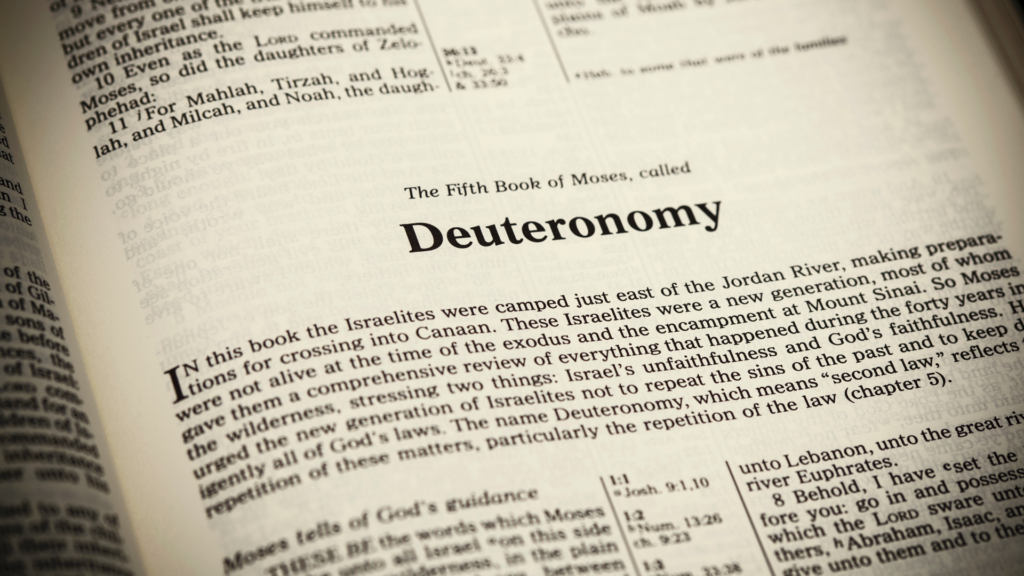
The contextual background of the Book of Deuteronomy provides a crucial foundation for understanding its significance within the larger biblical narrative.
Historical context
Deuteronomy was written during a critical transition in Israel’s history. The Israelites were at the plains of Moab, on the verge of entering Canaan, after spending 40 years wandering in the desert due to their disobedience.
The book is framed as Moses’ farewell address to the new generation of Israelites. Their parents, the generation that had been delivered from Egypt, had died in the wilderness because of their unbelief.
Now, as they stood on the cusp of taking possession of the Promised Land, Moses reminded them of God’s laws and covenant. He emphasized the need for loyalty to God alone and warned of the consequences of disobedience.
The book is set in the final months of Moses’ life (around the 13th century BC), as he handed over leadership to Joshua and reminded the Israelites of their history, laws, and covenant obligations before they crossed the Jordan River into the Promised Land.
Deuteronomy as part of the Pentateuch

Deuteronomy holds a unique place within the Pentateuch, the first five books of the Bible, which also includes Genesis, Exodus, Leviticus, and Numbers.
Often referred to as the Torah or the Law, the Pentateuch lays the foundational narrative for the Israelite faith. Deuteronomy, serving as the concluding segment of this literary collection, stands as a testament to the continuity of God’s covenant with His chosen people.
It synthesizes and reinforces the principles, laws, and narratives presented in the preceding books, forming a cohesive narrative that guides the Israelites in their worship, morality, and covenant relationship with God.
As such, studying Deuteronomy is not only a journey into its standalone significance but also an exploration of the broader theological framework established in the Pentateuch.
Cultural context

In the cultural context of ancient Israel, Deuteronomy reflects the values and practices of a theocratic society where religion and governance were deeply intertwined. The laws provided in the book were not just religious guidelines but also societal rules, covering everything from worship practices to social justice.
The Israelites were transitioning from a nomadic lifestyle in the desert to a more settled, agrarian existence in Canaan, so many of the laws focused on how they should live as a distinct, holy people in the land they were about to inherit.
Canaan, the land they were entering, was inhabited by people who practiced idolatry and other religious customs that God found detestable.
One of the key themes in Deuteronomy is the command to avoid adopting the practices of these surrounding nations and to remain set apart as God’s chosen people. This cultural tension between the Israelites and their future neighbors underpins much of the book’s exhortations.
Authorship and date of writing

Traditionally, Moses is credited with the authorship of Deuteronomy, as it consists largely of his speeches to the Israelites. The book’s content directly records Moses’ words and actions, though the final chapter, which details his death, was likely added by a later editor, possibly Joshua or another prophet.
Scholars who hold to Mosaic authorship generally place the writing of Deuteronomy around the 13th century BC. However, some modern critical scholars suggest that parts of the book may have been written or edited much later.
The exact date of writing is estimated to be around 1408–1406 B.C., placing it within the broader timeline of the Israelites’ journey from slavery in Egypt to their anticipated settlement in Canaan.
Despite this, Deuteronomy remains deeply rooted in the Mosaic tradition, reflecting the core laws and theology that Moses imparted to Israel.
Deuteronomy Bible study guide: Structure of the book

Deuteronomy is meticulously structured, presenting its message through a series of sermons and speeches delivered by Moses.
This intentional organization contributes to the coherence of the text and serves as a literary framework for conveying critical themes and teachings.
Division into sermons and speeches
Deuteronomy is unique in its presentation, comprising a collection of speeches and sermons by Moses to the Israelites.
These orations are delivered on the plains of Moab, providing a reflective pause in the Israelites’ journey before entering the Promised Land.
The division into speeches allows for a focused exploration of various aspects of the covenant, law, and ethical principles, creating a structured and comprehensive guide for the nation.
Overview of key chapters and sections

The book is divided into several key chapters and sections, each contributing to the overall narrative and theological depth.
| Chapters | Details |
|---|---|
| Covenant renewal (29-30) | Moses reinforces the covenant between God and the people, highlighting its terms and the consequences of obedience or disobedience. |
| The Shema and the Great Commandment (6:4-9) | This pivotal passage, known as the Shema, highlights the importance of monotheism and the command to love God with all one’s heart, soul, and strength. |
| Laws and ethical principles (12-26) | Moses provides a detailed exposition of laws, including ethical and moral guidelines, intended to govern the lives of the Israelites. |
| Blessings and curses (28) | The consequences of obedience and disobedience are depicted, reinforcing the conditional nature of God’s covenant. |
| Moses’ farewell and blessings (31-34) | Moses delivers his farewell address, blesses the tribes individually, and climbs Mount Nebo to view the Promised Land before his death. |
Emphasis on the Shema (Deuteronomy 6:4-9)

Central to the structure of Deuteronomy is the profound emphasis on the Shema, found in Deuteronomy 6:4-9. The Shema, a declaration of the oneness of God, serves as a foundational creed for the Israelites.
In Deuteronomy 6:4-5 (NIV), it states: “Hear, O Israel: The LORD our God, the LORD is one. Love the LORD your God with all your heart and with all your soul and with all your strength.”
This passage is a theological cornerstone and a cry for wholehearted devotion and obedience to God.
Emphasizing the centrality of monotheism and the command to love God, the Shema highlights the importance of the covenant and serves as a unifying declaration for the Israelite community.
The structure of Deuteronomy, with its division into speeches, thematic chapters, and a profound emphasis on the Shema, contributes to the cohesiveness and theological richness of this foundational book within the biblical narrative.
Literary style

Deuteronomy is structured as a series of speeches to emphasize the covenant between God and His people. Other literary techniques include:
- Speech form: Deuteronomy is structured as a series of speeches or discourses delivered by Moses to the Israelites before they enter the Promised Land. These speeches are reflective, didactic, and exhortative in nature.
- Covenantal format: The book follows the ancient Near Eastern suzerain-vassal treaty format, which includes elements like a preamble, historical prologue, stipulations, blessings and curses, and witness statements. This structure enhances the legal and formal tone of the text.
- Repetition: Key ideas and laws from earlier books, especially Exodus and Leviticus, are reiterated. This repetition serves to reinforce the covenantal obligations of Israel.
- Legal and instructional tone: Much of the text is prescriptive, laying out laws, commandments, and statutes. The style is direct, authoritative, and often formulaic, using phrases like “Hear, O Israel” and “The LORD your God.”
- Exhortation and warning: Moses’ speeches are filled with warnings and encouragements, using vivid language and emotional appeals to stir the hearts of the listeners, urging obedience to God.
- Poetic and hymnic elements: The book includes sections of poetry, such as the Song of Moses (Deuteronomy 32) and the Blessing of Moses (Deuteronomy 33), adding a lyrical quality to the text.
- Use of second person: The language is predominantly in the second person, addressing the Israelites directly (“you” and “your”). This creates a personal and communal sense of accountability.
- Rhetorical questions: Moses frequently uses rhetorical questions to provoke thought and reflection among the Israelites, making his speeches more engaging.
- Historical retrospective: Deuteronomy includes a recounting of Israel’s past, written in a narrative style that reflects on their journey through the wilderness and their covenant relationship with God.
- Covenant renewal ceremony: The style of the book evokes a formal ceremony where the covenant between God and Israel is renewed. This is reflected in the solemn and ceremonial language throughout.
Deuteronomy Bible study guide: Major milestones in Deuteronomy
Deuteronomy marks a pivotal moment in Israel’s history as Moses delivers his farewell address to the Israelites. Preparing them for life in the Promised Land, the book recounts these milestones:
| Event/period | Summary |
|---|---|
| Background (Exodus) | Israelites enslaved in Egypt; Moses leads them out in the Exodus (Exodus 1-15). |
| Travel and wilderness | Wandering in the wilderness for 40 years due to disobedience; events recorded in Numbers (Numbers 14-20). |
| Near the Promised Land | Israel arrives at the border of Canaan, and Moses prepares to address the nation (Deuteronomy 1:1-5). |
| Moses’ speeches | A series of farewell speeches and sermons by Moses (Deuteronomy 1-30). |
| Covenant renewal | Moses renews the covenant between God and Israel, emphasizing obedience and commitment (Deuteronomy 29). |
| Commandments and laws | Detailed instructions regarding moral, ethical, and legal principles for the Israelites (Deuteronomy 5-26). |
| Promised blessings | If Israel obeys, they are promised blessings, prosperity, and success in the Promised Land (Deuteronomy 28:1-14). |
| Curses for disobedience | Consequences outlined for disobedience, including exile and suffering (Deuteronomy 28:15-68). |
| Moses’ blessing and death | Moses blesses each tribe individually, climbs Mount Nebo, views the Promised Land, and dies (Deuteronomy 33-34). |
| Entrance to Canaan | Joshua succeeds Moses, leading the Israelites into the Promised Land and conquering Jericho (Joshua 1-6). |
| Legacy of Deuteronomy | The principles and teachings of Deuteronomy continue to influence the Israelites throughout their history and beyond (Nehemiah 8:1-18; Matthew 22:37-40; Mark 12:29-31; Luke 10:27; Romans 13:9). |
Unique contributions of Deuteronomy to the biblical narrative
Deuteronomy brings distinctive elements to the biblical narrative, contributing to its theological richness.
Covenant renewal
While other books highlight the establishment of the covenant, Deuteronomy uniquely focuses on its renewal. The covenantal relationship between God and the Israelites is reiterated, emphasizing the enduring nature of God’s commitment.
Farewell speeches
Deuteronomy contains Moses’ farewell speeches, providing a reflective conclusion to the narrative. These speeches highlight the importance of the entire Pentateuch and set the stage for the Israelites’ future.
Deuteronomy Bible study guide: Key themes
Delving into the Book of Deuteronomy reveals profound themes that resonate throughout the narrative. These themes shape the Israelites’ journey and offer timeless wisdom and guidance.
Covenant and relationship with God
The covenant between God and His people forms the bedrock of Deuteronomy, emphasizing the intimate relationship and responsibilities shared between them.
The renewal of the covenant
In Deuteronomy, Moses renews the covenant between God and the Israelites, reminding them of their unique relationship with the Lord.
This renewal emphasizes that the covenant is not just for the generation that left Egypt, but for all future generations of Israel. The covenant is a binding agreement that calls the Israelites to remain faithful to God as their sovereign ruler.
Obedience and blessings

The covenant promises blessings to the Israelites if they obey God’s commandments. Obedience is linked to prosperity, peace, and continued favor from God.
The law is not merely a set of rules but a path to living under God’s favor and experiencing His blessings in their land.
Consequences of disobedience
On the other hand, disobedience leads to curses and severe consequences, including exile, defeat in battle, and suffering.
Deuteronomy makes it clear that breaking the covenant brings God’s judgment, and the people are warned repeatedly to keep His commandments to avoid these dire consequences.
Law and morality

Deuteronomy provides a comprehensive framework for ethical living and moral conduct, grounded in the divine law.
The giving of the law
Moses reiterates the law given at Mount Sinai, expanding on the Ten Commandments and giving detailed instructions for various aspects of life, including social justice, religious practices, and governance.
The law serves as a guide for maintaining a just and moral society that reflects God’s holiness.
Ethical principles in Deuteronomy

Deuteronomy emphasizes ethical living, urging the Israelites to act with justice, compassion, and righteousness.
Key principles include caring for the vulnerable, treating others fairly, and upholding the sanctity of life. These laws highlight the moral responsibility of the Israelites toward one another and toward God.
Application to contemporary life
The ethical teachings of Deuteronomy remain relevant today, offering timeless principles of justice, fairness, and love for others.
Believers are called to apply these moral guidelines in their daily lives, upholding values such as kindness, honesty, and respect for others as part of their covenant relationship with God.
Worship and the Promised Land

Woven into Deuteronomy is a profound exploration of worship and the anticipation of entering the Promised Land. These themes offer insights into the practices of the Israelites and carry relevance for believers today.
Instructions for worship
Deuteronomy provides detailed instructions on how the Israelites are to worship God, including the establishment of a central place for worship and the proper conduct of sacrifices.
Worship is to be done in a manner that honors God’s holiness, and the Israelites are forbidden from adopting pagan practices.
Anticipation of entering the Promised Land

As the Israelites stand on the threshold of the Promised Land, Deuteronomy prepares them for life in this new land. Moses emphasizes that their success in the Promised Land depends on their faithfulness to God and obedience to His commands.
The land is a gift from God, and their continued possession of it is conditional on their adherence to the covenant.
Relevance for believers today

For modern believers, the Promised Land symbolizes God’s promises and His faithfulness.
Worship remains central to the Christian life, and just as the Israelites were called to worship God in truth and purity, believers today are called to offer their lives as spiritual worship, honoring God through obedience and devotion.
Deuteronomy Bible study guide: Key characters
The Book of Deuteronomy introduces us to key figures who played pivotal roles in the unfolding narrative of the Israelites. These characters, particularly Moses and Joshua, leave an unerasable mark on the journey of the nation and the establishment of their covenant with God.
Moses
Moses stands as a towering figure in Deuteronomy, serving as the primary leader and mediator between God and the Israelites.
Role as the leader
Moses assumes the role of a visionary leader, prophet, and lawgiver for the Israelite community.
In Deuteronomy, his leadership takes center stage as he delivers a series of speeches and sermons, providing guidance, reiterating the covenant, and preparing the Israelites for their entry into the Promised Land.
Relationship with God

Moses’ relationship with God is characterized by intimacy and dialogue. In Deuteronomy 34:10 (NIV), the text affirms, “Since then, no prophet has risen in Israel like Moses, whom the LORD knew face to face.”
This intimate connection with God underscores Moses’ unique position in biblical history. His encounters with God on Mount Sinai and throughout the wilderness journey shape the narrative of Deuteronomy, reflecting a profound and personal relationship with the Almighty.
Joshua
Joshua emerges as a significant figure in the latter part of Deuteronomy, taking on the mantle of leadership and guiding the Israelites into the Promised Land.
Successor to Moses
As Moses’ successor, Joshua is appointed to lead the Israelites into Canaan.
Deuteronomy 31:7-8 (NIV) captures this transition: “Then Moses summoned Joshua and said to him in the presence of all Israel, ‘Be strong and courageous, for you must go with this people into the land that the LORD swore to their ancestors to give them, and you must divide it among them as their inheritance.'”
Leadership in the conquest of Canaan

Joshua’s leadership becomes central to the conquest of Canaan, as chronicled in the subsequent Books of Joshua and Judges.
He leads the Israelites across the Jordan River, oversees the miraculous fall of Jericho, and plays a crucial role in securing the land promised to their forefathers.
Moses and Joshua, each in their unique capacities, contribute significantly to the narrative of Deuteronomy.
Moses, the visionary leader and mediator of God’s covenant, lays the groundwork, while Joshua, as his successor, carries the mantle of leadership into the long-awaited Promised Land.
Other characters

Here are other characters that shape the narrative of Deuteronomy.
- The Israelites: The entire book addresses the Israelites as they prepare to enter the Promised Land. Moses urges them to remember their covenant with God, to obey the laws, and to remain faithful to Him. Moses warns the Israelites of the blessings that come from obedience and the curses that follow disobedience (Deuteronomy 28).
- God (Yahweh): God is portrayed as the sovereign ruler and covenant-keeper. His character is consistently revealed through His laws, promises, and warnings delivered by Moses. God’s faithfulness and justice are emphasized throughout the book. God reaffirms His covenant with Israel through Moses and provides clear instructions for blessings and curses depending on their obedience or disobedience (Deuteronomy 29:9–15).
- The Levites: The Levites play a key role in teaching the law to the people and ensuring its observance. They are given specific instructions regarding their duties, offerings, and inheritance. Moses instructs the Levites to read the law to all Israel every seven years to ensure the people remain faithful to God’s commandments (Deuteronomy 31:9–13).
Deuteronomy Bible study guide: Key passages and their exegesis
These passages provide a deep theological foundation for understanding Israel’s covenant with God, the importance of obedience, and the consequences of their choices.
Deuteronomy 6:4-5
This passage, known as the Shema, is one of the most foundational texts in Judaism and Christian theology. The word “Shema” means “hear” or “listen,” emphasizing the importance of listening and internalizing God’s Word.
The declaration of God’s oneness establishes monotheism at the core of Israel’s faith. The call to love God “with all your heart, soul, and strength” is a command to total devotion, encompassing every aspect of one’s being.
This love is not merely emotional but is demonstrated through obedience to God’s commandments (Deut. 6:6-9). The Shema also serves as a daily affirmation of faith for the Israelites, reminding them of their covenant relationship with God.
Deuteronomy 8:2-3

This passage highlights the purpose of Israel’s wilderness experience. It wasn’t just a physical journey but a spiritual one designed to humble and test the Israelites.
God’s provision of manna teaches a profound spiritual truth—that physical sustenance is not enough for life; it is God’s Word that truly sustains.
Jesus later quotes this verse during His temptation in the wilderness (Matthew 4:4), showing its enduring significance.
The Israelites’ experience serves as a reminder to future generations of God’s faithfulness and the importance of relying on Him, not just for physical needs but for spiritual nourishment as well.
Deuteronomy 18:15

This prophecy points to the future role of prophets in Israel’s history, but it also carries a messianic significance. Moses, as the mediator between God and the Israelites, foreshadows a greater Prophet to come—Jesus Christ.
In Acts 3:22, Peter applies this verse to Jesus, recognizing Him as the fulfillment of this promise. The passage anticipates the prophetic office and emphasizes the importance of listening to God’s chosen spokesperson.
It is a call for obedience to divine revelation, whether through Moses, future prophets, or ultimately, Christ.
Deuteronomy 30:19-20

In this climactic moment, Moses presents Israel with a choice—life or death, blessings or curses. Choosing life means loving God, obeying His commands, and remaining faithful to Him.
This passage underscores the concept of covenantal blessings tied to obedience. It reflects the heart of Deuteronomy’s message: the law isn’t just a set of rules but a pathway to life and flourishing.
This invitation to “choose life” also foreshadows the New Testament’s emphasis on the offer of eternal life through faith in Christ.
The phrase “the Lord is your life” encapsulates the central truth that life, both physical and spiritual, is found in a relationship with God.
Deuteronomy Bible study guide: Practical application

The Book of Deuteronomy, though rooted in the historical context of the Israelites, offers practical lessons that resonate across time.
Lessons for individual and community living
Deuteronomy provides valuable principles for harmonious living both as individuals and within a community.
- Ethical conduct and justice: The emphasis on ethical conduct and justice, as outlined in Deuteronomy, serves as a blueprint for fostering fairness, compassion, and righteousness within our personal lives and communities.
- Covenantal relationships: The covenantal relationships described in Deuteronomy highlight the importance of loyalty, trust, and commitment. These principles, when applied to our relationships, contribute to the strength and resilience of our communities.
Insights for spiritual growth

The spiritual journey depicted in Deuteronomy serves as a source of inspiration for personal and communal spiritual growth.
- Wholehearted devotion: The Shema’s call for wholehearted devotion to God provides a foundational principle for spiritual growth. Embracing this devotion cultivates a deeper connection with God and fuels personal transformation.
- Trust in divine guidance: Moses’ relationship with God and the Israelites’ journey underscores the importance of trust in divine guidance. Applying this principle invites spiritual growth through reliance on God’s wisdom and direction.
Reflection on personal obedience and commitment

Deuteronomy challenges believers to reflect on their personal obedience to God’s commands and their commitment to the covenant.
- Obedience as a path to blessings: The correlation between obedience and blessings in Deuteronomy prompts believers to assess their own obedience to God’s commands and the blessings that flow from a life aligned with divine principles.
- Renewed commitment: The renewing of the covenant in Deuteronomy serves as a call for Christians to renew their commitment to God. This reflection invites a conscious and intentional commitment to live according to God’s will.
Deuteronomy Bible study guide: Relevant cross-references

It’s essential to interlink Deuteronomy with other passages to gain a richer perspective on the lessons found in the book.
Comparison with other biblical passages
Connecting Deuteronomy with other Scriptures reveals both the continuity and development of its legal and moral instructions, showing how it fits within the broader biblical narrative.
Exodus
Exodus 20:1-17 contains the Ten Commandments, which form a foundational part of the legal and moral framework in Deuteronomy.
Comparing these commandments with their restatement in Deuteronomy 5 reveals both continuity and development in the legal instructions provided to the Israelites.
Leviticus
Leviticus 26:3-13 outlines blessings for obedience and curses for disobedience, similar to the blessings and curses described in Deuteronomy 28.
This comparison highlights the consequences of Israel’s faithfulness or infidelity to God’s covenant and reinforces the conditional nature of the blessings promised to them.
Joshua
In Joshua 1:7-9, God commands Joshua to be strong and courageous, urging him to meditate on the law and obey it.
This passage parallels the emphasis in Deuteronomy on adhering to God’s commandments and demonstrates how the principles of Deuteronomy were to guide the Israelites even after Moses’ death.
Deuteronomy Bible study guide: Exploring related themes

Examining similar themes provides additional insights into the teachings of Deuteronomy, helping you appreciate the impact of its message across different contexts in the Bible.
Covenant and obedience
The theme of covenant and obedience is central in Deuteronomy, where the Israelites are reminded of their commitment to God and the need to follow His laws.
This theme is echoed in Genesis 17:1-14, where God establishes His covenant with Abraham, and in Jeremiah 31:31-34, where the promise of a new covenant is made, emphasizing internal transformation and obedience.
Justice and righteousness

Deuteronomy places a strong emphasis on justice and righteousness, particularly in its legal codes and social instructions.
This theme is further explored in Micah 6:8, which encapsulates the call for justice, mercy, and humility, and in Proverbs 21:3, where the pursuit of justice and righteousness is deemed more acceptable to God than mere ritualistic offerings.
The role of remembrance and teaching
Deuteronomy frequently underscores the importance of remembering and teaching God’s commands to future generations.
This theme is mirrored in Psalm 78:5-7, which speaks of the duty to pass on God’s teachings to one’s descendants, and in 2 Timothy 3:14-17, where Paul advises Timothy to continue in the teachings he has learned, highlighting the enduring value of scripture.
Deuteronomy Bible study guide: Addressing common misconceptions
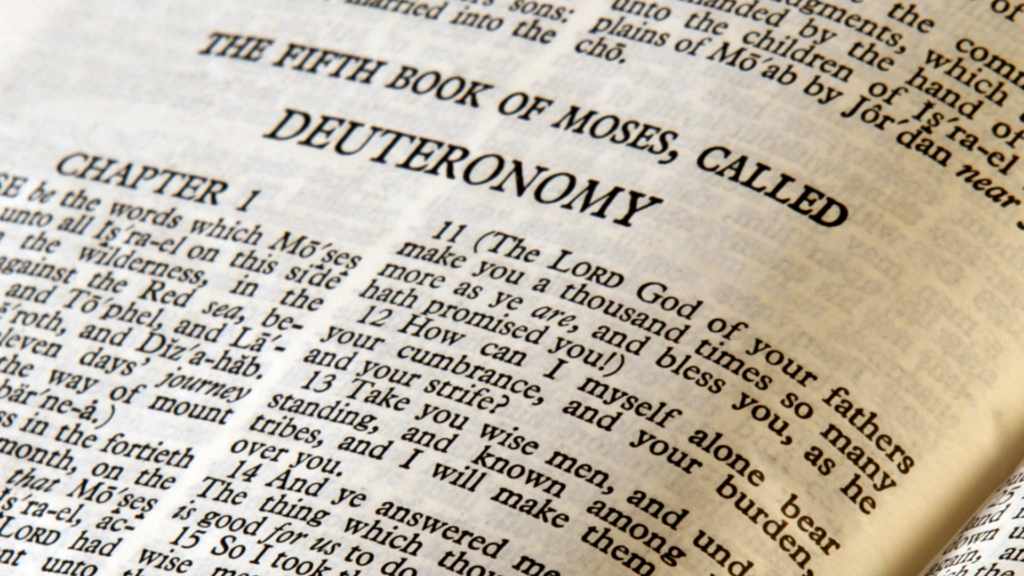
Deuteronomy is often misunderstood due to its legal and historical content. I provide clarity to help you appreciate the depth and relevance of this book.
Deuteronomy is just a repetition of laws
While Deuteronomy does revisit laws from earlier books, it serves a broader purpose. It not only repeats but also expands upon the laws, presenting them in the context of a new generation about to enter the Promised Land.
For instance, the laws related to justice and worship are reaffirmed but also tailored to address the specific circumstances of the Israelites as they transition from a nomadic to a settled lifestyle (Deuteronomy 6:1-25).
The book promotes legalism

Deuteronomy is often seen as promoting a legalistic approach to faith. However, it emphasizes the importance of loving and obeying God from the heart rather than merely following a set of rules.
Moses stresses that adherence to the commandments is a response to God’s love and covenant, not merely a ritualistic practice (Deuteronomy 10:12-13). The focus is on a relationship with God that flows from sincere devotion rather than mere compliance.
Deuteronomy advocates for brutal punishments

Some interpret Deuteronomy’s laws on punishment as excessively harsh. However, these laws were designed for a specific historical and cultural context, aimed at maintaining order and justice within the community.
The text includes provisions for mercy and protection, such as cities of refuge for those who accidentally commit manslaughter (Deuteronomy 19:1-13).
The legal system described was more about ensuring justice and maintaining societal order rather than implementing arbitrary cruelty.
Deuteronomy’s commands are outdated and irrelevant

While some commands in Deuteronomy are specific to ancient Israel, the principles behind them remain relevant. The emphasis on justice, compassion, and faithfulness transcends cultural and historical boundaries.
For instance, the command to love one’s neighbor as oneself (Deuteronomy 6:5, 15:7-11) is foundational and continues to be a guiding principle in Christian ethics and moral teachings.
Deuteronomy contradicts the New Testament

Deuteronomy is sometimes seen as conflicting with New Testament teachings, particularly concerning grace and law.
However, Jesus and the New Testament writers often refer back to Deuteronomy, indicating its ongoing relevance and coherence with New Testament principles.
For example, Jesus cites the Shema from Deuteronomy 6:4-5 as the greatest commandment, highlighting its foundational role in understanding God’s will (Matthew 22:37-40).
Deuteronomy Bible study questions

These questions facilitate individual reflection and foster meaningful group discussions, encouraging a deeper exploration of Deuteronomy.
Questions for individual reflection
Q1: How does the concept of covenant in Deuteronomy shape your understanding of your relationship with God?
Q2: In what ways does the call for obedience and blessings in Deuteronomy resonate with your own life journey?
Q3: Reflect on the significance of the Shema (Deuteronomy 6:4-9) in your personal spiritual life. How can you apply its principles daily?
Q4: How does the idea of justice in Deuteronomy influence your perspective on ethical living and social responsibility?
Q5: Consider the consequences of disobedience outlined in Deuteronomy 28. How does this impact your choices and actions?
Q6: In what aspects of your life can you see the relevance of the laws and ethical principles presented in Deuteronomy?
Q7: Reflect on Moses’ role as a leader and mediator. How can his qualities be emulated in contemporary leadership contexts?
Q8: How does the anticipation of entering the Promised Land in Deuteronomy inspire hope and trust in your personal journey?
Q9: Explore the concept of love for God with all your heart, soul, and strength. How can this love be expressed in practical terms in your daily life?
Q10: In what ways can you renew your commitment to God, drawing inspiration from the renewals of the covenant in Deuteronomy?
Deuteronomy Bible study guide: Group discussion questions

Q1: How does understanding the historical and cultural context of ancient Israel enhance our interpretation of Deuteronomy?
Q2: Discuss the role of leaders in Deuteronomy, focusing on Moses and Joshua. How do their leadership styles differ, and what lessons can be gleaned for contemporary leadership?
Q3: Explore the concept of covenant renewal in Deuteronomy. How does this renewal impact the trajectory of the Israelites’ journey?
Q4: In Deuteronomy, justice is a recurring theme. How can the principles of justice outlined in the text inform our approach to social justice in the modern context?
Q5: Examine the theological continuity between Deuteronomy and other Old Testament books. How do shared themes contribute to the coherence of the biblical narrative?
Q6: Consider the challenges in understanding Deuteronomy, including cultural and historical differences. How can we overcome these challenges to glean deeper insights?
Q7: Discuss the potential theological questions and contradictions that may arise in Deuteronomy. How can these apparent challenges deepen our understanding of God’s nature?
Q8: Reflect on the Shema and its significance in Deuteronomy. How can we practically incorporate its principles into our communal worship and personal spiritual practices?
Q9: Explore the concept of blessings and curses in Deuteronomy 28. How do these consequences shape our understanding of divine justice and accountability?
Q10: Address common misconceptions about Deuteronomy. How can a more accurate interpretation of the book impact our theological perspectives and daily lives?
Begin exploring Deuteronomy today
Studying Deuteronomy shapes your understanding of covenant, obedience, and justice. I encourage you to dive deeper into the book. Read its chapters individually and engage with the text to grasp its profound teachings.

I’m a devoted follower of Christ on a journey to share the profound love, faith, and hope found in our Savior. Through my writings, I aim to inspire, uplift, and encourage fellow believers as we walk together in God’s light. Join me in exploring the beauty of faith and discovering the richness of a life rooted in Christ.


