What profound insights does the Book of Ephesians hold for your spiritual journey today? In this comprehensive Bible study guide, I delve into the invaluable messages of Ephesians, exploring themes of unity, grace, and spiritual growth. Discover how Paul’s teachings can inspire and transform your faith journey.
Ephesians Bible study guide: Brief overview
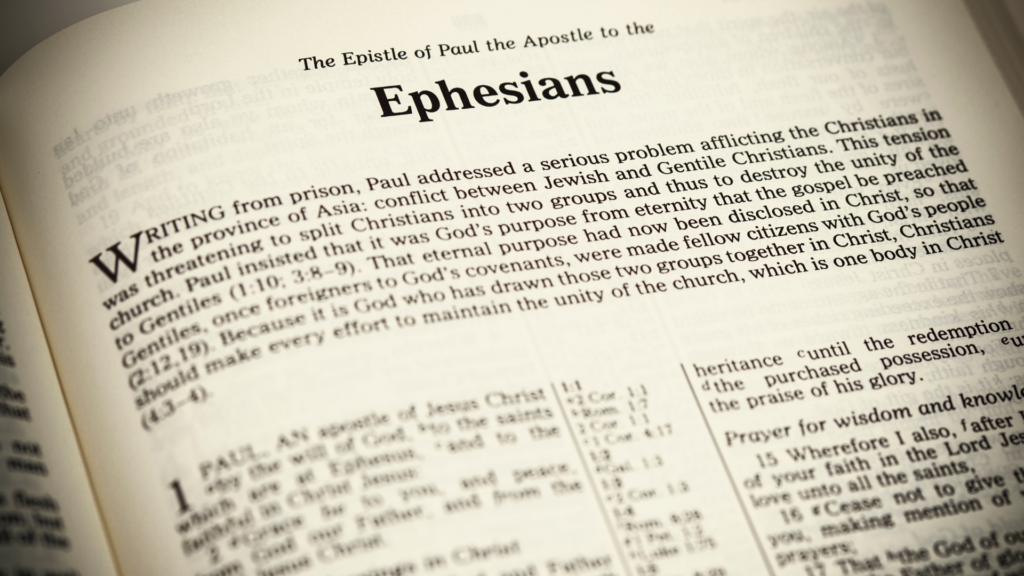
The Book of Ephesians, attributed to the Apostle Paul, is a profound epistle in the New Testament that addresses the spiritual growth and practical aspects of a Christian’s life. Written to the church in Ephesus, it emphasizes the themes of unity in Christ, the mystery of the gospel, and the transformative power of God’s grace.
The letter is divided into two main sections: the first half focuses on theological teachings, highlighting the reconciliation of Jews and Gentiles, the blessings believers have in Christ, and the church as the body of Christ.
The second half offers practical guidance on Christian living, including instructions on maintaining unity, ethical conduct, relationships within households, and spiritual warfare. Here’s a summary of Ephesians:
| Aspect | Details |
|---|---|
| Author | Apostle Paul |
| Date of writing | Approximately AD 60-62 |
| Purpose | To encourage and instruct the church in Ephesus about their identity in Christ and unity in the body of Christ. |
| Recipients | The church in Ephesus and other churches in the surrounding region. |
| Historical context | Written during Paul’s imprisonment in Rome, addressing a Gentile audience in a major commercial and religious hub. |
| Key themes | Unity in the body of Christ, the mystery of the Gospel, spiritual blessings in Christ, Christian living and ethics, and spiritual warfare. |
| Notable verses | Ephesians 1:3-14, 2:8-10, 4:1-6, 6:10-18 |
| Application for today | Emphasizes the importance of unity and reconciliation within the church, encourages believers to understand their identity in Christ, and provides practical instructions for Christian living and spiritual warfare. |
Importance of studying Ephesians

Ephesians is an enriching book offering timeless wisdom and spiritual insights to those seeking a deeper understanding of Christian doctrine and practical Christian living.
This Bible study guide aims to illuminate the richness of Ephesians, providing a structured approach for individuals and groups to engage with its teachings.
Studying Ephesians is crucial for believers seeking to strengthen their faith and grasp the profound implications of their identity in Christ. The epistle explores themes such as redemption, unity, and spiritual warfare.
Purpose of the Ephesians Bible study guide

This guide facilitates a comprehensive and structured exploration of the epistle, enabling individuals and groups to delve deeper into its theological and practical teachings. It aims to help you understand the historical and cultural context of the letter, interpret its key themes, and apply its principles to modern life.
By providing insights and thought-provoking questions, the guide seeks to enrich your spiritual journey, fostering a stronger relationship with God and a clearer understanding of your role within the Christian community.
Ultimately, the Ephesians Bible study guide aims to bridge the gap between ancient wisdom and contemporary Christian living.
Ephesians Bible study guide: Background information

Ephesians is a rich theological and practical guide for believers, deeply rooted in its historical and cultural contexts. Understanding these backgrounds enhances your comprehension and application of its timeless truths in your life today.
Historical context
Ephesians was likely written during a time of significant growth and challenge for the early Christian Church. The Roman Empire, characterized by its political stability and extensive road networks, facilitated the spread of Christianity but also imposed severe persecutions.
Ephesus, a major city in Asia Minor (modern-day Turkey), was a crucial hub for early Christianity. It was renowned for its large population, diverse culture, and the Temple of Artemis, one of the Seven Wonders of the Ancient World.
The Christian community in Ephesus faced pressures from both Roman authorities and local pagan practices, creating a backdrop of tension and perseverance that is evident in the epistle.
Cultural context

The cultural milieu of Ephesus during the time of the epistle was a melting pot of Greco-Roman traditions and various religious practices. Ephesus was an affluent city, boasting a strong economy and vibrant social life.
The city’s inhabitants were exposed to numerous philosophies and religions, including the worship of Artemis, which was deeply ingrained in the local culture. This religious plurality and the associated moral relativism posed significant challenges for early Christians, who were called to live distinctly from the surrounding pagan society.
The early Christian community in Ephesus was a mix of Jewish and Gentile converts. This diverse background brought about challenges in unity and practice, which Paul addresses by emphasizing the breaking down of the “dividing wall of hostility” (Ephesians 2:14) and promoting unity in Christ.
Authorship and date of writing

The authorship of Ephesians has been traditionally attributed to the Apostle Paul, although some modern scholars debate this, suggesting it might have been written by a close disciple of Paul or someone within the Pauline tradition. The epistle itself claims Paul as the author (Ephesians 1:1), and early Church Fathers, such as Ignatius and Irenaeus, also support this attribution.
Ephesians is believed to have been penned around AD 60-62 during Paul’s imprisonment in Rome. This timeframe aligns with the content and themes of the letter, reflecting Paul’s mature theological insights and pastoral concerns for the churches he had founded or influenced.
The letter’s emphasis on unity, spiritual growth, and the cosmic scope of Christ’s work suggests it was written to encourage and instruct the Ephesians in their faith amidst growing external pressures and internal diversity.
Ephesians Bible study guide: Structure of the book

Ephesians is a blend of profound theology and practical instruction, aimed at encouraging believers to live out their faith in unity and love. Here’s the division of the book into chapters:
| Chapter | Content |
|---|---|
| 1 | Greeting and spiritual blessings in Christ (1-14) |
| Paul’s prayer for wisdom and revelation (15-23) | |
| 2 | Transformation from death to life through grace (1-10) |
| Reconciliation of Jews and Gentiles into one body (11-22) | |
| 3 | Paul’s role in revealing the mystery of Christ (1-13) |
| Paul’s prayer for spiritual strength and love (14-21) | |
| 4 | Call to unity in the body of Christ (1-6) |
| Christ’s gifts to the church for maturity (7-16) | |
| Instructions for Christian living (17-32) | |
| 5 | Exhortation to imitate God and live in love (1-21) |
| Instructions for Christian households (22-33) | |
| 6 | Further instructions for Christian households (1-9) |
| The armor of God for spiritual warfare (10-20) | |
| Final greetings and benediction (21-24) |
Literary style

The Book of Ephesians is characterized by its formal literary style, featuring:
- Doctrinal exposition: The first half of the letter (chapters 1-3) is rich with theological content, exploring profound truths about salvation, the church, and the mystery of the Gospel.
- Prayers and doxologies: Paul includes powerful prayers (1:15-23, 3:14-21) and doxologies, praising God’s grace and power.
- Ethical instructions: The latter half of the letter (chapters 4-6) shifts to practical exhortations, providing ethical guidelines for Christian living.
- Metaphors and imagery: Paul employs vivid metaphors, such as the church as the body of Christ, and the armor of God, to convey spiritual truths.
- Rhythmic and poetic language: The epistle contains sections that are almost hymnic in nature, with rhythmic and poetic language elevating the text (1:3-14, 6:10-17).
Ephesians Bible study guide: Key themes

Ephesians explores several profound themes that impact the lives of believers. These themes serve as pillars supporting the theological and practical aspects of the epistle.
The blessings of redemption (Eph. 1:1-14)

The opening verses of Ephesians set the tone for a profound exploration of the blessings that believers receive through the redemptive work of Christ. I unveil the truths of God’s plan and the spiritual inheritance awaiting those who are in Christ.
Salutation and introduction
The epistle commences with a customary salutation from the apostle Paul, identifying himself as the writer and extending grace and peace to the Ephesian church. In these initial words, Paul lays the groundwork for the theological discourse that follows.
The spiritual blessings in Christ

Paul embarks on an eloquent expression of the spiritual blessings bestowed upon believers through their union with Christ. Here, I highlight the richness of God’s grace and the depth of His redemptive plan.
Chosen in Christ
In the grand plan of salvation, believers are portrayed as chosen by God before the foundation of the world. This divine election reflects the intimate relationship God desires with His people and underscores the sovereign grace at the heart of redemption.
Predestined for adoption

Building upon the theme of divine choice, Paul expounds on the predestined plan for believers to be adopted as sons and daughters into God’s family. This adoption carries the weight of intimacy and inheritance, emphasizing the believer’s privileged status as a child of God.
Redemption through His blood

The concept of redemption takes center stage as Paul highlights the pivotal role of Christ’s sacrificial death. Through the shedding of His blood, believers find forgiveness and release from the bondage of sin, experiencing the fullness of God’s redeeming love.
The mystery of His will
Paul delves into the mysterious nature of God’s will, revealing the divine intention to unite all things in Christ. This perspective underscores the overarching purpose of redemption, extending beyond individual salvation to the restoration of all creation.
Sealed with the Holy Spirit

The culmination of this section centers on the sealing work of the Holy Spirit. The Spirit serves as both a mark of ownership and a guarantee of the believers’ future inheritance, solidifying the unbreakable bond between God and His redeemed people.
Prayer for spiritual wisdom (Eph. 1:15-23)

Having expounded on the blessings of redemption, Paul transitions into a heartfelt prayer for the Ephesian believers.
This prayer serves as a spiritual guidepost, revealing Paul’s desire for the growth and enlightenment of the recipients in their understanding of God’s redemptive plan.
Paul’s thanksgiving and prayer

In the opening verses of Chapter 1, Paul expresses gratitude for the Ephesians’ faith and love, acknowledging their status as fellow members of the body of Christ.
This sets the stage for a prayer that extends beyond routine supplication, reaching into the depths of spiritual wisdom and revelation.
Praying for wisdom and revelation

Paul’s intercession takes a distinctive turn as he implores God to grant the Ephesian believers a spirit of wisdom and revelation.
This request goes beyond mere intellectual understanding, aiming for a profound, spiritual insight that penetrates the mysteries of God’s redemptive plan.
The hope of God’s calling

Woven into Paul’s prayer is a focus on the hope that stems from God’s calling. The Ephesians are encouraged to grasp the richness of their calling, understanding the glorious inheritance that awaits them.
This element of the prayer underscores the forward-looking nature of the Christian faith, rooted in the certainty of God’s promises.
The power of God in Christ

Paul climaxes the prayer by highlighting the incomprehensible power of God, manifested in the resurrected Christ. This power is not only an abstract force but a dynamic energy that operates in believers, raising them from spiritual death to life.
The resurrection power of Christ is the source of strength for the Christian journey, enabling believers to overcome obstacles and live victoriously.
Salvation by grace (Eph. 2:1-10)

Ephesians 2:1-10 unveils the transformative nature of salvation, emphasizing the unmerited favor of God that brings believers from a state of spiritual death to life.
I provide a profound exploration of the foundational principles of grace, faith, and divine craftsmanship in the process of redemption.
From death to life

Paul begins this passage by portraying the spiritual condition of humanity apart from Christ. Describing a state of spiritual death marked by trespasses and sins, he establishes the desperate need for salvation.
This bleak picture serves as a backdrop against which God’s redemptive plan shines.
Saved by grace through faith

The central theme emerges as Paul declares the crucial role of God’s grace in the salvation of believers. Salvation is not a result of human effort or achievement but is a product of God’s unmerited favor.
Faith becomes the conduit through which this grace is received, underlining the collaborative nature of God’s plan and human response.
God’s workmanship

A distinctive feature of this passage is the concept of believers being God’s workmanship. Paul employs the imagery of craftsmanship to convey the intentional and masterful design God invests in each individual believer.
This metaphor emphasizes the uniqueness and purpose embedded in the life of every person transformed by God’s grace.
Unity in Christ

The passage concludes by highlighting the unity experienced by those who are saved by grace. Both Jews and Gentiles are brought together into one body through Christ, eradicating the barriers that once separated them.
This unity underscores the inclusive nature of God’s redemptive plan, extending salvation to all who believe.
One new humanity in Christ (Eph. 2:11-22)

Ephesians 2:11-22 unfolds a powerful message of unity in Christ, emphasizing the reconciliation of diverse groups into one new humanity.
This passage addresses the historical and cultural divisions that once existed, proclaiming the transformative work of Christ in breaking down barriers and establishing a new, unified identity in Him.
Breaking down the dividing wall

Paul begins by addressing the historical division between Jews and Gentiles, symbolized by the “dividing wall of hostility.”
Through the sacrifice of Christ on the cross, this wall is dismantled, eradicating the enmity and establishing a pathway for unity. The reconciliation in Christ transcends cultural and ethnic boundaries, paving the way for a harmonious community.
Reconciled to God and one another

The passage emphasizes the dual reconciliation that takes place through Christ: reconciliation between individuals and God, and reconciliation between diverse groups.
This profound reconciliation is not based on human efforts but is a result of God’s grace, drawing people into a restored relationship with Him and fostering unity among believers.
The temple of the Lord

Paul employs the metaphor of a temple to illustrate the unity of believers in Christ. Rather than a physical structure, this temple is composed of individuals, with Christ as the cornerstone.
Believers, both Jews and Gentiles, are intricately connected, forming a dwelling place for the Spirit of God. This imagery underscores the sacred and unified nature of the Christian community.
Citizens of God’s household

The passage concludes by portraying believers as citizens of God’s household, members of His family. This familial imagery highlights the intimacy and shared identity that believers, regardless of their backgrounds, experience in Christ.
God’s dwelling place is not confined to a specific group but extends to all who are united in faith.
Paul’s ministry to the Gentiles (Eph. 3:1-13)

Ephesians 3:1-13 offers a glimpse into Paul’s unique role as a minister to the Gentiles, unveiling the mystery of God’s plan for all nations.
Paul, inspired by the Holy Spirit, sheds light on the inclusive nature of the Gospel, breaking down barriers and proclaiming the boundless riches of Christ’s redemptive work.
The mystery revealed

Paul opens this passage by referring to the mysterious plan of God, a divine secret hidden from previous generations.
This mystery now revealed through the Spirit to God’s apostles and prophets, centers on the inclusion of Gentiles in the inheritance of Christ.
The revelation of this mystery represents a radical shift in understanding the expansiveness of God’s redemptive purposes.
Paul’s role in revealing the mystery

The apostle Paul takes on a distinctive role as a steward of this divine mystery. Commissioned by God’s grace, he becomes a messenger, unlocking the mystery to make known the manifold wisdom of God.
Paul sees himself as part of a grand narrative, playing a crucial role in unveiling God’s redemptive plan for both Jews and Gentiles.
Boldness and access with confidence

Paul emphasizes the boldness and confidence believers can now have through faith in Christ. The revelation of the mystery brings knowledge and instills confidence in approaching God.
The barriers that once separated individuals from God’s presence are dismantled through Christ, allowing believers, both Jew and Gentile, to boldly access the Father.
Prayer for spiritual strength (Eph. 3:14-21)

Ephesians 3:14-21 unveils one of Paul’s heartfelt prayers for the Ephesian believers, expressing a desire for their spiritual strength, rooted in the transformative power of God’s love and presence.
This passage is a glimpse into Paul’s pastoral heart and his longing for the believers’ deepened understanding of God’s immeasurable love.
Kneeling before the Father

Paul begins his prayer by emphasizing the posture of humility – kneeling before the Father. This physical act symbolizes reverence and submission, recognizing the sovereignty and authority of God.
Paul models a prayerful attitude that seeks God’s intervention in the lives of believers.
Strengthened with power

The core of Paul’s prayer is a plea for the believers to be strengthened with power through the Holy Spirit.
This divine empowerment is not for external accomplishments but for inner fortification, enabling believers to navigate life’s challenges with resilience and steadfastness.
Christ dwelling in our hearts

Paul envisions a deep, intimate relationship with Christ, praying that Christ may dwell in the hearts of believers through faith.
This dwelling is not a temporary visitation but a permanent residence, signifying a profound and ongoing communion with the Savior. The indwelling of Christ is the source of spiritual vitality and transformation.
Prayer for love and fullness

The prayer culminates with a supplication for believers to comprehend the vast dimensions of Christ’s love – a love that surpasses human understanding.
This love becomes the foundation for fullness in God, where believers are filled with the richness of His glory and presence, experiencing a profound transformation in every aspect of their lives.
Unity in the body of Christ (Eph. 4:1-16)

Ephesians 4:1-16 outlines the importance of unity within the body of Christ, stressing the significance of believers walking in a manner worthy of their calling.
Paul’s words serve as a blueprint for fostering harmony, cooperation, and growth within the diverse community of faith.
Walking worthy of the calling

Paul begins this passage with an exhortation for believers to walk in a manner worthy of their divine calling. This calling is not a set of duties but a transformative invitation to embody the values and character of Christ.
The call to unity is grounded in the understanding of the high and holy calling each believer has received.
Unity in the body

The essence of the passage lies in Paul’s emphasis on the unity of the body of Christ. He underscores the oneness of the faith, uniting believers in a common confession of Christ as Lord.
This unity is not uniformity but a harmonious diversity, acknowledging different roles and functions within the body while maintaining a shared foundation in Christ.
Equipping of the saints

Paul introduces the concept of God’s gifting to the church – apostles, prophets, evangelists, pastors, and teachers. These gifts are bestowed for a purpose: the equipping of the saints for the work of ministry.
The goal is to empower every believer to actively contribute to the building up of the body, fostering a dynamic and engaged community.
Building up the body in love

The ultimate aim is the building up of the body of Christ, with love serving as the foundational mortar.
Believers are called to speak the truth in love, growing together in Christ as they nurture relationships characterized by mutual support, encouragement, and accountability. This approach results in a mature and unified body that reflects the fullness of Christ.
New life in Christ (Eph. 4:17-32)

Ephesians 4:17-32 portrays the transformative journey of believers as they embrace a new life in Christ.
Paul contrasts the characteristics of the old life with the virtues and behaviors indicative of those who are renewed by the Spirit. This passage serves as a practical guide for living out the Christian faith in daily conduct.
The old life and the new life

Paul begins by describing the contrast between the old life, marked by futility and ignorance, and the new life in Christ.
The call to the new life is an invitation to move away from the darkness of the past and step into the light of God’s truth and righteousness.
Putting off the old self

Central to the transformation is the deliberate act of putting off the old self, characterized by deceitful desires.
Believers are urged to shed the behaviors of their former way of life, rejecting falsehood and embracing the truth. This process involves a conscious and ongoing commitment to align your thoughts and actions with the values of Christ.
Renewed in the Spirit of the mind

The renewal Paul speaks of is not external but extends to the inner workings of the mind and spirit. Believers are called to allow the Spirit of God to renew their minds, fostering a transformed perspective and a discerning spirit.
This renewal is a continuous process, aligning the believer’s thoughts with God’s truth.
Living in love and forgiveness

The new life in Christ is characterized by tangible expressions of love and forgiveness. Believers are encouraged to imitate God’s forgiveness in their interactions with others.
The call to live in love and forgiveness is a reflection of the grace received and a testimony to the transformative power of Christ’s redemptive work.
Ephesians Bible study guide: Imitators of God (Eph. 5:1-21)

Ephesians 5:1-21 challenges you to embody the character of God in your daily life, urging you to walk in love, light, wisdom, and the fullness of the Spirit.
This passage is a practical guide for believers to live as imitators of God, reflecting His nature in their relationships and conduct.
Walk in love

Paul commences by emphasizing the importance of walking in love, mirroring God’s sacrificial love demonstrated through Christ.
Believers are called to selflessly love one another, modeling their conduct on the ultimate expression of love found in Christ’s redemptive work on the cross.
The light of Christ

The passage draws attention to the concept of light, contrasting it with the darkness of sinful behavior. Believers are called to walk as children of light, living in a way that exposes and dispels the works of darkness.
This light is an ethical standard and a reflection of Christ’s illuminating presence in their lives.
Wisdom in Christ

Wisdom becomes a central theme as Paul encourages believers to be wise in their conduct. This wisdom is not of worldly origin but is rooted in the knowledge of God’s will.
Understanding and applying God’s will enables believers to navigate life with discernment, making choices that align with the divine purpose.
Filled with the Spirit

The call to be filled with the Spirit is a recurring theme in Ephesians. Believers are invited to allow the Holy Spirit to have a continual and transformative influence on their lives.
Being filled with the Spirit is linked to expressions of worship, gratitude, and mutual submission, fostering a community marked by reverence for God and love for one another.
Relationships in the Christian household (Eph. 5:22-6:9)

Ephesians 5:22-6:9 delves into the dynamics of relationships within the Christian household, providing guidance on the roles and responsibilities of wives, husbands, children, parents, slaves, and masters.
This passage aims to establish a framework for harmonious and Christ-centered relationships within the family unit.
Wives and husbands

Paul begins by addressing the mutual submission and sacrificial love that should characterize the relationship between wives and husbands.
Wives are encouraged to submit to their husbands, while husbands are called to love their wives as Christ loved the church. This model reflects the selfless and nurturing love Christ has for His followers.
Children and parents

The passage extends to the relationship between children and parents. Children are instructed to obey their parents, and parents are urged to nurture and instruct their children in the ways of the Lord.
The emphasis is on creating an environment of mutual respect and guidance within the family structure.
Slaves and masters

In the context of the cultural norms of the time, Paul addresses the relationship between slaves and masters.
While acknowledging the existing social structures, Paul introduces a Christian ethic by urging masters to treat their slaves justly and slaves to serve with sincerity as if serving Christ. This ethic challenges societal norms and promotes dignity and fairness.
The Christian ethic in relationships

The overarching theme throughout these relational dynamics is the application of Christian ethics. Paul emphasizes the transformative power of Christ’s love and the indwelling of the Holy Spirit in guiding relationships.
The Christian ethic seeks to transcend cultural norms and establish a foundation of mutual respect, love, and submission within the family unit.
Spiritual warfare (Eph. 6:10-20)

Ephesians 6:10-20 unveils a crucial dimension of the Christian journey—the reality of spiritual warfare. In this passage, Paul equips believers with the imagery of armor, urging them to stand firm against the spiritual forces of darkness.
The battle is not against flesh and blood, but against the unseen powers that seek to undermine the believer’s faith.
Put on the whole armor of God

Paul opens by urging believers to equip themselves with the full armor of God. This symbolic armor includes the belt of truth, the breastplate of righteousness, the shoes of the gospel of peace, the shield of faith, the helmet of salvation, and the sword of the Spirit, which is the Word of God.
Each piece signifies essential attributes and truths that fortify believers in their spiritual warfare.
Stand firm against the devil

The call to stand firm against the devil is a resounding theme in this passage. Paul emphasizes the believers’ need to resist the schemes of the adversary.
Standing firm is an active posture, requiring vigilance, rooted in the assurance of God’s strength and the protective armor He provides.
The weapons of our warfare

The passage underscores that the battle is not fought with physical weapons but with spiritual ones. The armor of God serves as both defensive and offensive weaponry, enabling believers to withstand attacks and engage in spiritual warfare.
The Word of God, in particular, is highlighted as a powerful offensive weapon against the schemes of the enemy.
Praying at all times

Paul concludes by emphasizing the importance of prayer in spiritual warfare. Believers are encouraged to pray at all times, in the Spirit, with perseverance and supplication for all the saints.
Prayer becomes a dynamic and essential aspect of engaging in the ongoing spiritual battle, aligning believers with the power and wisdom of God.
Ephesians Bible study guide: Key characters

The characters in Ephesians illustrate Paul’s theological insights into the nature of the church, the cosmic implications of Christ’s work, and the practical outworking of the gospel in the lives of believers.
Paul, the apostle
Paul is the author of Ephesians and introduces himself in the opening verses (Ephesians 1:1). He writes from prison, underscoring his commitment to the gospel despite persecution and hardship. Paul’s authority as an apostle is foundational to his teachings on unity, grace, and the mystery of Christ.
Christ Jesus

Christ is the central figure throughout Ephesians. Paul emphasizes Christ’s role in God’s cosmic plan of redemption, highlighting his supremacy, lordship, and the unifying power of his sacrifice on the cross. Ephesians presents Christ as the head of the church and the agent of reconciliation for all believers.
The church
The church, as the body of Christ, is a key character in Ephesians. Paul describes the church as a unified community of believers, both Jew and Gentile, reconciled through Christ. He emphasizes the church’s role in displaying God’s wisdom to the world and calls believers to walk in unity, love, and maturity.
Gentiles
Ephesians addresses the inclusion of Gentiles in God’s plan of salvation. Paul emphasizes that through Christ, Gentiles are no longer excluded but are fellow heirs and partakers of the promise. This theme underscores the universality of God’s grace and the unity of believers across cultural and ethnic divides.
Spiritual forces

Ephesians briefly touches on spiritual forces and powers (Ephesians 6:12), highlighting the cosmic dimension of the Christian faith. Paul encourages believers to stand firm against spiritual opposition by putting on the armor of God, emphasizing the spiritual warfare aspect of the Christian life.
Household relationships
Paul addresses various household relationships (Ephesians 5:22-6:9), outlining how Christian principles should govern marriages, parent-child relationships, and master-slave dynamics. These teachings reflect Paul’s emphasis on living out the gospel in practical, everyday contexts.
Ephesians Bible study guide: Key passages and their exegesis

The Book of Ephesians emphasizes the unity of believers in Christ and the implications of this unity for their conduct and spiritual growth. Here are key passages:
Ephesians 2:8-10
These verses summarize the doctrine of salvation by grace through faith. Salvation is entirely God’s gift, not something earned through human effort. This underscores the importance of faith as the means by which we receive God’s grace.
Additionally, believers are described as God’s “workmanship,” indicating that their new life in Christ is a result of God’s creative work. The purpose of this salvation involves living out good works that God has prepared in advance for believers to walk in, demonstrating the transformative power of God’s grace.
Ephesians 4:1-6

In this passage, Paul exhorts believers to live in a manner that reflects their calling in Christ. The emphasis is on unity within the body of Christ, which is maintained through humility, gentleness, patience, and love.
The repetition of “one” emphasizes the unity that believers share in their faith: one body (the church), one Spirit (the Holy Spirit), one hope (eternal life), one Lord (Jesus Christ), one faith (the Christian faith), one baptism (into Christ’s death and resurrection), and one God and Father of all.
This unity is not merely organizational but spiritual and foundational to Christian identity and community.
Ephesians 6:10-18

This passage calls believers to spiritual readiness and warfare against the devil and his schemes. It begins with a call to rely on God’s strength and to equip oneself with the “whole armor of God,” which is essential for standing firm against spiritual opposition.
The imagery of armor highlights various aspects of Christian virtues and truths that believers must embody and apply in their lives: truth, righteousness, readiness in the gospel, faith, salvation, and the Word of God.
Prayer is emphasized as a crucial component of spiritual warfare, indicating that dependence on God through prayer is vital for maintaining spiritual resilience and strength.
Ephesians Bible study guide: Practical application

Ephesians offers theological insights and practical instructions for Christian living. By applying these teachings, you can grow in your faith, deepen your relationship with God, and live out your calling as a follower of Christ.
Understanding your identity in Christ
The letter begins by outlining the spiritual blessings that believers have received in Christ (Ephesians 1:3-14), emphasizing themes such as adoption, redemption, and the sealing of the Holy Spirit.
The verses encourage you to ground your identity not in worldly achievements or circumstances but in your relationship with Christ. Understanding your identity in Christ transforms how you see yourself and relate to others, fostering humility, gratitude, and confidence in God’s promises.
Living in unity and love

Paul highlights the reconciliation that Christ has accomplished between Jews and Gentiles (Ephesians 2:11-22), illustrating how this reconciliation serves as a model for unity among believers. Practical applications include pursuing peace, bearing with one another in love, and using your gifts to build up the body of Christ (Ephesians 4:1-16).
Living in unity and love requires humility, patience, and a commitment to maintaining relationships despite differences, reflecting the love and grace of God to the world.
Spiritual warfare and armor of God
Paul describes the armor of God (Ephesians 6:10-20), equipping believers with tools such as truth, righteousness, faith, salvation, and the Word of God. Understanding and applying this spiritual armor involves daily reliance on God’s strength, prayer, and vigilance against the schemes of the devil.
By putting on the armor of God, you are empowered to stand firm in your faith, resist temptation, and advance God’s Kingdom in a world hostile to the gospel.
Ephesians Bible study guide: Relevant cross-references

Examining cross-references and related themes deepens your understanding of Ephesians and underscores the interconnectedness of Scripture.
Connecting Ephesians with other biblical passages
Ephesians contains rich theological insights that find parallels and echoes in other parts of the Bible. Here are passages that resonate with themes found in Ephesians:
Romans 8:1-4
Romans 8:1-4 speaks about the freedom and victory believers have in Christ Jesus. It emphasizes the transformative power of the Spirit, who enables believers to live not according to the flesh but in accordance with the Spirit’s leading.
Colossians

Colossians 3:1-17 focuses on the new life believers have in Christ. It exhorts them to set their minds on heavenly things, to put off sinful behaviors, and to put on virtues such as compassion, kindness, and forgiveness. This passage resonates with Ephesians’ emphasis on living out the new identity in Christ.
1 Peter
In 1 Peter 2:4-10, Peter describes believers as living stones being built into a spiritual house, highlighting their identity as a chosen people and a royal priesthood. This echoes Ephesians’ emphasis on the unity of believers in Christ and their identity as God’s adopted children.
Ephesians Bible study guide: Exploring related themes

Throughout the Bible, several overarching themes emerge, reflecting God’s redemptive plan and His character.
Unity in Christ
The theme of unity in Christ permeates Ephesians, especially in chapters 2 and 4. Ephesians 4:3 exhorts believers to “make every effort to keep the unity of the Spirit through the bond of peace.”
This theme is also evident in Psalm 133, which celebrates the goodness and pleasantness of brothers dwelling together in unity.
God’s plan of redemption

Ephesians emphasizes God’s grand plan of redemption and reconciliation through Christ (Ephesians 1:7-10). This theme is traced throughout Scripture, notably in Isaiah 53, where the suffering Servant is prophesied to bear the iniquities of many, bringing salvation and healing to humanity.
Spiritual warfare
Ephesians 6:10-18 discusses the spiritual battle believers face and the spiritual armor necessary for victory. This theme of spiritual warfare is echoed in 2 Corinthians 10:3-5, where believers are called to take captive every thought to make it obedient to Christ, and in 1 Peter 5:8-9, which warns of the adversary prowling like a roaring lion.
Ephesians Bible study guide: Addressing common misconceptions

Like many ancient texts, the Book of Ephesians is often subject to misinterpretations. I provide clarity to help you grasp the teachings of this profound letter.
Salvation by works
Some Christians argue that salvation can be earned through good works. However, Ephesians clearly states that salvation is by grace through faith, not by works, so that no one can boast (Ephesians 2:8-9).
This passage emphasizes that it is God’s gift, underscoring the foundational Christian doctrine that salvation is not achieved by human effort but by divine grace.
Unity in the church is optional

Another misunderstanding is that unity within the church is merely a suggestion rather than a command. Ephesians 4:3 reminds Christians to “make every effort to keep the unity of the Spirit through the bond of peace.”
Paul stresses that unity is integral to the body of Christ, and he outlines the various roles within the church to equip the saints and build up the body until we all reach unity in faith and knowledge (Ephesians 4:11-13). This indicates that unity is not optional but essential for the church’s growth and maturity.
Spiritual warfare is irrelevant today

Some believe that the concept of spiritual warfare, as described in Ephesians 6:10-18, is outdated or irrelevant. Paul, however, presents spiritual warfare as a present and ongoing reality.
He describes the armor of God, which includes truth, righteousness, the gospel of peace, faith, salvation, the Word of God, and prayer, as necessary defenses against the spiritual forces of evil. This passage remains relevant for believers today, emphasizing the need for spiritual vigilance and preparedness.
Predestination excludes free will

Ephesians 1:4-5 speaks of God choosing us before the foundation of the world and predestining us for adoption through Jesus Christ. This has led some to believe that predestination negates human free will.
However, Ephesians balances God’s sovereignty with human responsibility. While God’s foreknowledge and predestination are affirmed, the text also calls believers to live in a manner worthy of their calling (Ephesians 4:1), indicating that human response and responsibility are crucial.
Marriage roles promote inequality

Ephesians 5:22-33, which addresses the roles of husbands and wives, is often misunderstood to promote inequality. Paul’s instructions for wives to submit to their husbands and for husbands to love their wives as Christ loved the church have been misinterpreted as endorsing male dominance.
However, this passage promotes mutual respect and sacrificial love. The call for husbands to love their wives with the same selfless love that Christ demonstrated for the church sets a high standard for marital relationships, emphasizing mutual submission out of reverence for Christ (Ephesians 5:21).
Ephesians Bible study questions

These questions are designed for both individual reflection and group discussion, offering a thoughtful exploration of key themes and teachings found in Ephesians.
Questions for individual reflection
Q1: In Ephesians 1:3-14, how does the concept of being chosen and predestined impact your understanding of God’s grace and your identity in Christ?
Q2: Reflect on Ephesians 3:1-13. How does Paul’s ministry to the Gentiles reveal the inclusive nature of God’s redemptive plan, and how might this impact your perspective on sharing the Gospel?
Q3: In Ephesians 4:1-16, consider your role in maintaining unity within the body of Christ. How can you actively contribute to the building up of the church?
Q4: Ephesians 5:1-21 emphasizes imitating God in our lives. In what areas of your life do you find it challenging to mirror God’s character, and what steps can you take to align your actions with His love and wisdom?
Q5: Ephesians 6:10-20 introduces the idea of spiritual warfare and the armor of God. How intentional are you about putting on this spiritual armor daily? What specific practices can help you in this endeavor?
Q6: Consider Ephesians 2:11-22, addressing the unity of Jews and Gentiles in Christ. How does this call to unity challenge societal norms and prejudices today?
Q7: In Ephesians 4:17-32, Paul discusses the transition from the old life to the new life in Christ. What aspects of your “old self” do you find challenging to put off, and how can the renewal of your mind aid in this process?
Q8: Ephesians 5:22-6:9 provides guidance on relationships within the Christian household. How do the principles outlined challenge cultural norms, and how can they be applied in contemporary family dynamics?
Q9: Reflect on Ephesians 3:14-21, where Paul prays for believers’ spiritual strength. How can you apply Paul’s prayer for inner strength and a deepened understanding of God’s love in your own life?
Q10: Ephesians 6:18 encourages believers to pray at all times. How consistent is your prayer life, and in what ways can you deepen your connection with God through consistent and fervent prayer?
Ephesians Bible study guide: Group discussion questions

Q1: How does the theme of unity permeate the Book of Ephesians, and what practical steps can a local church take to foster unity among its members?
Q2: Discuss the significance of the armor of God in Ephesians 6:10-20. How can understanding and utilizing this spiritual armor strengthen the individual believer and the church as a whole?
Q3: In Ephesians 4:1-16, Paul speaks about the equipping of the saints for the work of ministry. In what ways can a church community actively support and equip its members for various ministries?
Q4: Ephesians 5:1-21 highlights the importance of imitating God. How can a Christian community collectively strive to live out this call to imitate God’s love and wisdom?
Q5: Discuss the implications of Ephesians 3:1-13 for contemporary evangelism. How can the church effectively communicate the inclusive nature of God’s redemptive plan?
Q6: Ephesians 2:11-22 addresses the unity of Jews and Gentiles in Christ. How can the church promote racial and cultural unity in today’s diverse society?
Q7: Reflect on Ephesians 4:17-32. Share personal experiences of transitioning from the old life to the new life in Christ. How can the group support one another in this ongoing process?
Q8: Explore the principles outlined in Ephesians 5:22-6:9 regarding relationships within the Christian household. How can a Christian family embody these principles in practical ways?
Q9: Discuss the concept of spiritual warfare in Ephesians 6:10-20. How can a small group engage in spiritual warfare and support one another in times of spiritual attack?
Q10: Ephesians 3:14-21 contains Paul’s prayer for spiritual strength. Discuss how the group can support one another in prayer and spiritual growth.
Start exploring Ephesians today
The invaluable wisdom of the Book of Ephesians invites a deeper connection with God’s Word. Delve into Bible studies on individual chapters for a more in-depth exploration. Start today and let the transformative power of this epistle enrich your spiritual journey.

I’m a devoted follower of Christ on a journey to share the profound love, faith, and hope found in our Savior. Through my writings, I aim to inspire, uplift, and encourage fellow believers as we walk together in God’s light. Join me in exploring the beauty of faith and discovering the richness of a life rooted in Christ.