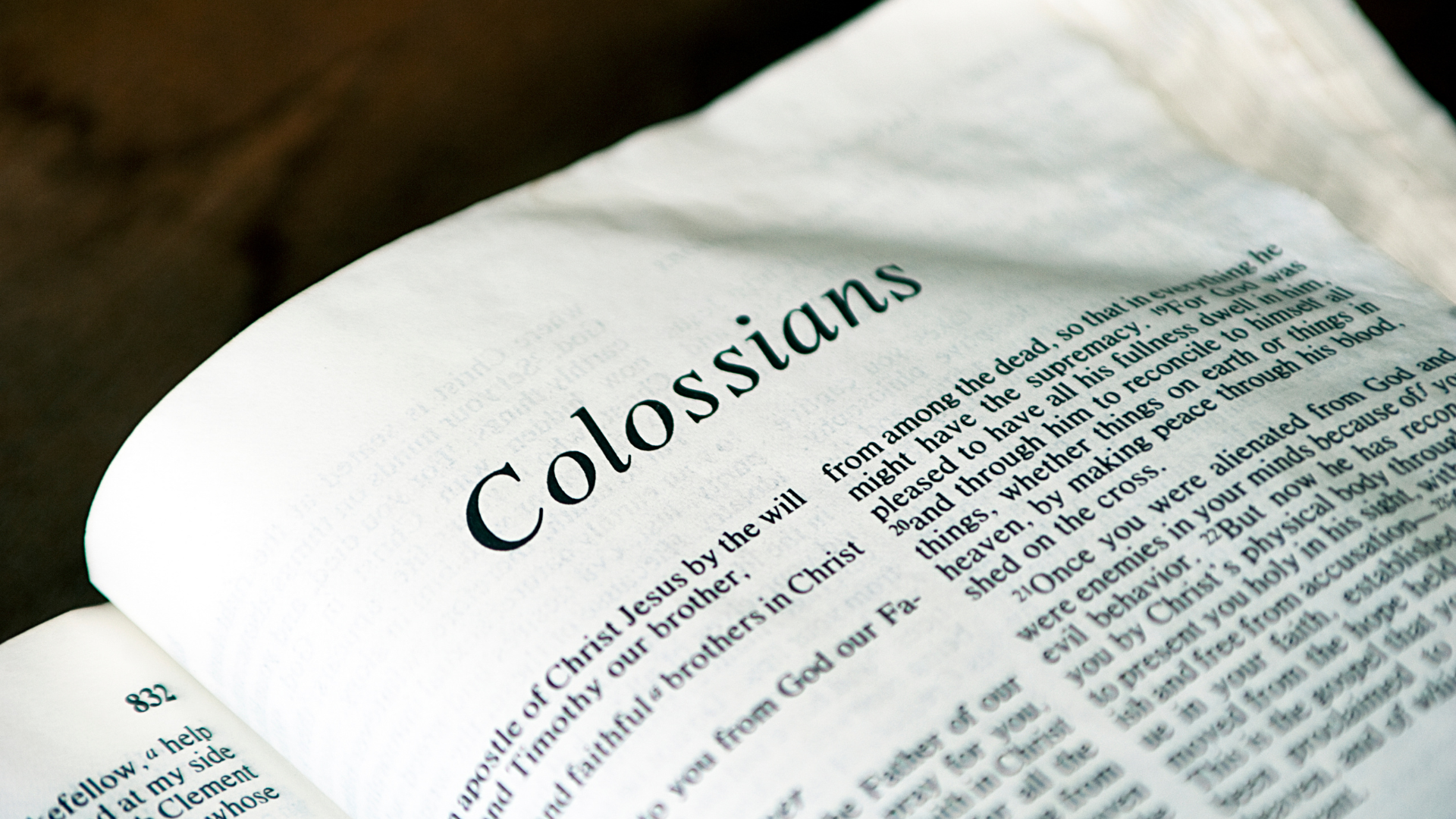
Ever wondered what makes the Book of Colossians so vital for understanding the Christian faith? In this comprehensive Bible study guide, I delve into Paul’s powerful letter to the Colossians, exploring its timeless teachings on Christ’s supremacy, spiritual growth, and living a life rooted in faith. Discover the profound impact of this epistle on your faith journey.
Colossians Bible study guide: Brief overview

The Book of Colossians, one of the epistles in the New Testament, was written by the Apostle Paul during his imprisonment in Rome around A.D. 60-62. Addressed to the believers in Colossae, a small town in Asia Minor, this letter is a rich theological treatise that underscores the supremacy and sufficiency of Christ.
Paul wrote to counter false teachings that had infiltrated the Colossian church, which threatened to dilute the pure gospel message with elements of pagan philosophy, Jewish legalism, and mysticism.
The epistle is divided into two main sections: doctrinal (chapters 1-2), where Paul elaborates on the preeminence of Christ in creation and redemption, and practical (chapters 3-4), where he provides guidance on Christian living, urging believers to live in a manner worthy of their new identity in Christ. Here is a summary of the Book of Colossians.
| Category | Details |
|---|---|
| Author | Apostle Paul |
| Date of writing | Around AD 60-62 |
| Purpose | To address false teachings and to affirm the supremacy and sufficiency of Christ |
| Recipients | The church in Colossae, a small city in Asia Minor (modern-day Turkey) |
| Historical context | Written while Paul was in prison in Rome. Colossae was influenced by a mix of Greek philosophy, Jewish legalism, and mysticism. |
| Key themes | Supremacy of Christ, fullness in Christ, Christian living, rejection of false teachings. |
| Notable verses | Colossians 1:15-20, 2:8-10, 3:1-4, 3:12-17 |
| Application for today | Emphasize Christ’s supremacy in all aspects of life, seek fullness in Christ rather than worldly philosophies, live out Christian virtues in daily life, and be vigilant against teachings that contradict the core message of Christianity. |
Importance of studying Colossians

The Book of Colossians provides a profound understanding of Christ’s nature and His role in the cosmos. Paul’s high Christology affirms that Christ is the image of the invisible God and the head of the church, which is vital for maintaining sound doctrine in the face of modern-day heresies and spiritual confusion.
Colossians emphasizes the believer’s completeness in Christ, which is essential for personal spiritual growth and maturity. This epistle teaches that everything believers need for spiritual fullness is found in Christ, freeing them from the need to seek additional spiritual experiences or adhere to legalistic practices.
Purpose of the Colossians Bible study guide

This guide helps you delve deeper into the text, extracting practical and theological insights that can be applied to your daily life. It aims to equip you with a comprehensive understanding of Paul’s teachings on Christ’s supremacy and the implications of this truth for your faith and conduct.
The Colossians Bible study guide seeks to provide historical and cultural context to enhance your understanding of the issues Paul addressed, making the ancient text relevant to contemporary Christians.
Additionally, it offers structured reflections and discussion questions to facilitate personal meditation and group studies, encouraging you to grasp the doctrinal truths and live out the practical exhortations in your community.
Colossians Bible study guide: Background information

Before delving into the study of Colossians, it’s essential to understand its background to lay the foundation for a thorough study of the letter so that you apply its timeless truths to your life today.
Historical context
Colossae was a small but significant city in the Lycus Valley of Phrygia, in what is now modern-day Turkey. It was part of the Roman province of Asia and lay along a major trade route, making it a melting pot of various cultures and religious practices.
During the time of the letter’s composition, Colossae was overshadowed by its more prominent neighboring cities, Laodicea and Hierapolis. The Colossian church was likely founded during Paul’s ministry in Ephesus, around AD 52-55.
Epaphras, a native of Colossae and a fellow worker of Paul, is believed to have played a key role in establishing the church there (Colossians 1:7-8). The Colossian Christians faced challenges from various ideological influences, including Jewish legalism, Greek philosophy, and local pagan religions, all of which threatened to dilute the purity of the gospel.
Cultural context

The cultural environment of Colossae was diverse and pluralistic, characterized by a mix of Greco-Roman and local Phrygian traditions. This cultural amalgamation posed significant challenges to the early Christians, as they navigated a landscape filled with different philosophies and religious practices.
One of the central issues addressed in Colossians is the syncretism that had begun to infiltrate the church. This included the blending of Christian teachings with elements of Judaism, such as strict dietary laws and observance of festivals (Colossians 2:16-17), as well as mystical and ascetic practices influenced by Greek thought (Colossians 2:18-23).
Paul’s letter addresses these cultural influences by reaffirming the sufficiency of Christ and the completeness of the believers in Him (Colossians 2:9-10). He emphasizes that the believers do not need to adhere to human traditions or seek spiritual fulfillment outside of Christ, who is the head over every power and authority (Colossians 2:10).
Authorship and date of writing

The Apostle Paul is traditionally recognized as the author of Colossians. The letter opens with Paul identifying himself as the author, along with Timothy as his co-sender (Colossians 1:1). The theological depth, pastoral tone, and stylistic features of the letter align well with Paul’s other writings.
Additionally, the personal references and greetings in the closing section of the letter support Pauline authorship (Colossians 4:7-18). Scholars generally date the writing of Colossians to around AD 60-62, during Paul’s first imprisonment in Rome. This dating is based on the letter’s references to Paul’s imprisonment (Colossians 4:3, 18) and its connection with the letters to Philemon and Ephesians, which were likely written around the same time.
The letter to Philemon mentions many of the same individuals and circumstances, suggesting that they were penned concurrently and delivered by the same messengers, Tychicus and Onesimus (Colossians 4:7-9; Philemon 1:10-12).
Colossians Bible study guide: Structure of the book

Colossians is structured into four chapters, each serving a distinct purpose in Paul’s message to the church in Colossae. The chapters collectively address theological truths, practical Christian living, and personal encouragement.
| Chapter | Details |
|---|---|
| 1 | Greetings, thanksgiving, prayer, and Christ’s supremacy |
| 2 | Warnings against false teachings and living in Christ |
| 3 | Instructions for Christian living and household relationships |
| 4 | Final exhortations, greetings, and closing remarks |
Literary style

The Book of Colossians is an epistle, characterized by its structured letter format. Here is a breakdown of its literary style:
- Epistolary format: Colossians follows the traditional structure of ancient letters, beginning with a greeting, followed by the main body, and concluding with personal remarks and a benediction.
- Theological exposition: The letter is rich in theological content, particularly emphasizing the supremacy and sufficiency of Christ. Paul elaborates on Christ’s role in creation, redemption, and the life of the believer.
- Pastoral tone: Paul’s care and concern for the Colossian church are evident throughout the epistle. He addresses their specific needs and challenges, offering encouragement and guidance.
- Ethical Instructions: Paul provides practical advice on Christian living, emphasizing virtues like compassion, kindness, humility, and patience. He also addresses household relationships, giving instructions to wives, husbands, children, and servants.
- Polemic against false teachings: A significant portion of the letter is dedicated to warning against and refuting false teachings that threaten the church. Paul addresses issues related to ascetic practices, worship of angels, and reliance on human traditions.
- Christocentric focus: The central theme of Colossians is the preeminence of Christ. Paul highlights Christ’s divine nature, His work in creation, and His role in the believer’s life.
- Use of hymns and doxology: The letter contains poetic passages that are believed to be early Christian hymns or doxologies, particularly in Colossians 1:15-20, which celebrates the preeminence of Christ.
- Instruction and exhortation: Paul balances doctrinal teaching with practical exhortation, urging the Colossians to live out their faith in tangible ways.
Colossians Bible study guide: Key themes

The Book of Colossians delves into several key themes, offering theological insights and practical guidance for believers.
Christ’s preeminence
This foundational concept permeates the entire letter, unveiling the theological significance of Christ’s supremacy in creation, redemption, and the life of the believer.
Understanding the theological significance
The epistle unfolds a majestic Christological hymn in Colossians 1:15-20, portraying Christ as the image of the invisible God, the firstborn over all creation, and the reconciler of all things.
Understanding the theological significance of Christ’s preeminence provides a profound framework for comprehending the divine mystery and God’s plan revealed in Him.
This mystery underlines the inclusion of Gentiles in God’s redemptive purposes, emphasizing the universality of the gospel message and the reconciliation of believers in Christ.
Implications for believers’ lives

Beyond theological depth, the theme explores the transformative implications for believers’ lives. Recognizing Christ’s preeminence reshapes identity, purpose, and daily living.
It calls you to align your thoughts, actions, and affections with the reality of Christ’s supremacy, fostering a life marked by devotion and obedience.
Battling false teaching
Colossians confronts the challenge of false teachings and philosophies infiltrating the Colossian community. The epistle equips believers to discern and counteract the influence of deceptive doctrines that could undermine the purity of the gospel.
Recognizing and confronting false doctrines

Chapter 2 addresses the pressing need to recognize and confront false doctrines. Paul warns against the allure of human traditions, legalism, and hollow philosophies that deviate from the true gospel.
Believers are called to discern truth from error and uphold the doctrinal purity of their faith.
Guarding against deceptive philosophies
Battling false teaching involves actively guarding against deceptive philosophies. Colossians underscores the importance of remaining rooted in Christ, emphasizing His sufficiency for salvation.
Believers are encouraged to build their foundation on the solid rock of Christ, guarding against the shifting sands of human wisdom and traditions.
Christian living
Colossians integrates profound theological truths with practical applications for Christian living. The epistle provides a blueprint for believers to embody the gospel in their daily lives, fostering a community characterized by virtues, love, and unity.
Practical applications of Paul’s teachings

Transitioning to practical living, Colossians 3 instructs believers to put off the old self and put on the new self in Christ. Christian living, according to Colossians, extends beyond theoretical knowledge to active, daily application.
Believers are called to live out the gospel in their relationships, workplaces, and communities. The centrality of love and unity within the body of Christ serves as a guiding principle, emphasizing the tangible expression of the gospel in the lives of believers.
Ethical conduct guidelines
Alongside its theological depth, Colossians provides practical instructions for Christian living and ethical conduct. Paul exhorts believers to live by their identity in Christ, emphasizing virtues such as love, humility, forgiveness, and thankfulness that reflect the transformative power of the gospel.
The ethical teachings in Colossians are grounded in the believers’ union with Christ and their participation in His death and resurrection.
Colossians Bible study guide: Chapter-by-chapter analysis

The Book of Colossians unfolds in a series of chapters, each contributing to the theological depth and practical guidance for Christian living. Let’s explore the chapters.
Chapter 1
This chapter sets the stage for a deep exploration of the theological richness found in the supremacy of Christ.
Paul’s greeting and thanksgiving

The epistle commences with a customary greeting from Paul, expressing gratitude for the Colossian believers’ faith and love. He acknowledges their response to the gospel and offers prayers for their spiritual growth.
The preeminence and supremacy of Christ
In this chapter, Paul delves into a majestic Christological hymn, highlighting the preeminence of Christ as the image of the invisible God, the creator, and sustainer of all things. This section establishes a theological foundation for the entire letter.
Paul’s ministry and suffering for the church
Paul provides insights into his ministry and the challenges he faces, emphasizing the purpose of suffering for the sake of the Church and the gospel.
Chapter 2

In this chapter, Paul addresses the looming threat of false teachings and the symbolic concept of spiritual circumcision.
Warnings against false teachings and philosophies
Paul addresses the threat of false teachings infiltrating the Colossian community. He warns against deceptive philosophies and urges believers to remain rooted in Christ.
Freedom in Christ and the sufficiency of Christ

The chapter emphasizes the believer’s freedom in Christ, countering legalistic tendencies. Paul underscores the sufficiency of Christ for salvation and warns against relying on human traditions or rituals.
Spiritual circumcision and the reality of resurrection with Christ
Paul elaborates on the spiritual circumcision that believers experience in Christ, signifying a new life. He also discusses the reality of resurrection with Christ, emphasizing the transformative power of the gospel.
Chapter 3

In Colossians 3, the focus shifts from theological depth to practical Christian living.
Living in Christ – Putting off the old self and putting on the new self
The focus shifts to practical implications for Christian living. Paul encourages believers to put off the old self characterized by sinful practices and to put on the new self, aligned with Christ’s righteousness.
Practical instructions for Christian living

This section offers practical guidelines for living a Christ-centered life, covering topics such as ethical conduct, relationships, and the pursuit of godly virtues.
The centrality of love and unity in the body of Christ
Paul emphasizes the paramount importance of love and unity within the body of Christ, urging believers to bear with one another and maintain peace.
Chapter 4

In this chapter, Paul offers exhortations and instructions to the believers.
Final exhortations and instructions
Paul concludes the letter with practical exhortations, including wise conduct toward outsiders, making the most of every opportunity, and gracious speech.
Greetings and personal remarks

Personal greetings are extended to individuals associated with the Colossian community, fostering a sense of connection within the broader Christian fellowship.
Prayer and the importance of wisdom in dealing with outsiders
The epistle concludes with Paul’s request for prayer and an emphasis on the importance of wisdom in interactions with those outside the faith.
Colossians Bible study guide: Key characters

The Book of Colossians comprises characters central to the context and delivery of Paul’s message to the Colossian believers.
- Paul: The author of the letter, who identifies himself as an apostle of Christ Jesus. He is writing to the Colossians from prison, expressing concern and offering guidance to the church.
- Timothy: A close associate of Paul, mentioned as a co-sender of the letter. He is also a trusted companion in Paul’s ministry.
- Epaphras: A key figure in the Colossian church, described as a fellow servant of Christ who has reported to Paul about the faith and love of the Colossians. He is also noted for his role in founding or strengthening the Colossian church.
- Onesimus: A runaway slave who had become a Christian and is mentioned in the context of his return to his master Philemon, showing the interconnectedness of Paul’s letters to different communities.
- Archippus: Mentioned in Colossians 4:17, he is a fellow worker who appears to have a significant role in the church at Colossae. Paul encourages him to fulfill his ministry.
- Tychicus: A messenger who is sent along with Onesimus to deliver the letter to the Colossians and provide updates on Paul’s situation.
Colossians Bible study guide: Notable verses and their exegesis (NIV)

Colossians contains Scriptures that highlight the importance of Christian doctrine and living. Let’s explore some verses:
Colossians 1:15-16
“The Son is the image of the invisible God, the firstborn over all creation… For in him all things were created: things in heaven and on earth, visible and invisible, whether thrones or powers or rulers or authorities; all things have been created through him and for him.”
This passage exalts Christ’s preeminence, depicting Him as the visible representation of the invisible God and the creator of all things. It emphasizes His role in both the spiritual and physical realms, showcasing His authority over creation.
Colossians 2:9-10

“For in Christ all the fullness of the Deity lives in bodily form, and in Christ, you have been brought to fullness.”
These verses highlight the completeness found in Christ. The fullness of the divine resides in Him, and believers, through their union with Christ, experience a fullness that transcends any other spiritual or philosophical pursuits.
Colossians 3:1-4
“Since, then, you have been raised with Christ, set your hearts on things above, where Christ is, seated at the right hand of God… For you died, and your life is now hidden with Christ in God.”
This passage calls believers to a heavenly perspective, reminding them of their identification with Christ in His death and resurrection. It encourages a pursuit of spiritual priorities and a life hidden in Christ.
Colossians 3:12-14

“Therefore, as God’s chosen people, holy and dearly loved, clothe yourselves with compassion, kindness, humility, gentleness, and patience. Bear with each other and forgive one another… And over all these virtues put on love, which binds them all together in perfect unity.”
These verses provide a practical guide for Christian living, urging believers to embody virtues such as compassion, kindness, and humility. Love is presented as the unifying force that binds these virtues, fostering harmony within the Christian community.
Colossians 4:5-6
“Be wise in the way you act toward outsiders; make the most of every opportunity. Let your conversation be always full of grace, seasoned with salt, so that you may know how to answer everyone.”
Paul’s counsel in these verses emphasizes wisdom in interactions with those outside the faith. Believers are encouraged to approach outsiders with grace and a winsome demeanor, using their words to exemplify the transformative power of the gospel.
Colossians Bible study guide: Practical application

The timeless truths of Colossians resonates with contemporary believers, offering profound insights and practical guidance for navigating the challenges of modern life.
Relevance of Colossians for contemporary believers
In a world marked by diverse philosophies, distractions, and competing worldviews, Colossians stands as a beacon of truth and relevance for today’s believers.
The epistle addresses universal themes of identity in Christ, doctrinal purity, and the practical outworking of faith, making it a valuable resource for navigating the complexities of the 21st century.
Practical steps for applying Colossians in everyday situations

Navigating the complexities of daily life demands practical wisdom grounded in God’s Word. Here are actionable steps drawn from Colossians:
Embracing Christ’s preeminence
Contemporary believers can apply Colossians by embracing and internalizing the preeminence of Christ. This involves prioritizing Christ in every aspect of life, allowing His lordship to shape decisions, attitudes, and relationships.
Discerning and confronting deceptive influences
Colossians equips believers to discern and confront deceptive influences, which are particularly prevalent in the age of information.
Applying this involves cultivating discernment in media consumption, social interactions, and evaluating cultural narratives through the lens of biblical truth.
Practicing Christ-centered living
The practical teachings in Colossians 3 guide modern believers in cultivating Christ-centered living.
This includes intentional efforts to put off behaviors and attitudes inconsistent with a Christian worldview while actively embracing virtues and practices that reflect Christ’s character.
Fostering love and unity
The emphasis on love and unity within the body of Christ in Colossians is especially relevant in a world marked by division and strife.
Believers can apply this by seeking reconciliation, practicing forgiveness, and fostering a community characterized by love, grace, and unity.
Colossians Bible study guide: Relevant cross-references

Understanding the Bible requires examining various passages in light of one another. By contrasting different Scriptures, you gain deeper insights and see how the teachings interconnect.
Comparison with other biblical passages
The comparative approach helps you understand the message of Colossians in a broader biblical context.
Ephesians
Ephesians and Colossians share many thematic elements, especially regarding the supremacy of Christ. Ephesians 1:15-23 emphasizes Christ’s exalted position and His headship over the Church, which complements Colossians 1:15-20, where Paul also discusses Christ’s preeminence and His role in creation and redemption.
Philippians

Philippians 2:5-11 highlights the humility and exaltation of Christ, a concept closely related to Colossians 3:1-4, where Paul urges believers to set their minds on things above, reflecting on the risen Christ’s authority and our position in Him.
Romans
Romans 12:1-2 discusses the transformation of believers through the renewal of the mind, which aligns with Colossians 3:9-10, where Paul speaks about putting off the old self and putting on the new self, created in Christ’s likeness.
Related biblical themes

Examining interconnected themes throughout Scripture enhances your understanding of the teachings in Colossians.
The supremacy of Christ
The theme of Christ’s supremacy is central to Colossians. This is echoed in John 1:1-14, where Christ’s divine nature and role in creation are affirmed, and Hebrews 1:1-4, which highlights Christ’s role as the exact representation of God’s being and His superior status over all things.
Christian living and new identity

The concept of living a new life in Christ is prominent in Colossians. This is also reflected in 2 Corinthians 5:17, which describes believers as new creations in Christ, and Galatians 2:20, where Paul speaks of living by faith in the Son of God who loved him and sacrificed Himself for him.
Unity in the body of Christ
Colossians emphasizes unity within the Church. This theme is also addressed in 1 Corinthians 12:12-27, which speaks about the Church as one body with many members, and Ephesians 4:1-6, which urges believers to maintain unity in the Spirit through the bond of peace.
Colossians Bible study guide: Addressing common misconceptions

Despite its clarity, certain misconceptions can arise from this epistle. Understanding these misinterpretations helps you maintain a true and vibrant relationship with Christ, rooted in the authentic gospel message.
The supremacy of Christ is merely symbolic
Some interpret the supremacy of Christ in Colossians as symbolic rather than literal. However, Paul explicitly asserts Christ’s preeminence over all creation.
In Colossians 1:16-17, Paul emphasizes that all things were created through Christ and for Him, and He is before all things, holding everything together. This passage underscores that Christ’s supremacy is not symbolic but a fundamental truth about His nature and role in creation.
Paul’s teachings on false teachings are outdated and irrelevant

Paul’s warnings against false teachings in Colossians 2:8 and 2:18 might be seen as relevant only to the Colossian church’s context. Yet, these warnings remain pertinent today.
Paul advises believers to be vigilant against philosophies and teachings that deviate from the gospel. The principles of discerning truth and avoiding deception are timeless and crucial for maintaining doctrinal purity in any era.
The “empty deceit” Paul warns against is limited to Gnostic beliefs
While Paul specifically addresses Gnostic influences in Colossians 2:8, the concept of “empty deceit” can extend to any teaching that undermines the gospel.
The core issue is not just Gnosticism but any philosophy that detracts from the sufficiency of Christ’s work and the truth of the gospel. Paul’s call to reject such deceit applies broadly to any falsehood that distorts the core message of Christianity.
Paul’s instructions on Christian conduct are mere suggestions

Some view Paul’s exhortations on Christian living in Colossians 3:1-17 as optional rather than essential. However, Paul presents these instructions as imperative for believers’ lives.
He instructs Christians to seek things above, to put off old behaviors, and to put on virtues reflecting their new identity in Christ. These commands are foundational for living out the gospel authentically.
The role of Christ in redemption is secondary to personal efforts
A common misunderstanding is that personal efforts are paramount in salvation, with Christ’s role being secondary. However, Colossians 1:13-14 clearly establishes that it is through Christ’s redemption that believers are transferred from darkness to light.
The emphasis is on Christ’s work as the primary means of redemption, and personal efforts are a response to the grace already provided by Him.
Colossians Bible study questions
Whether engaging individually or in a group setting, these questions are designed to prompt reflection, discussion, and a deeper understanding of the truths presented in Colossians.
Questions for individual reflection
Q1: How does the concept of Christ’s preeminence, as outlined in Colossians, influence your understanding of your own identity and purpose?
Q2: In what ways have false teachings or philosophies influenced your beliefs or practices? How can Colossians guide you in discerning and confronting such influences?
Q3: Reflect on a specific area of your life where you find it challenging to live out the gospel. How might the practical teachings in Colossians 3 be applied to transform this aspect of your life?
Q4: Consider the virtues mentioned in Colossians 3:12-14 (compassion, kindness, humility, gentleness, patience, forgiveness, and love). Which of these virtues do you find most challenging to cultivate, and why?
Q5: How can the instruction to “let the word of Christ dwell in you richly” (Colossians 3:16) be practically applied in your daily routine and decision-making?
Q6: In Colossians 4:5, Paul urges believers to “make the most of every opportunity.” What specific opportunities for sharing the gospel or displaying Christ’s love do you encounter in your daily life?
Q7: Consider the personal greetings in Colossians 4:7-18. How do these glimpses into Paul’s relationships with others inspire you to cultivate deeper connections within your Christian community?
Q8: Reflect on a time when you faced adversity or suffering for your faith. How can Paul’s perspective on suffering in Colossians 1:24 inform your own approach to challenges?
Q9: In what ways do you see the mystery of God’s plan revealed in Christ shaping your understanding of the gospel’s universality and inclusivity?
Q10: Colossians emphasizes the importance of wisdom in dealing with outsiders (Colossians 4:5-6). How can you seek and apply God’s wisdom in your interactions with those who may not share your faith?
Group discussion questions

Q1: How does the theme of Christ’s preeminence weave through each chapter of Colossians, and what implications does it hold for our identity as a Christian community?
Q2: Considering the warnings against false teachings in Colossians 2, how can our group guard against deceptive influences and promote doctrinal purity in our fellowship?
Q3: Discuss specific examples from Colossians 3 that provide practical guidance for Christian living. How can we support one another in applying these principles in our individual lives?
Q4: Explore the concept of spiritual circumcision and the reality of resurrection with Christ in Colossians 2. How do these ideas shape our understanding of personal transformation and the Christian journey?
Q5: How can our group actively foster an environment that reflects the centrality of love and unity within the body of Christ, as emphasized in Colossians 3?
Q6: Discuss the significance of Paul’s final exhortations and instructions in Colossians 4. How can our group embody these principles in our witness to those outside the faith?
Q7: Consider the practical applications of Paul’s teachings in Colossians 3:12-17. How can our group encourage one another to live out these virtues in our community and beyond?
Q8: Reflect on the impact of Paul’s personal greetings in Colossians 4:7-18. How can our group foster deeper connections and relationships within our Christian community?
Q9: Explore the theme of suffering in Colossians 1:24. How can our group support one another during times of adversity or challenges, drawing inspiration from Paul’s perspective?
Q10: Discuss the relevance of Colossians for our contemporary context. How can our group apply the insights gained from this study to navigate the challenges and opportunities of our modern lives?
Begin reading Colossians today
Embark on a personal journey through the Book of Colossians. Consider delving deeper into individual chapters to discover new insights and application. Begin exploring Colossians today and let its transformative message inspire and guide you in your walk with Christ.

I’m a devoted follower of Christ on a journey to share the profound love, faith, and hope found in our Savior. Through my writings, I aim to inspire, uplift, and encourage fellow believers as we walk together in God’s light. Join me in exploring the beauty of faith and discovering the richness of a life rooted in Christ.