
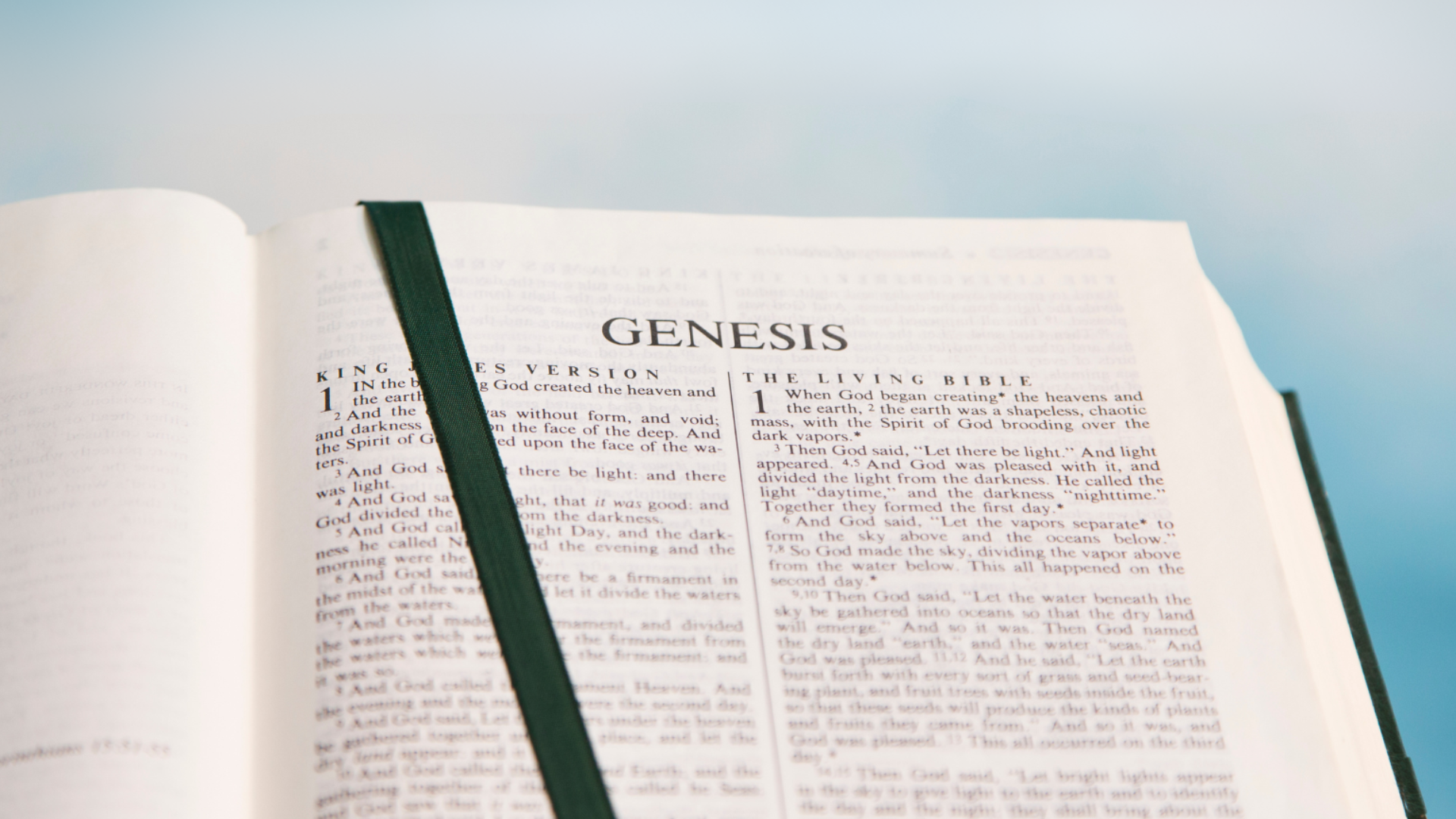
What can the first book of the Bible teach us about life, faith, and God’s plan for humanity? The Book of Genesis lays the foundation for understanding the entire Bible, from creation to covenant. In this Bible study guide, I navigate the rich narratives of Genesis, uncovering the origins of the universe, profound lessons, and the captivating prologue to the story of God’s redemptive plan.
Genesis Bible study guide: Brief overview

The Book of Genesis, the opening chapter of the Bible, sets the stage for the unfolding narrative of God’s interaction with humanity.
Comprising 50 chapters, Genesis spans a vast timeline, from the creation of the universe to the life of Joseph in Egypt. It introduces us to pivotal figures such as Adam and Eve, Noah, Abraham, Isaac, Jacob, and Joseph, whose stories lay the foundation for the larger biblical narrative.
The Book of Genesis also lays the groundwork for the entire biblical narrative as it unfolds the origins of the world and the covenant relationship between God and His people. Here is a summary of Genesis:
| Aspect | Summary |
|---|---|
| Author | Traditionally attributed to Moses. |
| Date of writing | Likely written between 1446-1406 BC (during the Exodus period). |
| Purpose | To provide an account of the origins of the world, humanity, sin, and God’s covenant relationship with His chosen people, Israel. |
| Recipients | The Israelites, particularly during their journey from Egypt to the Promised Land. |
| Historical context | Written during the early formation of the Israelite nation, reflecting on God’s promises and their identity as His chosen people. |
| Key themes | Creation and order of the universe, the fall and consequences of sin, God’s covenant with Abraham and His descendants, God’s sovereignty, and the establishment of God’s chosen people through the patriarchs (Abraham, Isaac, Jacob, Joseph). |
| Notable verses | Genesis 1:1-3, 3:15, 12:1-3, 15:6, 22:1-18. |
| Application for today | Helps believers recognize God’s sovereignty in creation and human history, understand the consequences of sin and God’s redemptive plan, and trust in God’s promises and His covenant faithfulness. |
Importance of studying Genesis

Genesis serves as the foundation for understanding key theological concepts, such as creation, sin, and covenant, woven throughout the Bible.
Exploring Genesis provides insights into human nature, God’s character, and the overarching narrative of salvation. It is a gateway to comprehending the broader biblical storyline.
Studying Genesis provides a crucial lens through which you can understand the rest of Scripture, gaining perspective on the redemptive plan of God and the development of key universal themes such as human identity and morality.
Purpose of the Genesis Bible study guide

This guide facilitates a deeper exploration of this foundational book. It aims to provide you with a structured and insightful journey through the text, offering clarity on historical and cultural contexts, uncovering theological themes, and highlighting the relevance of Genesis for contemporary believers.
By engaging with the Genesis Bible study guide, you gain a comprehensive understanding of the book, fostering personal reflection, group discussion, and practical application of its timeless truths in your life.
Genesis Bible study guide: Background information

Before delving into the profound narratives of Genesis, it is crucial to understand the historical and cultural context of the Ancient Near East. This background helps you grasp the text and appreciate the significance of the stories within.
Ancient Near East backdrop
The Ancient Near East, as mentioned in the Bible, includes several important regions and civilizations. Here are key areas:
- Mesopotamia: Often referred to as the “land between the rivers,” Mesopotamia is the region located between the Tigris and Euphrates rivers. This area includes cities such as Babylon, Ur, and Nineveh.
- Persia: The Persian Empire, with its capital at Persepolis, is mentioned in various biblical accounts, including the books of Daniel and Esther.
- Egypt: Egypt is a significant biblical location, and various events in the Old Testament, such as the Exodus, involve interactions with Egypt. Major cities include Memphis and Thebes.
- Canaan: This region corresponds roughly to modern-day Israel, the West Bank, and parts of Jordan and Lebanon. It is central to many biblical narratives, including the journeys of the patriarchs and the Israelite conquest.
- Syria: The biblical region of Syria encompasses parts of modern Syria and northern Jordan. Damascus, an ancient city, is often mentioned in the Bible.
- Anatolia (Asia Minor): Though not always a prominent biblical focus, Anatolia includes regions like modern-day Turkey. The New Testament references cities like Ephesus and Colossae in this area.
- Assyria: The Assyrian Empire played a significant role in biblical history, especially in relation to the Northern Kingdom of Israel. Nineveh City was the capital of Assyria.
- Babylon (Chaldea): Babylon, one of the most famous ancient cities, features prominently in the Bible, particularly in relation to the Babylonian Captivity of the Israelites.
These regions form the backdrop for many biblical events, stories, and prophecies. Keep in mind that the historical geography of the Ancient Near East can be complex, with empires rising and falling over time, influencing biblical narratives.
Historical context

The Book of Genesis is foundational to both Christian and Jewish traditions. Its narrative covers the early history of God’s people, the origins of humanity, and the creation of the world.
Genesis is often thought to have been written during the time of the patriarchs (circa 2000–1500 BCE) and spans from the creation of the world to the death of Joseph in Egypt. The events in Genesis are set in the ancient Near East, encompassing locations like Mesopotamia (modern-day Iraq), Canaan (modern-day Israel and Palestine), and Egypt.
These regions were culturally rich and dominated by civilizations such as the Sumerians, Akkadians, Egyptians, and Hittites. Genesis reflects the worldview of a nomadic and tribal society, with its patriarchs like Abraham, Isaac, and Jacob living as herders in these regions.
The book also provides theological explanations for human relationships, the origin of nations, and the establishment of God’s covenant with Israel, a theme that undergirds much of the Hebrew Bible.
Cultural context

The cultural world of Genesis is deeply rooted in ancient Near Eastern customs, including family structures, religious practices, and social norms. Patriarchal authority was dominant, with male heads of families making decisions on behalf of their households.
The concept of covenant, which features prominently in the narratives of Noah, Abraham, Isaac, and Jacob, mirrors ancient treaty-making traditions of the time, particularly in Mesopotamia.
Many of the stories in Genesis, such as the creation narrative, the Flood, and the Tower of Babel, have parallels with other ancient Near Eastern myths, such as the Babylonian Epic of Gilgamesh or the Enuma Elish.
However, Genesis provides these stories with a monotheistic perspective, presenting Yahweh as the sole Creator and sustainer of the universe, contrasting with the polytheism of surrounding cultures.
The theme of divine election and the establishment of God’s chosen people, Israel, begins in Genesis, where God makes promises to Abraham and his descendants, shaping the religious identity of Israel as distinct from the surrounding nations. Sacrifice, rituals, and altars built by the patriarchs are another cultural aspect reflected in the book, indicative of ancient religious practices.
Authorship and date of writing

Traditionally, Genesis is attributed to Moses as part of the Pentateuch (the first five books of the Bible). However, modern scholarship suggests that the book may have been compiled from various sources over several centuries.
The documentary hypothesis suggests that Genesis was formed from different traditions, primarily known as the JEPD theory: J (Yahwist), E (Elohist), P (Priestly), and D (Deuteronomic) sources.
The final form of Genesis likely took shape during the post-exilic period, around the 6th or 5th century BCE, though earlier versions or traditions may have been passed down orally or in writing much earlier.
The narrative shows a blending of older patriarchal traditions with later theological reflections, especially regarding the role of God in history and the origin of Israel as a people.
Genesis Bible study guide: Structure of the book

The Book of Genesis weaves together narratives that shape the theological and historical foundations of the Judeo-Christian tradition. To navigate this intricate landscape, understanding the structural organization of Genesis is paramount.
Division into two main parts: Primeval History and Patriarchal History
Dividing Genesis into two distinctive sections provides a roadmap for exploring its diverse content. The Primeval History (Chapters 1-11) lays the groundwork for the broader narrative, introducing the creation of the world, the fall of humanity, and the development of diverse languages.
The subsequent Patriarchal History (Chapters 12-50) zooms in on the lives of key figures, forming the ancestral lineage of the Israelite people.
Visual representation of Genesis’s two main parts
Here is a visual representation of the division of Genesis into Primeval and Patriarchal Histories. It outlines the chapters included in each section and a brief description of the key events and themes covered within these divisions.
| Section | Description |
|---|---|
| Chapters 1-11 | |
| Primeval History | Introduction of the creation of the world. |
| Narration of the fall of humanity in the Garden of Eden. | |
| Account of Noah and the flood, showcasing God’s justice and mercy. | |
| Tower of Babel narrative, exploring the consequences of human pride and the dispersion of languages. | |
| Chapters 12-50 | |
| Patriarchal History | Focus on the lives of key figures: Abraham, Isaac, Jacob, and Joseph. |
| Abraham’s covenant with God and the establishment of the Israelite lineage. | |
| Isaac’s blessings and the continuation of the covenant. | |
| Jacob’s struggles, transformation, and the renaming to Israel. | |
| Joseph’s journey from slavery to prominence in Egypt, setting the stage for the descent to Egypt. |
Key events
Here is a chronological overview of key events in the Book of Genesis, spanning from the creation of the world to the life of Joseph in Egypt, with corresponding chapter references.
| Event | Chapter(s) |
|---|---|
| Creation of the world | 1-2 |
| Fall of humanity | 3 |
| Cain and Abel | 4 |
| Genealogy of Adam | 5 |
| Noah and the flood | 6-10 |
| Tower of Babel | 11 |
| Genealogy of Shem | 11:10-26 |
| Call of Abram | 12 |
| Abram and Sarai in Egypt | 12:10-20 |
| Covenant with Abram | 15 |
| Birth of Ishmael | 16 |
| Covenant renewed | 17 |
| Destruction of Sodom | 18-19 |
| Birth of Isaac | 21 |
| Test of Abraham | 22 |
| Genealogy of Nahor | 22:20-24 |
| Death and burial of Sarah | 23 |
| Marriage of Isaac | 24 |
| Death of Abraham | 25:7-11 |
| Birth of Esau and Jacob | 25:19-26 |
| Jacob’s deception | 27 |
| Jacob’s dream | 28 |
| Jacob’s marriages | 29-30 |
| Jacob’s encounter with God | 32-33 |
| Dinah’s violation | 34 |
| Jacob’s return to Bethel | 35 |
| Death of Rachel | 35:16-20 |
| Joseph sold into slavery | 37 |
| Judah and Tamar | 38 |
| Joseph in Potiphar’s house | 39 |
| Joseph’s imprisonment | 40 |
| Pharaoh’s dreams | 41 |
| Joseph’s rise to power | 41 |
| Joseph’s brothers in Egypt | 42-45 |
| Jacob’s family settles in Egypt | 46-47 |
| Jacob’s blessings | 48-49 |
| Death and burial of Jacob | 49-50 |
Overview of major sections and key events

Creation narrative
Genesis commences with the account of creation, detailing the formation of the world in six days. This foundational narrative establishes God as the supreme Creator, emphasizing the goodness of the created order.
Fall of humanity
The narrative transitions to the tragic episode of human disobedience in the Garden of Eden. Adam and Eve’s disobedience results in the introduction of sin and the consequential separation from God, setting the stage for the complexities of human history.
Noah and the flood

In response to the increasing wickedness of humanity, the story of Noah unfolds. The ark becomes a vessel of salvation, preserving the remnant of creation and illustrating God’s justice and mercy.
Tower of Babel
The Tower of Babel narrative explores the consequences of human pride and disobedience, leading to the dispersion of languages and the scattering of people across the earth.
Patriarchal narratives (Abraham, Isaac, Jacob, Joseph)

The bulk of Genesis resides in the accounts of the patriarchs – Abraham’s covenant, Isaac’s blessings, Jacob’s struggles and transformation, and Joseph’s journey from slavery to prominence in Egypt.
These narratives trace the foundations of God’s covenant and the development of the Israelite people. The structure of Genesis, with its delineation into Primeval and Patriarchal Histories, provides a framework for comprehending the depth and breadth of its narratives.
Literary style

Genesis captivates readers with its profound literary depth. Its literary style blends narrative techniques, genealogical records, and symbolic storytelling.
- Narrative structure: Genesis follows a narrative style, composed of stories about key figures and events. It alternates between genealogies and lengthy, detailed narratives.
- Genealogical sections: These sections provide structured lists of descendants, often used to transition between major stories (e.g., the generations of Adam, Noah, and Abraham). They emphasize lineage and continuity.
- Repetitive patterns: Genesis frequently uses repetitive storytelling structures, such as recurring themes of covenant promises, sibling rivalry, and the motif of divine-human interaction (e.g., creation, fall, redemption).
- Symbolism: Symbolic language is often employed to convey deeper meanings, such as the serpent in the Garden of Eden representing temptation or the rainbow symbolizing God’s covenant with Noah.
- Dialogical elements: Dialogue is a key feature in Genesis, where conversations between God and individuals (e.g., Adam, Noah, Abraham) play a central role in advancing the narrative and revealing character motivations.
- Etiological stories: Many stories in Genesis explain the origins of customs, peoples, or natural phenomena (e.g., the Tower of Babel explaining the origin of different languages).
- Epic tone: The narrative tone of Genesis is grand and epic, especially in the opening chapters that describe creation, the flood, and the lives of the patriarchs.
- Poetic passages: Genesis contains a few poetic interludes, such as the blessings of Jacob and Noah, that break from the narrative style to offer prophecy or reflection in a more elevated form.
- Anthropomorphism: God is often portrayed with human-like qualities, such as walking in the Garden of Eden or engaging in direct conversations with human beings.
- Parallels and contrasts: The text frequently sets up parallels between different stories (e.g., the creation and fall, Cain and Abel) or contrasts between characters (e.g., Jacob and Esau) to highlight moral or theological points.
- Structured by toledot: The Hebrew term toledot (“generations”) serves as a structural marker throughout the book, dividing the text into distinct sections, each focusing on the lineage and history of a particular family or individual.
- Mythological influence: Genesis includes mythological elements, particularly in the creation and flood stories, which echo ancient Near Eastern myths but adapt them to a monotheistic worldview.
Genesis Bible study guide: Key themes

The themes in Genesis shape your understanding of God, offering insights into the nature of humanity and the divine-human relationship.
Creation and the nature of God
The opening chapters of Genesis lay the groundwork for understanding the nature of God and the purpose of creation.
God as the Creator

The Book of Genesis opens with the fundamental declaration of God’s role as the Creator of the universe. Through His word, God brings the cosmos into existence, highlighting His sovereignty, power, and intentional design.
Genesis 1-2 illustrates God’s meticulous order in creation, culminating in the creation of humanity, who are made in His image. This establishes God’s authority and the purposefulness of all things created.
Human responsibility in creation
Alongside God’s creation, humanity is given a special role. In Genesis 1:26-28, God commands Adam and Eve to “fill the earth and subdue it” and to have dominion over all living creatures.
This stewardship implies a partnership between God and humans, where humanity is entrusted to care for, manage, and protect creation responsibly. This theme underscores the importance of human action in sustaining God’s creation.
Sin and its consequences

The shadow of sin looms large in the Genesis narrative, casting its impact on humanity and setting the stage for the redemptive journey.
The fall of Adam and Eve
In Genesis 3, the narrative shifts as Adam and Eve, through the deception of the serpent, disobeys God’s command. The eating of the forbidden fruit symbolizes humanity’s rebellion against divine authority.
This act introduces sin into the world, breaking the intimate relationship between God and humans, and bringing about spiritual and physical death. The fall marks the beginning of human suffering, toil, and alienation from God.
The impact of sin on humanity

The consequences of sin extend far beyond Adam and Eve. Genesis recounts how sin permeates human relationships and society. Cain’s murder of Abel (Genesis 4), the corruption of humanity before the flood (Genesis 6), and the pride of the Tower of Babel (Genesis 11) all reflect the growing impact of sin.
Each event demonstrates how sin disrupts harmony, leading to separation from God, strife among people, and divine judgment.
Covenant and promise
Genesis introduces the concept of covenant—a binding agreement between God and humanity that shapes the course of salvation history.
God’s covenant with Abraham

A major turning point in Genesis is God’s covenant with Abraham, found in Genesis 12, 15, and 17. God promises Abraham descendants as numerous as the stars, land for his offspring, and that through him “all nations of the earth will be blessed” (Genesis 12:3).
This covenant establishes a special relationship between God and Abraham’s descendants, marking the beginning of God’s redemptive plan for humanity.
The significance of the covenant throughout Genesis
The theme of covenant runs throughout Genesis, shaping the lives of the patriarchs—Abraham, Isaac, Jacob, and Joseph. God’s promises remain central as He reaffirms the covenant with Isaac and Jacob, ensuring the continuation of His plan.
The fulfillment of these promises is seen in the growth of Abraham’s family, setting the stage for the nation of Israel. The covenant reflects God’s faithfulness and commitment to restore humanity despite sin’s pervasive presence.
Genesis Bible study guide: Key characters

The characters in Genesis embody lessons and truths that resonate across generations. As I delve into the lives of these figures, I unearth insights into faith, obedience, redemption, and divine providence.
Adam and Eve
Adam and Eve, the first humans, play a critical role in the narrative as the predecessors of humanity. Their choices in the Garden of Eden set in motion the complexities of the human experience, introducing sin and the need for redemption.
Lessons from their experiences

Through Adam and Eve, we glean lessons about the consequences of disobedience, the importance of accountability, and the human struggle with temptation. Their story invites self-reflection on our own choices and the continuous need for God’s grace.
Genesis 3:6 and 3:16-19 capture the pivotal moments of Adam and Eve’s choices and the resulting consequences.
Eve’s temptation and Adam’s participation illustrate the universal struggle with disobedience, while the pronouncement of consequences highlights the far-reaching impact of their actions on human experience.
Abraham
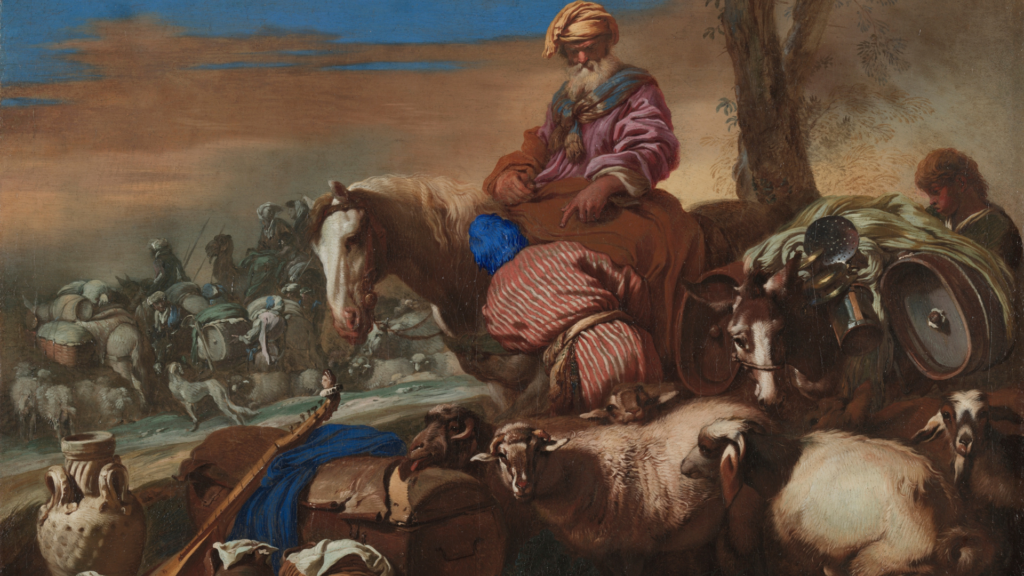
Abraham, the father of the faithful, exemplifies profound faith and obedience. His journey unfolds as a testament to the transformative power of trust in God’s promises.
God’s call and promises to Abraham
God’s call to Abraham in Genesis 12 marks the inception of a divine covenant, promising descendants, blessings, and land. Abraham’s obedience in following God’s leading sets the stage for a narrative of unwavering faith.
Abraham’s faith and obedience
Abraham’s faith is highlighted in Genesis 15:6. This moment underscores the righteousness associated with faith, becoming a foundational concept in biblical theology.
Abraham’s willingness to offer Isaac in Genesis 22 demonstrates unparalleled obedience and trust in God’s sovereignty.
Genesis 12:1-2 and 22:2 capture the essence of Abraham’s journey—his response to God’s call and the test of faith in offering his beloved son. Abraham’s life serves as a powerful testimony to the transformative impact of unwavering faith and obedience.
Joseph

Joseph’s narrative, spanning from slavery to leadership, showcases the providence of God amid adversity. His life becomes a canvas painted with themes of resilience, forgiveness, and divine intervention.
Joseph’s journey from slavery to leadership
Sold into slavery by his brothers, Joseph’s journey takes unexpected turns. Yet, through divine favor and unwavering integrity, he rises to prominence in Egypt, becoming a key figure in the salvation of many during a severe famine.
God’s providence in Joseph’s life
Genesis 50:20 captures Joseph’s perspective on the twists of his life: “You intended to harm me, but God intended it for good to accomplish what is now being done, the saving of many lives.”
Joseph’s unwavering faith in God’s providence illustrates the transformative power of viewing life’s challenges through a divine lens. Joseph’s journey from the pit to the palace symbolizes the redemptive arc in his life.
The initial betrayal and suffering in the cistern (Genesis 37:23-24) pave the way for divine elevation to a position of authority (Genesis 41:41-43). Joseph’s story offers profound insights into forgiveness, resilience, and the overarching providence of God.
Genesis Bible study guide: Key passages and their exegesis

These passages offer a glimpse into God’s character, His relationship with humanity, and His overarching plan for salvation.
Genesis 1:1-2
This passage marks the opening of the Bible, introducing God as the ultimate Creator. The phrase “In the beginning” speaks of the beginning of time, pointing to God as eternal, existing before creation.
The terms “without form and void” suggest chaos and emptiness, and the action of the Spirit of God “hovering” signifies His active presence in the shaping of creation.
Theologically, this passage emphasizes God’s power and sovereignty. Everything in existence is brought into being by His will, showing the universe is neither accidental nor eternal—it is created with a purpose.
This sets the stage for a biblical worldview in which all of creation is subject to God’s authority.
Genesis 3:6

This verse captures the pivotal moment of humanity’s fall into sin. Eve’s decision to eat from the Tree of the Knowledge of Good and Evil reflects humanity’s desire to attain wisdom and autonomy apart from God.
The threefold temptation—pleasing to the eye, good for food, and desirable for wisdom—mirrors the human struggle with physical desires, the allure of appearances, and the pursuit of power.
Adam, who was with her, also partakes, indicating a collective responsibility. This act of disobedience introduces sin, leading to a break in the perfect relationship between humanity and God.
The consequences are far-reaching, bringing death, suffering, and the need for redemption. This passage illustrates the profound effects of sin on all creation and sets the stage for God’s unfolding plan of salvation.
Genesis 12:1-3

This passage is a cornerstone of biblical theology, initiating God’s covenant relationship with Abram (later Abraham). God’s command to leave his homeland marks a significant step of faith, as Abram is called to trust in God’s promises without knowing the details.
The promises include the establishment of a great nation, blessings, and a name that will become great. The final promise, that “in you, all the families of the earth shall be blessed,” points forward to the coming of the Messiah, through whom all nations would receive spiritual blessing.
Abram’s obedience becomes a model of faith, and this covenant forms the basis for God’s relationship with Israel, leading to the eventual fulfillment in Jesus Christ.
Genesis 50:20

This verse captures Joseph’s perspective on the events of his life, particularly his brothers’ betrayal. Although they sold him into slavery out of jealousy, Joseph recognizes that God’s providence was at work.
What was intended for harm, God turned into an opportunity for good, resulting in the preservation of many lives during the famine.
Joseph’s statement highlights one of the key themes of Genesis: God’s sovereignty over human affairs. Even amid suffering, injustice, and evil, God is working out His redemptive purposes.
This verse points to the greater reality of God’s ability to redeem even the most painful circumstances, foreshadowing the ultimate act of redemption in Christ.
Genesis Bible study guide: Practical application
The lives of the characters and the themes in Genesis provide profound insights applicable to our daily lives.
Lessons for contemporary Christians
The narratives in Genesis transcend time, holding relevance for modern Christians seeking guidance on matters of faith, obedience, and the intricate balance between divine sovereignty and human agency.
Faith and obedience

The Book of Genesis emphasizes the importance of faith and obedience in the lives of God’s people. Abraham’s willingness to obey God and leave his homeland without knowing the destination (Genesis 12) highlights the faith and trust required to walk with God.
For contemporary Christians, this calls us to trust God’s plan even when the outcome is unclear. It teaches that obedience, even in difficult circumstances, is a demonstration of our faith in God’s promises.
God’s sovereignty in human affairs
Genesis illustrates God’s sovereignty through stories like Joseph’s rise to power despite his brothers’ betrayal (Genesis 50:20). This reminds Christians today that even when life seems unfair or chaotic, God is still in control.
His purposes may be hidden, but they are always for the good of those who love Him. We are encouraged to remain faithful and trust that God is working behind the scenes in all areas of our lives.
Applying Genesis to daily life

The practical application of Genesis extends beyond theological reflection, touching on morality, ethics, and the dynamics of your relationship with God and others.
Morality and ethics
Genesis lays the foundation for understanding morality and ethics, especially through stories like Adam and Eve’s fall (Genesis 3) and Cain and Abel’s conflict (Genesis 4).
These narratives show the consequences of disobedience and the importance of living according to God’s moral law. For Christians today, the lessons from Genesis call us to live with integrity, respect for others, and a commitment to God’s commands in every aspect of our lives.
Relationship with God and others

The relationships depicted in Genesis, from Adam and Eve to Jacob and Esau, reveal the complexities of human interactions and the need for reconciliation. Genesis 1:27 reminds us that all people are made in the image of God, guiding Christians to treat others with dignity and love.
Genesis also emphasizes the need for a personal relationship with God, as seen in the lives of Noah, Abraham, and Joseph. For believers, it encourages the pursuit of a deeper connection with God through prayer, worship, and obedience, while fostering peaceful and loving relationships with others.
Genesis Bible study guide: Relevant cross-references

It is essential to explore Genesis in relation to other biblical texts that shed light on its themes to enhance your understanding of God’s plans throughout Scripture.
Comparing Genesis with other biblical passages
Genesis finds significant parallels and connection points with various passages throughout the Bible.
Exodus
In Exodus 20:11, the account of the Ten Commandments references the creation narrative found in Genesis. It directly ties the Sabbath rest to God’s creation of the world in six days, illustrating the significance of rest as established by God.
This connection underscores the sanctity of creation and the rhythm of work and rest that God initiated from the beginning.
Romans

Paul’s letter to the Romans echoes the fall of man in Genesis. The entrance of sin through Adam’s disobedience and its consequences on all of humanity is a central topic in Romans 5:12, illustrating the need for salvation through Christ.
This parallel emphasizes the theological depth of Genesis, as it is foundational to understanding the narrative of sin and redemption throughout Scripture.
Hebrews
The faith of Abraham, first introduced in Genesis, is further elaborated in Hebrews 11:8-12. Here, Abraham’s journey of faith, particularly his obedience to God’s call to leave his homeland, is praised as an example for believers.
The promises made to Abraham in Genesis regarding land, descendants, and blessings are echoed, linking Genesis to the faith journey of New Testament believers.
Genesis Bible study guide: Exploring related themes

Genesis introduces foundational themes that reverberate throughout the rest of Scripture. These themes are echoed in many biblical texts and remain central to the biblical narrative.
The covenant
The concept of covenant, first introduced in Genesis with Noah and later with Abraham, plays a vital role throughout the Bible. In Jeremiah 31:31-34, God promises a new covenant with His people, which will not be like the one made with their ancestors.
This theme of covenant reveals God’s unchanging faithfulness and His desire for a relationship with humanity, establishing a redemptive framework that culminates in Christ’s work.
Creation and new creation

The creation narrative in Genesis serves as a template for understanding God’s power and intention for the world. In Isaiah 65:17, the prophet speaks of a future new creation, a renewal of the heavens and the earth.
This eschatological vision shows that the story of Genesis is not merely about the beginning of the world but points forward to God’s ultimate restoration of all things.
Redemption and the promise of salvation
The theme of redemption, introduced through the fall in Genesis, is woven throughout Scripture. In Revelation 21:3-4, we see the culmination of God’s plan to dwell with His people, where there is no more death, pain, or suffering.
The promise of redemption, first hinted at in Genesis 3 with the promise of a coming Savior, finds its ultimate fulfillment here, linking the beginning of Scripture with its end.
Genesis Bible study guide: Addressing common misconceptions

Genesis is often misinterpreted. I provide clarity based on the Scriptures to help you approach the book with a more informed perspective.
Genesis describes the creation of the earth in six 24-hour days
Many interpret Genesis 1 as suggesting that God created the earth in six literal 24-hour days. However, the Hebrew word “yom,” translated as “day,” can also refer to longer periods or epochs.
Genesis 1 describes a sequential order of creation, but it does not explicitly state the duration of these “days” as 24 hours. For instance, in Genesis 1:5, God refers to the light and darkness as “day” and “night,” indicating a broader conceptual understanding of time.
Adam and Eve were the first humans

A common belief is that Adam and Eve were the first and only humans created by God. Genesis 2:7 mentions the creation of Adam and Genesis 2:22 refers to Eve being made from Adam.
However, Genesis 1:26-27 indicates that humanity was created in God’s image, suggesting the possibility of other humans existing simultaneously. The text in Genesis does not explicitly address the existence of other people outside the Garden of Eden.
The flood was a global event

The story of Noah’s Flood in Genesis 6-9 is often interpreted as a global catastrophe. While Genesis 7:19-20 describes the waters covering the earth, the term “earth” can be understood in various contexts, including a regional perspective.
Some scholars suggest that the flood was a significant regional event affecting the known world of Noah’s time rather than the entire planet.
The Tower of Babel was a literal, physical structure

Genesis 11:1-9 describes the Tower of Babel and the confusion of languages. The literal interpretation of the Tower as a massive ziggurat has been debated.
The account focuses more on the pride and ambition of humanity in trying to reach heaven, rather than the actual physical dimensions of the tower.
The confusion of languages was a divine intervention to disperse people across the earth, emphasizing the theme of human limitations and divine sovereignty.
Genesis is purely mythological

Some view Genesis as purely mythological or symbolic rather than historical. While Genesis uses symbolic language and includes ancient Near Eastern literary forms, it also contains historical narratives and genealogies that align with other biblical and historical records.
Genesis 12:1-3, where God calls Abraham, marks a pivotal moment in biblical history that establishes a real historical foundation for the Abrahamic covenant and the Israelite people.
Genesis Bible study questions

These questions facilitate individual contemplation and group discussions, fostering a deeper understanding of the profound themes within the Book of Genesis.
Questions for individual reflection
Q1: How does the narrative of Adam and Eve’s disobedience in the Garden of Eden resonate with your own experiences of facing temptation?
Q2: In what ways can you relate to Abraham’s journey of stepping into the unknown in response to God’s call?
Q3: Consider a challenging situation in your life. How might Joseph’s perspective on God’s providence influence your approach to adversity?
Q4: How has the concept of covenant shaped your understanding of your relationship with God?
Q5: Reflect on a time when forgiveness played a pivotal role in a relationship. How does Joseph’s forgiveness of his brothers inspire your approach to reconciliation?
Q6: In what ways do you see the themes of creation and responsibility for the environment reflected in your own approach to ecological stewardship
Q7: How do the consequences of the fall in Genesis 3 impact your understanding of the complexities in human relationships and societal structures?
Q8: Consider the moments in Genesis where individuals grapple with God’s promises. How has your faith been tested, and how did you navigate such seasons?
Q9: How can the lessons from the Tower of Babel narrative inform your perspective on unity, diversity, and the consequences of human pride in contemporary society?
Q10: In what ways do you see the overarching themes of Genesis contributing to your personal journey of faith and understanding of God’s character?
Genesis Bible study guide: Group discussion questions

Q1: Reflect on the narratives of Genesis that resonate with your personal experiences. How do these stories influence your understanding of faith and obedience?
Q2: Discuss the significance of the covenant in Genesis and its implications for our relationship with God. How might covenantal understanding shape our communal life?
Q3: Explore the theme of forgiveness in Genesis, focusing on Joseph’s story. How can the principles of forgiveness be applied in our interpersonal relationships within the group?
Q4: Consider the ecological themes in Genesis. How can the group collectively engage in practices that reflect responsible stewardship of the environment?
Q5: Explore the consequences of human pride as depicted in the Tower of Babel narrative. How can the group actively promote humility and unity within its dynamics?
Q6: Discuss the impact of sin on human relationships and societal structures, drawing connections between the consequences depicted in Genesis and contemporary challenges
Q7: Share personal stories of faith-testing moments within the group. How did faith and endurance play a role in navigating these challenges?
Q8: Examine the role of women in the narratives of Genesis, considering characters like Eve, Sarah, and others. How can the group promote inclusivity and empower women within its context?
Q9: Discuss the concept of divine providence as seen in Joseph’s story. How does this understanding influence the group’s approach to challenges and uncertainties?
Q10: Reflect on the overarching themes of Genesis and their impact on the group’s collective journey of faith. How can the group incorporate these themes into its shared spiritual growth?
Start exploring Genesis today
As I conclude this exploration of the Genesis Bible study guide, I invite you to delve deeper into individual chapters through dedicated Bible studies to unearth unique insights that resonate in your daily life.

I’m a devoted follower of Christ on a journey to share the profound love, faith, and hope found in our Savior. Through my writings, I aim to inspire, uplift, and encourage fellow believers as we walk together in God’s light. Join me in exploring the beauty of faith and discovering the richness of a life rooted in Christ.


