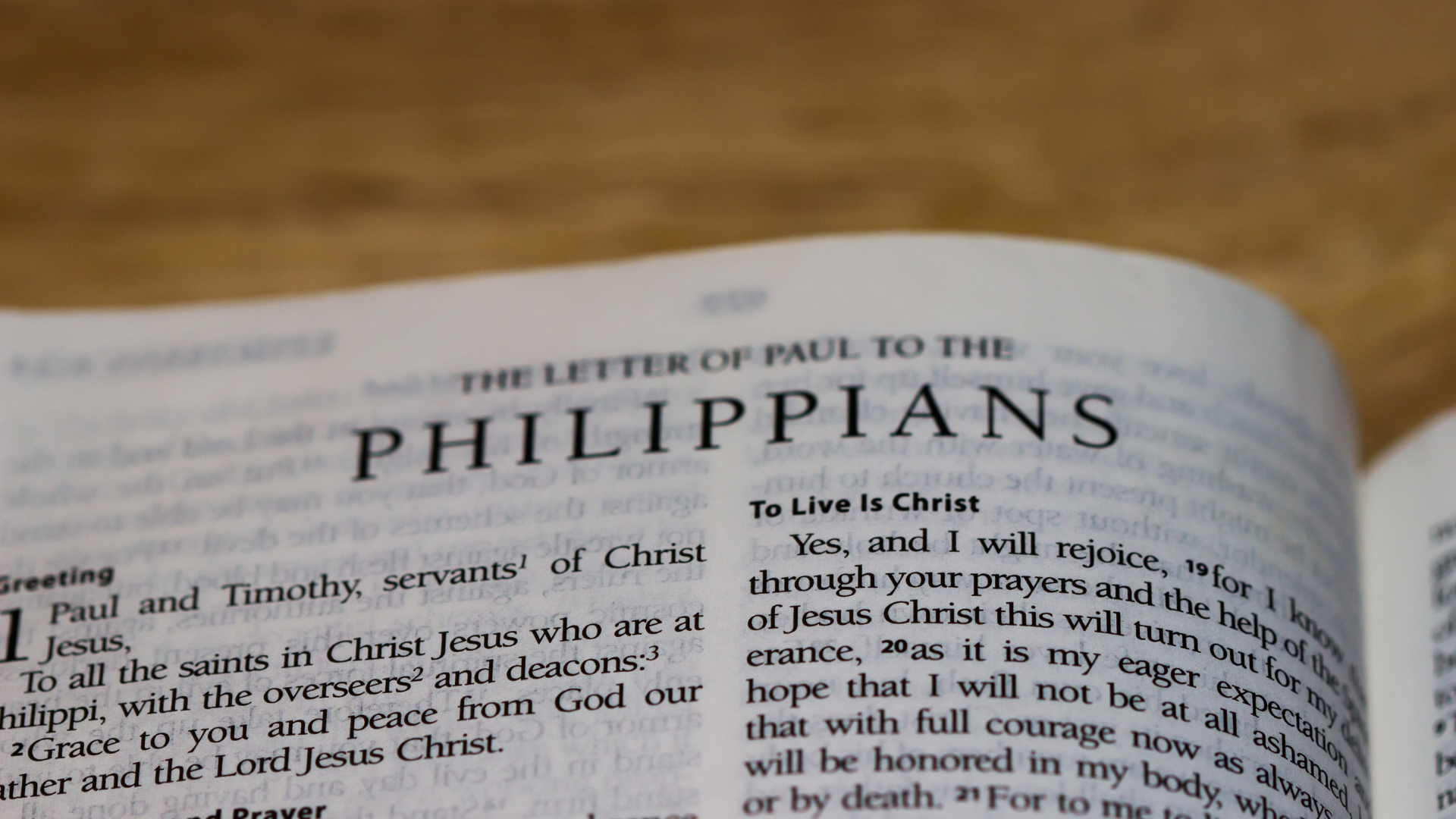
What does it mean to live a life of joy and purpose amidst challenges? In the Book of Philippians, the Apostle Paul provides profound insights and encouragement on finding contentment and strength through faith. This Bible study guide delves into the rich themes of Philippians, offering a roadmap to understanding and applying its timeless messages in your daily life.
Philippians Bible study guide: Brief overview

The Book of Philippians, found in the New Testament is a letter written by the apostle Paul to the Christian community in Philippi. Comprising four chapters, this epistle is known for its emphasis on joy, gratitude, and the Christian lifestyle.
Written around AD 61 during Paul’s imprisonment in Rome, this epistle is often referred to as the “Epistle of Joy” because of its emphasis on rejoicing in all circumstances. The letter is personal and heartfelt, expressing Paul’s deep affection for the Philippian believers and his gratitude for their support.
Key themes include joy, humility, the pursuit of Christ, and the importance of unity among believers. Paul encourages the Philippians to live in a manner worthy of the Gospel, to stand firm in their faith, and to find contentment in every situation. Here is a summary of the Book of Philippians:
| Aspect | Details |
|---|---|
| Author | Apostle Paul |
| Date of writing | Around AD 60-62 |
| Purpose | To express gratitude for the Philippians’ support, encourage them to live joyfully in Christ, promote unity and humility, and provide spiritual guidance and exhortation. |
| Recipients | The Christian community in Philippi |
| Historical context | Written during Paul’s imprisonment in Rome, the letter addresses the challenges and opportunities faced by a Roman colony with a diverse population and a strong Roman influence. |
| Key themes | Joy in Christ, humility and unity, spiritual growth, Contentment and peace, and Christ-centered living. |
| Notable verses | Philippians 1:4, 2:12-13, 3:7-11, 4:4 |
| Application for Today | Encourages believers to find joy in Christ despite circumstances, live in unity and humility, pursue spiritual growth, and apply Christian principles in daily life. |
Importance of Studying Philippians

Philippians offers profound insights into maintaining joy and peace amidst trials. Paul’s own situation of imprisonment and his unwavering faith provides a powerful example of enduring hardships with grace. The letter emphasizes the importance of unity within the church and humility in personal relationships, reflecting Christ’s example.
Philippians encourages believers to grow in their relationship with Christ, to press on toward spiritual maturity, and to work out their salvation with fear and trembling. The epistle challenges Christians to prioritize their relationship with Christ above all else, highlighting the surpassing worth of knowing Him.
With its practical advice and theological depth, Philippians equips believers to live out their faith in everyday life.
Purpose of the Philippians Bible study guide

This study guide provides you with a comprehensive understanding of the letter’s themes, context, and application. It aims to help you grasp the historical, cultural, and theological context of Philippians to enhance your comprehension of its message.
The guide fosters spiritual growth by encouraging personal reflection and application, leading to spiritual maturity and a closer walk with Christ. Philippians teaches believers how to cultivate joy and contentment in all circumstances, following Paul’s example.
The study seeks to highlight the importance of unity within the Christian community and the role of humility in nurturing healthy relationships. Ultimately, the Philippians Bible study guide facilitates personal reflection and group study by offering discussion questions and practical insights for living out the teachings of Philippians in daily life, fostering a deeper communal understanding and shared spiritual growth.
Philippians Bible study guide: Background information

The Book of Philippians showcases the depth of Paul’s relationship with the Philippian church and his unwavering faith in Christ despite his circumstances. l delve into its historical and cultural context to help you understand the circumstances surrounding its writing.
Historical context
The city of Philippi was a prominent Roman colony located in Macedonia, northern Greece. It was strategically significant due to its location along the Via Egnatia, a major Roman road that facilitated trade and military movement.
Philippi’s status as a Roman colony meant its inhabitants enjoyed Roman citizenship, which afforded them various privileges and legal protections. The Christian community in Philippi was founded by Paul during his second missionary journey around 49-50 AD (Acts 16:12-40).
Philippi was the first European city where Paul established a church, making it a significant milestone in the spread of Christianity. The initial converts included Lydia, a wealthy merchant, and the Philippian jailer, whose dramatic conversion is recounted in Acts 16.
Cultural context

Philippi’s culture was heavily influenced by Roman customs and traditions, reflecting its status as a Roman colony. The residents, known as Philippians, were proud of their Roman citizenship and deeply embedded in Roman social and political life.
This influence is evident in the language and themes Paul uses in his letter, as he often employs military and civic metaphors familiar to his readers. The church in Philippi was diverse, comprising Jews and Gentiles from various social and economic backgrounds.
This diversity presented both opportunities and challenges, as Paul sought to foster unity and mutual respect among the believers. The Philippians also faced external pressures and potential persecution due to their Christian faith, which contrasted sharply with the prevailing Roman religious practices.
Authorship and date of writing

The Epistle to the Philippians is universally acknowledged to be authored by the Apostle Paul. Paul’s authorship is supported by both internal and external evidence, including the personal tone of the letter and the references to his own experiences and companions.
Paul wrote Philippians during his imprisonment, believed to be in Rome, around 60-62 AD. This period of Paul’s life is often referred to as his first Roman imprisonment, during which he was under house arrest but had some freedom to receive visitors and write letters (Acts 28:30-31).
The letter reflects Paul’s close relationship with the Philippian church, marked by mutual affection and support. The Philippians had sent Epaphroditus to assist Paul during his imprisonment, and the letter expresses Paul’s gratitude for their generosity and partnership in the gospel. It also addresses issues within the church, such as the need for unity, humility, and perseverance in the face of suffering.
The traditional view: Pauline authorship
The traditional perspective attributes the authorship of Philippians to the apostle Paul. Paul, known for his prolific writings and missionary journeys, is believed to have composed this letter during his imprisonment in Rome, around 60-62 AD.
Advocates of the Pauline authorship emphasize the consistency of language, style, and theological themes with Paul’s other epistles.
Alternative views and scholarly debates

Despite the traditional view, alternative perspectives have emerged, challenging the notion of Pauline authorship. Some scholars propose that Philippians, along with other disputed letters (known as the “Prison Epistles”), might have been written by a follower or disciple of Paul rather than the apostle himself.
Others suggest that multiple hands may have contributed to the composition, leading to a more collaborative authorship.
Philippians Bible study guide: Structure of the Epistle

The structure of the Book of Philippians plays a crucial role in understanding the flow of Paul’s thoughts and the overarching themes he seeks to convey.
With four chapters, each brimming with profound insights and exhortations, Philippians invites believers into a journey of faith, joy, and Christian living.
Overview of the four chapters
Philippians is a concise yet powerful letter, and its four chapters unfold with purpose and coherence, offering profound insights into Christian living, joy, and gratitude.
| Chapter | Summary |
|---|---|
| 1 | Expresses joy and gratitude despite Paul’s imprisonment. Encourages standing firm in faith and living a life worthy of Christ. |
| 2 | Focuses on the humility of Christ, featuring the Christ hymn. Calls for emulation of Christ’s humility and unity among believers. |
| 3 | Shares Paul’s personal testimony, warns against legalism, and emphasizes the surpassing value of knowing Christ. Encourages pressing on toward the goal of Christlikeness. |
| 4 | Concludes with practical advice on living joyfully and contentedly. Addresses issues of unity, gratitude, and reliance on God’s strength. |
Literary style

The Book of Philippians employs a variety of literary styles and techniques that contribute to its theological depth and pastoral warmth.
Epistolary form
Philippians is structured as a letter, adhering to the conventions of Greco-Roman epistolary writing. It begins with a greeting, followed by a thanksgiving section, the main body of the letter, and concludes with final exhortations and a benediction. This structure reflects the personal and communal nature of Paul’s communication with the Philippian church.
Joy and rejoicing
One of the most distinctive features of Philippians is its emphasis on joy and rejoicing. Despite writing from imprisonment, Paul repeatedly uses the words “joy” and “rejoice,” creating a pervasive tone of encouragement and positivity. This thematic focus is expressed through repetitive language and emphatic expressions, reinforcing the message that joy in Christ transcends circumstances.
Christ Hymn

In Philippians 2:6-11, Paul includes a poetic and theologically rich passage often referred to as the “Christ Hymn.” This passage is characterized by its rhythmic structure and profound theological content, depicting the incarnation, humility, crucifixion, and exaltation of Christ. The use of parallelism and contrast enhances the hymn’s impact and memorability.
Pastoral tone
Paul’s writing in Philippians is notably pastoral. He uses affectionate and personal language, addressing the recipients as “brothers and sisters” and expressing his deep love and longing for them. This tone is reinforced by the use of first-person pronouns and direct appeals, which foster a sense of mutual care.
Exhortation and Imperatives
Throughout the letter, Paul employs exhortative language, urging the Philippians to live out their faith in specific ways. He uses imperative verbs to call them to actions such as standing firm, being united, rejoicing, and not being anxious. These exhortations are often framed within the context of Paul’s own example, adding weight to his instructions.
Rhetorical questions and antithesis

Paul frequently uses rhetorical questions to engage his readers and provoke reflection. He also employs antithetical statements to contrast different attitudes and behaviors, such as the humility of Christ versus human pride, or the contentment in Christ versus worldly anxiety. These rhetorical devices enhance the persuasive power of his message.
Imagery and metaphors
Paul utilizes vivid imagery and metaphors to convey spiritual truths. For example, he describes believers as “stars” shining in the world (Philippians 2:15) and likens his own life to a “drink offering” poured out for their faith (Philippians 2:17). These figurative expressions create memorable and impactful illustrations of his theological points.
Theological reflections
Philippians is rich in theological content, with Paul reflecting on themes such as the nature of Christ, the Christian life, and the future hope of believers. These reflections are interwoven with practical advice and personal anecdotes, creating a blend of doctrine and application that is both instructive and inspirational.
Philippians Bible study guide: Key themes

Philippians contains themes that offer guidance for Christian living. Here are the key themes highlighted in the epistle:
Joy in all circumstances
Joy stands as a pervasive theme in Philippians, a joy not contingent on external circumstances but rooted in the unchanging relationship with Christ (Philippians 4:4).
Paul, despite facing imprisonment and adversity, consistently emphasizes the call to rejoice. This joy springs from the believer’s deep connection with Christ, transcending challenges and providing a resilient foundation for a joy-filled life.
Unity in the body of Christ

Philippians underscores the importance of unity within the Christian community, emphasizing harmony, like-mindedness, and a shared commitment to the gospel (Philippians 2:2).
Paul urges believers to live in unity, considering others more significant than themselves. This call to unity fosters a community marked by mutual love and selflessness, reflecting the harmonious nature of the body of Christ.
Humility and servant leadership
The theme of humility is intricately woven throughout Philippians, culminating in the profound Christ Hymn that illustrates the epitome of selfless servant leadership (Philippians 2:5-8).
Paul calls believers to emulate the humility of Christ, considering others with genuine humility and adopting a servant-leader mindset. This theme challenges cultural norms and inspires a Christ-centered approach to leadership.
The importance of faith and righteousness

Faith and righteousness through Christ are central themes in Philippians, emphasizing the inadequacy of human efforts and the transformative power of faith (Philippians 3:9).
Paul shares his personal testimony, warning against legalism, and encourages believers to press on toward the goal of knowing Christ. The epistle underscores the vital role of faith in attaining true righteousness and spiritual maturity.
Contentment in Christ alone

The pursuit of contentment in Christ, irrespective of external circumstances, is a prevailing theme in the concluding chapters of Philippians (Philippians 4:11-13).
Paul reveals the secret of contentment, emphasizing that true satisfaction is found in Christ alone. This theme encourages believers to find peace and joy, not in worldly possessions or situations, but in an abiding relationship with Christ.
These key themes form a holistic framework for Christian living, offering believers guidance on cultivating joy, fostering unity, practicing humility, anchoring faith in Christ, and finding contentment in Him alone.
Philippians Bible study guide: Chapter-by-chapter analysis

The Book of Philippians comprises four chapters that emphasize teachings on joy, faith, and Christian living. Here is a detailed exploration of each chapter, unveiling the wisdom showcased by the apostle Paul.
Chapter 1: Living for Christ
Chapter 1 sets the tone for the entire epistle, revealing Paul’s deep affection for the Philippian believers despite his imprisonment. It serves as a testament to the joy that transcends circumstances and the commitment to live a life wholly dedicated to Christ.
Paul’s circumstances in prison
Despite facing imprisonment, Paul maintains an unwavering focus on advancing the gospel. His physical confinement contrasts sharply with the freedom he experiences in Christ, emphasizing the transformative power of faith amid adversity.
The joy of the gospel

Throughout this chapter, Paul repeatedly emphasizes the concept of joy. His joy stems from the Philippians’ partnership in the gospel and their shared commitment to Christ. This joy is a recurring theme, illustrating the profound impact of a life dedicated to Christ.
Striving for unity in the faith
Paul encourages the Philippians to stand firm in one spirit, striving side by side for the faith of the gospel. This call for unity lays the foundation for the themes of humility and selflessness that will be further explored in the subsequent chapters.
Chapter 2: Imitating Christ’s humility

Chapter 2 delves into the theme of humility, urging believers to emulate the selfless nature of Christ. This chapter unfolds with rich imagery, including the Christ Hymn, and provides practical guidance on fostering harmony within the Christian community.
The Christ Hymn
Central to Chapter 2 is the Christ Hymn, a poetic expression of Christ’s humility and self-sacrifice. This hymn is a cornerstone for understanding the call to humility and the model of servant leadership that believers are encouraged to follow.
Examples of humility in the Bible

Paul reinforces his call to humility by citing examples from the Old Testament, such as Timothy and Epaphroditus. These biblical exemplars serve as tangible models of selflessness and devotion to others, reinforcing the importance of humility in the Christian life.
Living in harmony with one another
Paul emphasizes the need for believers to live in harmony, considering others more significant than themselves. This call to unity and humility is a pivotal aspect of Christian living, fostering a community marked by mutual love and selflessness.
Chapter 3: Righteousness through faith

Chapter 3 turns the spotlight on righteousness through faith, as Paul shares his personal testimony and warns against the pitfalls of legalism. The chapter inspires believers to press on toward spiritual maturity and a deeper understanding of the righteousness found in Christ.
Paul’s personal testimony
Paul recounts his own journey and achievements before coming to Christ, highlighting the inadequacy of human accomplishments in securing righteousness. His personal testimony underscores the transformative power of faith in Christ.
Warning against legalism

Paul cautions against the lure of legalism, emphasizing that true righteousness comes through faith in Christ rather than adherence to religious laws. This warning resonates with a timeless message of salvation by grace through faith.
Pressing on toward the goal
The chapter concludes with a call to press on toward the goal of knowing Christ intimately. Believers are encouraged to leave behind the past, embracing a forward-looking attitude that seeks the higher calling found in Christ.
Chapter 4: Contentment in Christ

Chapter 4 serves as a capstone to the themes explored in Philippians, focusing on contentment and rejoicing in the Lord. Paul offers practical advice on finding joy and satisfaction in Christ, concluding the letter with warm remarks and greetings.
Rejoicing in the Lord always
Paul reiterates the call to rejoice, emphasizing that joy is not contingent on external circumstances but is rooted in the believer’s relationship with the Lord. This call to constant rejoicing underscores the resilient nature of Christian joy.
The secret of contentment

Paul shares the “secret” of contentment, revealing that it is found in Christ who provides strength in all circumstances. This powerful message resonates with believers facing challenges, offering a profound source of comfort and endurance.
Paul’s closing remarks and greetings
The letter concludes with Paul’s warm remarks and greetings, expressing his gratitude for the Philippians’ support and partnership. This closing section reinforces the relational aspect of the Christian journey and the importance of community in the faith.
Philippians Bible study guide: Key characters

The Book of Philippians features characters that play significant roles and contribute to the letter’s message of joy, unity, and perseverance in faith.
- Apostle Paul: He is the author of the letter. He is writing from prison (likely in Rome) and expresses his joy and gratitude for the Philippians’ support. He also provides encouragement and guidance to the church in Philippi.
- Timothy: Timothy is a close companion and co-worker of Paul. He is mentioned in the greeting and is likely with Paul when he writes the letter. Timothy is described as someone who genuinely cares for the Philippians and will be sent to them with the letter.
- Epaphroditus: Epaphroditus is a member of the Philippian church who was sent to Paul with a gift from the Philippians. He became ill during his visit but recovered later. Paul mentions him in the letter to express gratitude and to send him back to the Philippians.
- The Philippian church: While not an individual character, the members of the Philippian church are central to the letter. Paul writes to encourage them, express his affection, and address issues within the community.
Key passages/verses and their exegesis (NIV)

The Book of Philippians contains verses that resonate with profound theological significance. I delve into these verses, unraveling their meanings and understanding their relevance within the broader context of the epistle.
Philippians 1:21: “For to me, to live is Christ and to die is gain.”
In this verse, Paul expresses his profound perspective on life and death. He declares that for him, living is synonymous with Christ, and dying is considered gain because it leads to a closer presence with Christ.
Philippians 2:5-8: “Who, being in very nature God, did not consider equality with God something to be used to his own advantage; rather, he made himself nothing by taking the very nature of a servant, being made in human likeness. And being found in appearance as a man, he humbled himself by becoming obedient to death—even death on a cross!”
This passage contains the Christ Hymn, emphasizing the humility of Christ. Paul encourages the Philippians to emulate this humility, considering others more important than themselves, just as Christ humbled Himself for the sake of humanity.
Philippians 3:14 (NIV): “I press on toward the goal to win the prize for which God has called me heavenward in Christ Jesus.”

Paul articulates his determination to win the prize for which God has called him in Christ Jesus. This verse highlights the Christian’s journey toward spiritual maturity and the ultimate reward of eternal life with Christ.
Philippians 4:13: “I can do all this through him who gives me strength.”
A well-known and often-quoted verse, it expresses Paul’s confidence in Christ’s strength. He declares that he can face any circumstance and overcome any challenge through the strength that Christ provides.
These key verses highlight essential themes of Philippians, including the centrality of Christ in life, the call to emulate Christ’s humility, the pursuit of spiritual maturity, and the reliance on Christ’s strength in all circumstances.
Philippians Bible study guide: Practical application

The teachings of Philippians offer practical insights for believers seeking to live out their faith in everyday life. I explore how the principles embedded in Philippians can be applied to cultivate joy, contentment, unity, humility, and selflessness.
Applying the principles of Philippians in everyday life
Philippians provides a blueprint for applying Christian principles in the complexities of daily life, bridging the gap between theological truths and practical living.
Believers are encouraged to embrace gratitude in challenging circumstances, stand firm in faith amid trials, and continually strive for a life that reflects the joy and love of Christ.
Developing a joyful and content attitude

Joy and contentment, foundational themes in Philippians, are virtues that believers are encouraged to actively cultivate in their hearts and minds.
Christians should foster a habit of rejoicing in all circumstances, find contentment in Christ alone, and allow the joy of the Lord to be a constant source of strength and perspective.
Building unity in local Christian communities
The call for unity within the body of Christ is a prominent theme in Philippians, emphasizing the importance of harmonious relationships among believers.
Christians are called to actively pursue unity by fostering a spirit of mutual love, considering others more significant than oneself, and working towards common goals for the advancement of the gospel.
Embracing humility and selflessness in relationships

Philippians challenges believers to embrace humility and selflessness in their interactions, mirroring the servant leadership exemplified by Christ.
As a believer, you are required to cultivate a humble mindset, consider the needs of others above your own, and approach relationships with a genuine desire to serve and uplift others.
Philippians Bible study guide: Relevant cross-references

Understanding Philippians in light of other Scriptures can deepen your comprehension of its message and relevance for Christian living.
Connecting Philippians with other biblical passages
To understand Philippians, it is helpful to compare its teachings with other relevant passages. These comparisons reveal the consistency of Paul’s message with broader biblical principles.
James
James 1:2-4 encourages believers to view trials as opportunities for growth, similar to Paul’s message in Philippians 1:12-14, where he speaks about his imprisonment advancing the gospel. Both passages highlight how challenges can contribute to spiritual development and the advancement of God’s work.
Romans

Romans 12:1-2 talks about presenting oneself as a living sacrifice and being transformed by renewing the mind, which resonates with Philippians 2:5-8. Both passages stress the importance of humility and adopting a Christlike mindset as central to Christian living.
1 Thessalonians
1 Thessalonians 5:16-18 instructs believers to rejoice, pray, and give thanks in all circumstances, reflecting the joy and gratitude Paul expresses in Philippians 4:4-7. Both passages emphasize maintaining a joyful and thankful attitude amidst various life situations.
Philippians Bible study guide: Exploring related themes

These themes provide a richer understanding of Philippians and its teachings, demonstrating its connection to broader biblical principles and encouraging a holistic approach to Christian living.
Joy in the Christian life
Throughout the Bible, joy is portrayed as a significant aspect of the believer’s experience. For instance, Nehemiah 8:10 says, “The joy of the Lord is your strength,” illustrating how joy is a source of spiritual strength. Similarly, Galatians 5:22 lists joy as a fruit of the Spirit, reinforcing its importance in the Christian life.
Humility and service

Humility and service are central themes in Philippians, particularly in Philippians 2:3-4, which instructs believers to consider others better than themselves and look out for their interests. This theme is also evident in Mark 10:45, where Jesus states He came to serve rather than to be served, and in 1 Peter 5:5-6, which encourages humility before God.
Perseverance in trials
The call to persevere through trials is a recurring biblical theme. In 2 Corinthians 4:8-10, Paul describes how believers are afflicted but not crushed, and this echoes the perseverance Paul advocates in Philippians 3:12-14. Additionally, Hebrews 12:1-2 advises believers to run with endurance the race set before them, focusing on Jesus as the ultimate example of perseverance.
Philippians Bible study guide: Addressing common misconceptions

Several passages in Philippians are often misunderstood, leading to misinterpretations of Paul’s message. I address the misconceptions, providing clarity and context to enhance your understanding of this epistle.
“I can do all things through Christ” means unlimited success
One of the most frequently quoted verses from Philippians is Philippians 4:13. This verse is often interpreted as a promise of unlimited success and the ability to achieve any goal.
However, in context, Paul is speaking about contentment in all circumstances, whether in abundance or in need. He is highlighting that his strength comes from Christ, enabling him to endure all situations, not just achieve personal ambitions.
Philippians 2:12 promotes salvation by works

Philippians 2:12 instructs believers to work out their salvation with fear and trembling. This has led some to believe that salvation depends on human effort. However, the context reveals that Paul is addressing sanctification, not justification.
He encourages believers to live out their salvation, allowing God’s grace to transform their lives. The subsequent verse, Philippians 2:13, clarifies that it is God who works in believers to will and to act according to His purpose, underscoring divine empowerment rather than human effort.
Paul’s imprisonment was a defeat
Paul wrote the letter to the Philippians while he was imprisoned, which some might view as a sign of defeat or failure in his ministry. However, in Philippians 1:12-14, Paul explains that his imprisonment actually served to advance the gospel.
His chains became an opportunity to witness to the entire palace guard, and his courage inspired other believers to proclaim the gospel more boldly. This teaches us that God can use even the most challenging circumstances to fulfill His purposes.
The call to unity means uniformity

In Philippians 2:2-3, Paul urges the believers to be of one mind, having the same love, and being in full accord. This call to unity is often mistaken for a call to uniformity, suggesting that everyone must think and act (Philippians 1:18-19)identically.
However, Paul is advocating for unity in purpose and humility, not uniformity of thought. He emphasizes the importance of valuing others above ourselves and looking to the interests of others, which fosters genuine unity amidst diversity.
Rejoicing always means ignoring suffering
Philippians 4:4 commands believers to rejoice always in the Lord. This can be misunderstood as a call to ignore or suppress feelings of sorrow and suffering. However, Paul is not advocating for a denial of reality but encouraging a deep-seated joy rooted in Christ, irrespective of circumstances.
Throughout Philippians, Paul acknowledges his own sufferings and struggles but consistently points to the joy that comes from a relationship with Christ. This joy coexists with and even transcends the hardships of life.
Philippians Bible study questions

These study questions designed for both individual reflection and group discussion provide an opportunity to delve deeper into the themes and teachings found in Philippians.
Questions for individual reflection
Q1: How can you cultivate a mindset of joy in your life, especially during challenging circumstances?
Q2: Reflect on a specific instance where you’ve experienced unity within your Christian community. What contributed to that sense of unity?
Q3: In what areas of your life do you find it most challenging to practice humility and selflessness? How can you work towards improvement?
Q4: Consider times when you’ve faced adversity. How has your faith in Christ provided strength and resilience?
Q5: Identify areas where contentment is elusive in your life. How might a deeper reliance on Christ bring about a greater sense of contentment?
Q6: How do you personally connect with the idea of pressing on toward the goal of knowing Christ more deeply?
Q7: Reflect on the role of gratitude in your life. In what ways can you express gratitude for the support and partnership of fellow believers?
Q8: Consider the relationships in your life. In what ways can you actively work towards building unity and harmony within those relationships?
Q9: How can you practically apply the principles of humility and servant leadership in your workplace or community?
Q10: What steps can you take to live a life that is more aligned with the principles found in Philippians, both in your personal and public life?
Philippians Bible study guide: Group discussion questions

Q1: In Philippians 1, Paul expresses joy even amid challenging circumstances. How can we apply this principle in our own lives when facing difficulties?
Q2: The concept of unity is prominent in Philippians. In what ways can we actively contribute to fostering unity within our local Christian community, as Paul encourages in Philippians 2?
Q3: Philippians 2 introduces the Christ Hymn, emphasizing the humility of Christ. How can we incorporate the humility of Christ into our leadership styles and daily interactions with others?
Q4: Paul warns against legalism in Philippians 3. How can we guard against legalistic tendencies in our faith and instead focus on righteousness through faith in Christ?
Q5: Philippians 4 encourages believers to rejoice in the Lord always. How can we cultivate a habit of rejoicing, especially in challenging circumstances, and what role does gratitude play in this?
Q6: Contentment is a recurring theme in Philippians. How can we find contentment in our relationship with Christ rather than in external circumstances, as Paul suggests in Philippians 4?
Q7: Philippians emphasizes the importance of considering others more significant than ourselves. How can we practically embody this principle in our relationships and interactions with others?
Q8: The call to press on toward the goal of knowing Christ is mentioned in Philippians 3. How can we set spiritual goals and pursue a deeper relationship with Christ in our daily lives?
Q9: In Philippians 2, Paul mentions examples of humility in Timothy and Epaphroditus. How can we learn from these examples and apply similar humility in our own lives?
Q10: Philippians 4 provides practical advice for living joyfully and contentedly. What specific steps can we take to live out these principles in our daily routines, relationships, and decision-making processes?
Start exploring Philippians today
As you delve into the Book of Philippians, allow its message to shape your attitude and guide your actions. For a more in-depth exploration, consider exploring Bible studies focused on individual chapters. Begin reading Philippians today and discover the transformative power of God’s Word in your life.

I’m a devoted follower of Christ on a journey to share the profound love, faith, and hope found in our Savior. Through my writings, I aim to inspire, uplift, and encourage fellow believers as we walk together in God’s light. Join me in exploring the beauty of faith and discovering the richness of a life rooted in Christ. Want to connect with me? Follow me on Facebook and YouTube.