
Prayer is not meant to be a burden but a joyous privilege that brings you into intimate communion with God. So, if you’ve ever felt that your prayers lack depth, consistency, or results, I’ll equip you with practical tips to help you develop a powerful prayer life and experience the transformational power of prayer.
Pillars of a powerful prayer life

Just as a sturdy building requires a solid base, so does a vibrant prayer life requires elements that sustain your connection with God. Here are the pillars that support a powerful prayer life for Christians.
Cultivate a heart of gratitude and humility
Gratitude and humility are the cornerstones of a powerful prayer life. When you approach God with a thankful heart, recognizing His blessings and goodness in your life, you create an atmosphere of worship and praise.
1 Thessalonians 5:16-18 reminds you to “Rejoice always, pray continually, give thanks in all circumstances; for this is God’s will for you in Christ Jesus.” A grateful heart keeps you mindful of the countless ways God has been faithful to you, filling you with reverence for His grace.
I’ve experienced the impact of gratitude in prayer. There were times when I found myself consumed by worries and complaints, and my prayers felt empty and ineffective.
But as I started to intentionally count my blessings and thank God for even the smallest things, my perspective shifted. My prayers became more authentic, and I began to sense a deeper connection with God, as I poured out my heart to a loving Father.
Develop a desire to seek God’s Will

Prayer is not just about presenting your wish list to God; it’s also about aligning your desires with His perfect Will. Developing a genuine desire to seek God’s Will requires surrendering your own plans and ambitions, and acknowledging that He knows what’s best for you.
This can be a challenging process, but as you grow in your relationship with God, you learn to trust His guidance and submit to His divine purpose for your life. Proverbs 3:5-6 reminds you to “Trust in the LORD with all your heart and lean not on your own understanding; in all your ways submit to him, and he will make your paths straight.”
I remember a time when I was facing a major decision regarding my writing career. I sought God in prayer, asking Him to reveal His Will to me. As I patiently waited and continued to pray, I felt peace and clarity settling in my heart.
Eventually, God opened doors that I hadn’t even considered, leading me to a path that aligned perfectly with His plan for my life.
Build faith and trust in God’s promises

Faith is the bedrock of effective prayer. It’s believing in God’s promises even when circumstances seem contrary. As you immerse yourself in Scripture and meditate on God’s word, you find promises you can hold onto during prayer.
Trusting in these promises helps you approach God with confidence, knowing that He is faithful to fulfill His word. There have been times when I faced numerous challenges and didn’t know how things would work out.
In such moments, I clung to Isaiah 41:10, “So do not fear, for I am with you; do not be dismayed, for I am your God. I will strengthen you and help you; I will uphold you with my righteous right hand,” and Hebrews 11:6 – “And without faith, it is impossible to please God because anyone who comes to him must believe that he exists and that he rewards those who earnestly seek him.”
Trusting in God’s promises enabled me to pray with assurance, knowing that He was with me every step of the way.
Set aside a place for prayer and meditation

Carving out a sacred space for prayer and reflection is crucial. Finding a quiet and peaceful place, free from distractions, allows you to center your thoughts on God and nurture a deeper intimacy with Him.
This space can be a physical location, like a corner in your room or a garden, or it can be a mental space you create during your daily activities. I’ve found solace in a small prayer corner in my home. It’s adorned with a Bible, a pen, and a journal.
When I retreat to this space, I freely express my thoughts and emotions to God. It has become a place of encounter, where I experience God’s presence and find clarity in my prayers.
How to overcome common obstacles in prayer

Prayer brings you closer to God’s heart. Yet, as you strive to deepen your prayer life, you may encounter obstacles that affect your communion with God. These obstacles can leave you feeling discouraged and unsure of how to handle them. Follow these tips to navigate the obstacles:
Address doubts and spiritual dryness

There are times in your prayer life when doubts and spiritual dryness can creep in, leaving you feeling disconnected from God. You may wonder if your prayers even matter or if God is truly listening.
James 1:6 reminds us “But when you ask, you must believe and not doubt, because the one who doubts is like a wave of the sea, blown and tossed by the wind.” During such moments, it’s essential to remember that doubt is a natural part of your human experience, and it doesn’t mean you lack faith.
Instead of suppressing these doubts, bring them before God. I remember a season in my life when I felt spiritually dry and doubted the effectiveness of my prayers.
Instead of hiding those feelings, I decided to share my struggles with a close friend who had experienced similar doubts. Together, we sought God in prayer, asking Him to strengthen our faith. As we opened up to God about our doubts, we discovered that He met us in our vulnerability, reassuring us of His love and faithfulness.
Trust in God’s timing with unanswered prayers

One of the most challenging obstacles in prayer is dealing with unanswered prayers and God’s delayed timing. During such moments, turn to Psalm 27:14 which encourages you to “Wait for the LORD; be strong and take heart and wait for the LORD.” You may pray for something you desire, only to see your petitions seemingly unheard.
It’s crucial to remember that God’s ways are higher than ours, and His timing is perfect. I experienced a time when I prayed for a specific opportunity, but it didn’t materialize as I hoped. I felt disheartened and wondered why God hadn’t answered my prayers.
In my frustration, I turned to the Book of Isaiah, where I read, “For my thoughts are not your thoughts, neither are your ways my ways, declares the Lord” (Isaiah 55:8). This verse reminded me that God’s plans are beyond my understanding, and I needed to trust Him even in the midst of unanswered prayers.
Let go of guilt and fear in prayer

Guilt and fear can hinder your prayer life. You may feel unworthy to come before God due to past mistakes or harbor fear of being rejected by Him. However, God’s love is unconditional, and He invites you to come to Him with an open heart.
I once struggled with guilt over a mistake I had made, and it weighed heavily on my prayer life. However, as I turned to God in prayer, I found comfort in the promise of 1 John 1:9, which says, “If we confess our sins, he is faithful and just and will forgive us our sins and purify us from all unrighteousness.”
Embracing God’s forgiveness, I learned to let go of guilt and approach Him with confidence in His grace. Hebrews 4:16 says, “Let us then approach God’s throne of grace with confidence, so that we may receive mercy and find grace to help us in our time of need.”
Prayer is a journey, and as you encounter these challenges, remember God is compassionate and patient with you. He invites you to be authentic in your prayers and come to Him as you are.
How to develop a consistent prayer life

Developing a consistent prayer routine is not about rigid schedules or obligatory routines; rather, it is an intentional journey of drawing nearer to God.
It is an invitation to set aside time each day, whether in moments of quiet reflection or amidst the busyness, to commune with your Heavenly Father and align your heart with His. Here are tips to help you develop a consistent prayer routine:
Establish a daily prayer schedule

Consistency is key to developing a powerful prayer life. Just as you set aside time for important tasks in your daily routine, you should prioritize prayer in your schedules. Designate a specific time each day for prayer, whether it’s in the morning, during lunch breaks, or before sleeping.
By making prayer a regular habit, you create space for God to speak to you and for you to draw closer to Him.
I struggled with establishing a consistent prayer routine in the past. However, I started waking up earlier every morning to dedicate the first hours of my day to prayer as highlighted in Psalm 5:3: “In the morning, LORD, you hear my voice; in the morning, I lay my requests before you and wait expectantly.”
This allowed me to start the day with a sense of peace and purpose, and I found that my daily interactions were influenced positively by this intentional time with God.
Incorporate prayer into different aspects of life

Prayer should not be confined to a specific time or place; it can be integrated into every aspect of your life. 1 Thessalonians 5:17 reminds us to “Pray without ceasing.” Whether you’re at work, spending time with family, or engaging in social activities, you can maintain an attitude of prayerfulness.
Offering up quick prayers throughout the day helps you stay connected to God and invites Him into every situation you encounter.
For instance, during a busy workday, if a colleague shares their struggles, I take a moment to pray for them silently. In doing so, prayer becomes a natural part of my interactions, and I’ve witnessed how God’s grace touches the lives of those around me.
Use prayer journals and devotional materials

Keeping a prayer journal can be a powerful tool in deepening your prayer life. Writing down your thoughts, emotions, and prayers provides a tangible way to express your heart to God.
It allows you to track God’s faithfulness, as you note down answered prayers and experiences of His grace. I started using a prayer journal, and it has been a transformative practice.
One day, as I was looking back at previous entries, I was amazed to see how God had guided me through challenges and provided beyond my expectations. This realization boosted my faith and encouraged me to remain steadfast in prayer.
Pray with a prayer partner or in the community

Praying with others can bring a unique sense of unity and support to your prayer life. Find a prayer partner or join a prayer group or community where you can share prayer requests, intercede for one another, and witness the power of collective prayer.
In Matthew 18:20 we are reminded “For where two or three gather in my name, there am I with them.” I recall a time when I was going through a difficult season in my life. A friend offered to pray with me regularly. Her companionship and prayers were a source of strength and comfort.
As we prayed together, we felt the assurance that God was listening and working in our circumstances. It was a reminder that we don’t have to walk our faith journey alone; we have fellow believers to stand with us in prayer.
Developing a consistent prayer routine infuses your day with God’s presence, helping you experience a deeper connection with Him. As you build a solid foundation of prayer in your life, you open yourself up to a more intimate relationship with your Heavenly Father.
How to deepen your prayer life

Deepening your prayer life is an invitation to journey beyond routine petitions and embrace a meaningful communion with God. It is a path that leads to greater intimacy, understanding, and alignment with God’s Will. Implement these strategies to strengthen your prayer experience:
Study Scripture and meditate on God’s Word

The Word of God contains wisdom and revelation, and immersing yourself in Scripture deepens your prayer life significantly. Psalm 119:105 says, “Your word is a lamp for my feet, a light on my path.”
As you read and meditate on God’s word, it shapes your thoughts, aligns your desires with His, and provides you with powerful prayers inspired by His promises. I remember a time when I was feeling spiritually dry and distant from God. I decided to commit to a daily reading and meditation plan.
As I read God’s Word, I encountered passages that spoke directly to my heart. I began to incorporate these verses into my prayers, finding comfort, strength, and guidance in the truths they held. The more I engaged with Scripture, the more my prayer life flourished, and I felt a renewed sense of intimacy with God.
Engage in fasting and spiritual disciplines

Fasting and other spiritual disciplines are powerful tools that can enhance your prayer life. Fasting involves abstaining from food or other activities for a specific period while devoting that time to prayer and seeking God’s presence.
Matthew 6:17-18 reminds us “But when you fast, put oil on your head and wash your face so that it will not be obvious to others that you are fasting, but only to your Father, who is unseen; and your Father, who sees what is done in secret, will reward you.”
Fasting helps you develop self-control as it heightens spiritual sensitivity, creating an atmosphere of intimacy with God. During a season of seeking God’s direction in my life, I decided to fast and pray for clarity. As I sacrificed physical nourishment, I felt a deeper hunger for God’s presence.
In that vulnerable state, I experienced a profound closeness with Him, and my prayers became more focused and fervent. Fasting taught me the beauty of relying on God alone and deepened my dependence on Him.
Incorporate praise and worship in your prayer

Praise and worship are integral parts of prayer that shift your focus from yourself to the magnificence of God. Psalm 95:1-2 says, “Come, let us sing for joy to the LORD; let us shout aloud to the Rock of our salvation. Let us come before him with thanksgiving and extol him with music and song.”
When you praise God for His attributes, goodness, and faithfulness, it cultivates an atmosphere of adoration and reverence in your prayers. Worship opens your heart to a deeper connection with God, where His presence can touch you in profound ways.
In my prayer life, I realized the importance of incorporating praise and worship regularly. There were times when I felt burdened by my struggles and challenges, but as I began to sing songs of praise and declare God’s greatness, my perspective shifted.
I found peace and strength in acknowledging that God is in control, and my prayers turned from a list of requests to a heartfelt conversation with my Heavenly Father.
Cultivate a spirit of thankfulness

Thankfulness is a transformative attitude that enhances your prayer life. Colossians 4:2 says, “Devote yourselves to prayer, being watchful and thankful.” When you approach God with a grateful heart, even in the midst of challenges, it deepens your trust in His faithfulness.
Thankfulness opens your eyes to God’s blessings, both big and small, and helps you find joy in His presence. In my prayer journey, I started incorporating a time of thanksgiving before making any requests. I found that by focusing on what God has already done, my faith and confidence in His ability to answer my prayers grew.
Gratitude became a foundation for my prayers, and it allowed me to experience God’s peace even in uncertain times. As you integrate these practices into your prayer routine, you draw closer to God and experience a deeper connection with Him.
Strategies for effective intercessory prayer

Intercessory prayer allows you to stand in the gap for others, bringing their needs, concerns, and desires before the throne of God.
It is a powerful act of love and compassion, and through it, you become a vessel of God’s grace and mercy to those around you. Here are strategies that can deepen your intercession and make your prayers more impactful:
Identify specific areas for intercession

Effective intercessory prayer requires an intentional focus on specific areas of need. Take time to listen to the concerns and struggles of others, and ask God to reveal areas where your prayers can make a difference.
In 1 Timothy 2:1, the Apostle Paul reminds us – “I urge, then, first of all, that petitions, prayers, intercession, and thanksgiving be made for all people.” Interceding for others allows you to step into their shoes, empathize with their circumstances, and bring their needs before God’s throne of grace.
I remember an instance when a friend was going through a difficult time with her health. As I listened to her share her struggles, I felt a burden to pray for her healing and comfort. I made it a daily practice to lift her up in prayer, and through that intercession, I witnessed God’s healing touch and the strengthening of her faith.
Pray with authority and in Jesus’ name

Intercessory prayer carries spiritual authority when you pray in the name of Jesus. His name represents His character, power, and authority over all things. John 14:13-14 says, “And I will do whatever you ask in my name, so that the Father may be glorified in the Son. You may ask me for anything in my name, and I will do it.”
When you pray in Jesus’ name, you acknowledge that He is the mediator between you and God, and your prayers are offered in alignment with His Will.
I’ve seen the impact of praying in Jesus’ name. I remember praying for a friend who was facing a challenging decision. As I concluded my prayer, I invoked the name of Jesus, trusting that His perfect Will would prevail. The peace that washed over both of us affirmed that our prayers were heard, and God was working in her situation.
Persist in prayer for ongoing needs

Intercessory prayer often involves ongoing needs that require persistence and faithfulness. Just as the persistent widow in Jesus’ parable (Luke 18:1-8) kept seeking justice from the unjust judge, you are encouraged to persevere in your intercessions.
It is vital not to lose heart but to continue lifting up the needs of others with unwavering faith. Galatians 6:9 encourages us to keep praying – “Let us not become weary in doing good, for at the proper time, we will reap a harvest if we do not give up.”
I once prayed for a colleague who was going through a challenging time of reconciliation in their relationship. The process was long and difficult, but I kept praying. As I persisted, I witnessed God’s hand at work, slowly bringing healing and restoration to their broken bond.
Celebrate and recognize answered prayers

Effective intercessory prayer involves not only presenting your requests but also celebrating answered prayers. When God moves in response to your intercession, it is essential to give thanks and recognize His faithfulness.
1 Thessalonians 5:18 encourages us to “Give thanks in all circumstances; for this is God’s will for you in Christ Jesus.” Celebrating answered prayers deepens your faith and encourages you to continue interceding on behalf of others. I’ve witnessed answered prayers in my friend’s life.
One instance was when we prayed for her job situation. She had been searching for employment for months, and we gathered with her family to pray for God’s provision.
When she finally secured a job, we rejoiced together, giving thanks for God’s timely answer to our prayers. As you intercede for others, you step into the privilege of partnering with God in His work of compassion and transformation.
Growing through personal prayer challenges

Prayer challenges test your faith and resilience and can take various forms – from feeling distant from God during times of spiritual dryness to grappling with unanswered prayers and doubts about the effectiveness of your petitions. Follow these tips to navigate personal prayer challenges:
Learn from the prayer lives of Biblical figures

The prayer lives of Biblical figures serve as valuable lessons and inspiration for your prayer journey. As you study their experiences, you see their struggles, doubts, and victories in prayer, realizing that they were ordinary individuals who faced similar challenges as you do.
Their stories remind you that God is faithful and responsive to those who seek Him wholeheartedly. One Biblical figure whose prayer life has impacted me is Daniel. In the book of Daniel, we see him facing adversity and opposition, yet he remained steadfast in prayer.
Even when it became illegal to pray to anyone except the king, Daniel continued to pray to God.
Daniel 6:10 says “Now when Daniel learned that the decree had been published, he went home to his upstairs room where the windows opened toward Jerusalem. Three times a day he got down on his knees and prayed, giving thanks to his God, just as he had done before.”
Daniel’s unwavering commitment to prayer, despite the consequences, encourages me to be bold and persistent in seeking God’s presence.
Find encouragement from testimonies

Personal testimonies from fellow believers can encourage you when facing prayer challenges. Revelation 12:11 emphasizes the significance of testimonies “They triumphed over him [the enemy] by the blood of the Lamb and by the word of their testimony; they did not love their lives so much as to shrink from death.”
When you hear how God has answered prayers and worked miracles in the lives of others, it strengthens your faith and ignites hope in your heart. I remember attending a prayer conference where individuals shared their testimonies of healing, provision, and divine interventions.
Hearing these stories renewed my faith in my prayer life. It reminded me that the God who worked wonders in the lives of others is the same God I pray to, and He is more than able to answer my prayers too.
Seek mentorship and guidance in prayer

Seeking mentorship and guidance from more experienced believers can be instrumental in growing through personal prayer challenges. In Proverbs 19:20 you are encouraged to “Listen to advice and accept discipline, and at the end, you will be counted among the wise.”
Connecting with individuals who have a deep and mature prayer life allows you to learn from their insights and experiences. Their wisdom can help you navigate difficult seasons, develop resilience in prayer, and overcome obstacles you may encounter.
During a time of spiritual dryness in my prayer life, I sought the guidance of a seasoned prayer warrior in my church. She patiently listened to my struggles and shared her journey of ups and downs in prayer. Through her mentorship, I learned valuable lessons about perseverance and the flow of spiritual growth.
Her prayers and encouragement were like a guiding light that led me back to a place of intimacy with God. Personal prayer challenges can be transformed into opportunities for growth.
As you navigate the ups and downs of prayer, you will discover that every challenge can be a stepping stone toward a deeper and more intimate relationship with God.
The power of prayer in community

When individuals come together in unity, lifting their voices to the heavens as one, the impact of their collective prayers is a force beyond measure. Here are tips to help you experience the power of community prayer:
Participate in corporate worship and prayer
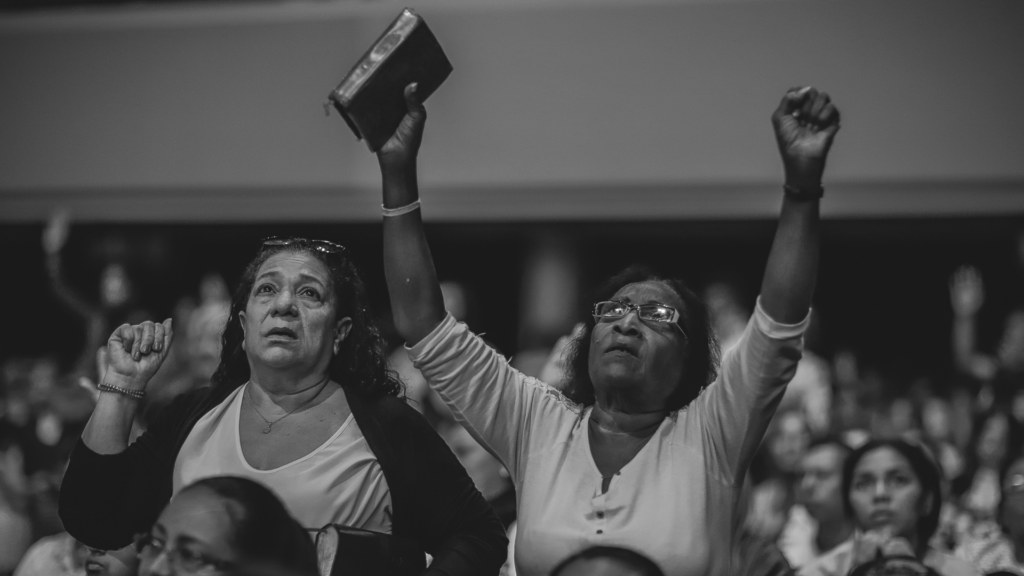
Praying together in a corporate setting holds a unique power. When believers come together to worship and pray, there is unity and collective faith that rises before God. Matthew 18:20 reminds us “For where two or three gather in my name, there am I with them.”
Corporate worship glorifies God and also strengthens your bond as members of the Body of Christ. I remember attending a church prayer night where the congregation gathered to seek God’s guidance for the church’s future.
As we sang praises and lifted our petitions in unison, I felt God’s presence. It was as if our individual prayers were woven together into melodious worship, and our hearts were aligned with God’s Will.
Join prayer groups and prayer chains

Prayer groups and prayer chains provide a network of support, intercession, and encouragement. Galatians 6:2 says “Carry each other’s burdens, and in this way, you will fulfill the law of Christ.” Being part of a prayer group allows you to share your burdens and joys with others, knowing that they are standing with you in prayer.
Additionally, prayer chains enable you to quickly mobilize a community of believers to lift urgent requests to God. I had the privilege of being part of a prayer group during a challenging season in my life.
Each member cared for one another, and we witnessed God’s hand at work in our prayers. Genuinely love and friendship grew among us as we interceded for each other. The experience taught me the beauty of being connected to a community of prayer warriors.
Engage in prayer retreats and conferences

Prayer retreats and conferences provide a unique opportunity to immerse yourself in an atmosphere of focused prayer and spiritual growth. Jeremiah 29:13 says “You will seek me and find me when you seek me with all your heart.”
These events offer dedicated time away from the busyness of life to seek God’s presence and guidance. They often include teaching, worship, and extended times of prayer that can revive and deepen your prayer life.
I once attended a prayer retreat where the theme was “Seeking God’s Heart.” The speakers shared personal stories of how prayer had transformed their lives and ministries. The retreat’s atmosphere of worship and prayer fueled a hunger for God in my heart.
It was a powerful reminder of the importance of setting aside intentional time to seek God’s face. I encourage you to embrace the power of praying together, knowing that you are bound together by the love of Christ and the common purpose of seeking His Will.
How to maintain a listening attitude in prayer

Prayer is a conversation with God, where you pour out your heart and present your requests before the Creator of the universe. While you may be eager to share your thoughts and desires with Him, it is equally essential to cultivate a listening attitude in prayer. Here is how to do it:
Practice silence and waiting on God

It’s easy to rush through your prayer time with a list of requests and concerns. However, maintaining a listening attitude in prayer requires intentional moments of silence and waiting on God.
Silence allows you to quiet your heart, tune out distractions, and attentively listen to God’s still, small voice. I remember a time when I felt overwhelmed with decisions and uncertainties. As I sought God’s guidance in prayer, I made a conscious effort to be silent before Him, patiently waiting for His leading.
In that quietness, I felt a gentle nudge in my heart, directing me towards the right path. It was a profound moment of communion with God that I wouldn’t have experienced without the practice of silence in prayer.
Recognize God’s voice and direction

Listening in prayer involves recognizing God’s voice and discerning His direction. God speaks to you in various ways, through Scripture, impressions in your heart, godly counsel, or even in the stillness of your soul. John 10:27 says “My sheep listen to my voice; I know them, and they follow me.”
Learning to discern His voice requires knowing His character through regular Bible study and prayerful intimacy with Him. I’ve experienced moments when God’s direction became evident in unexpected ways. One day, I was seeking guidance about a significant life decision.
As I meditated on a certain Bible verse, it spoke directly to my situation. Through that encounter, I recognized God’s voice and received clear direction for my next steps.
Journal and reflect on insights gained in prayer

Journaling and reflecting on your prayers and insights gained is a valuable practice that deepens your listening attitude in prayer. Habakkuk 2:1 says “I will stand at my watch and station myself on the ramparts; I will look to see what he will say to me, and what answer I am to give to this complaint.”
Writing down your thoughts and impressions allows you to capture God’s whispers and revelations. Over time, it becomes a reserve of spiritual growth and a reminder of God’s faithfulness.
In my prayer journal, I document my conversations with God, recording my prayers, thoughts, and anything I sense He is speaking to my heart. I find that as I revisit past entries, I gain fresh insights and witness God’s faithfulness in answering prayers.
Journaling is an essential tool for fostering a listening heart in prayer. Approach prayer with a heart that seeks not only to speak but also to listen to your Heavenly Father. In doing so, you open yourself up to the depths of His wisdom, love, and guidance.
How to overcome spiritual plateaus in prayer

Prayer is a vital aspect of your relationship with God, serving as a means of communication, worship, and spiritual growth. However, there may come moments when you feel stuck on a spiritual plateau in your prayer life.
This can leave you feeling distant from God and unsure of how to progress. Explore these strategies to reignite the fire of intimacy in your prayer life:
Embrace the flow of spiritual growth

In your prayer journey, you may encounter times when you feel stagnant, experiencing what is called “spiritual plateaus.” In Psalm 42:11 David asks “Why, my soul, are you downcast? Why so disturbed within me? Put your hope in God, for I will yet praise him, my Savior, and my God.”
It’s essential to recognize that spiritual growth often involves flows. Embracing these periods of plateau with grace and patience allows you to understand that it is a natural part of your walk with God.
I have experienced spiritual plateaus in my life, where my prayers seemed repetitive and lacked passion. At first, I felt discouraged, thinking I was failing in my spiritual life.
However, as I turned to God in prayer and sought His guidance, I learned that these times of plateau were opportunities for Him to teach me perseverance, trust, and reliance on His grace.
Focus on the relationship rather than routine in prayer

At times, your prayer life can become mechanical, and you may find yourself going through the motions of routine prayer. Overcoming spiritual plateaus involves shifting your focus from routine prayer to nurturing a deeper relationship with God.
Matthew 6:7-8 reminds us “And when you pray, do not keep on babbling like pagans, for they think they will be heard because of their many words. Do not be like them, for your Father knows what you need before you ask him.” Prayer is talking to a loving Father; it is not about reciting words.
I recall a period when my prayer time became routine, lacking the intimacy I desired. In an effort to break free from this rut, I started to approach prayer as a conversation with God. I poured out my heart honestly, sharing my joys, struggles, and questions.
This shift in focus revitalized my prayer life and allowed me to experience God’s presence in a fresh and meaningful way.
Rediscover the joy of prayer through childlike faith

One way to overcome spiritual plateaus in prayer is to rediscover the joy and wonder of prayer through childlike faith. Children approach prayer with simplicity, trust, and an expectant heart. As you cultivate childlike faith, you open yourself up to a deeper connection with God and a renewed awe in His presence.
I learned this lesson through observing my young niece during prayer time. Her prayers were heartfelt and genuine, and she believed wholeheartedly that God was listening. Inspired by her childlike faith, I began to approach prayer with renewed expectancy.
Through this shift in perspective, I discovered the joy of entering God’s presence with a childlike heart. Approach your prayer life with grace and openness, knowing that God’s desire is for a deep and intimate relationship with you.
As you journey through the ups and downs, may you be continually drawn closer to your Heavenly Father, experiencing the depth of His love in your prayer life.
FAQs
How do you grow a strong prayer life?
Be consistent, and sincere in God’s presence, and have a dedicated prayer space to help you develop a strong prayer life.
What are the three keys to a strong prayer life?
Faith, persistence, and gratitude are three essential keys to a strong prayer life.
What makes a prayer to be powerful?
A powerful prayer is characterized by genuine emotion, alignment with God’s Will, and believing that your prayer is heard and will be answered.
How do you develop a dynamic prayer life?
To develop a dynamic prayer life, incorporate variety in your prayers (supplication prayers, thanksgiving prayers, etc), seek spiritual guidance, and remain open to growth.
What is the key to successful prayer?
The key to successful prayer lies in faith, aligning your intentions with God’s Will, and an open heart to receive guidance and answers from God.
How do I prepare my heart for prayer?
Prepare your heart for prayer through self-reflection, confession, meditating on the Scriptures, and focusing on your intention to connect with God.
Commit to a stronger prayer life
Developing a powerful prayer life is a journey that requires commitment, patience, and a heart open to God’s leading. Through prayer, your relationship with God deepens, and you grow in intimacy with Him. As you cultivate a stronger prayer life, may you experience the power of prayer in your walk with Christ.

I’m a devoted follower of Christ on a journey to share the profound love, faith, and hope found in our Savior. Through my writings, I aim to inspire, uplift, and encourage fellow believers as we walk together in God’s light. Join me in exploring the beauty of faith and discovering the richness of a life rooted in Christ.